3 Day Tour to Merzouga Desert Ending in Fes — Sahara, Gorges & the Imperial City
Tour Type: Multi-Day Sahara Desert Tour | Duration: 3 Days / 2 Nights | Starts: Marrakech | Ends: Fes | Operated by: Morocco Live Trips
Three days is the sweet spot for the Sahara. Not the rushed two-day dash where you spend more time in the car than in the desert. Not the extended week-long expedition. Three days gives you the High Atlas crossing, the Dades and Todra gorges, a sunset camel trek into the Erg Chebbi dunes, a full night in a desert camp, and an efficient finish in Fes — Morocco's cultural capital — rather than a long backtrack to Marrakech.
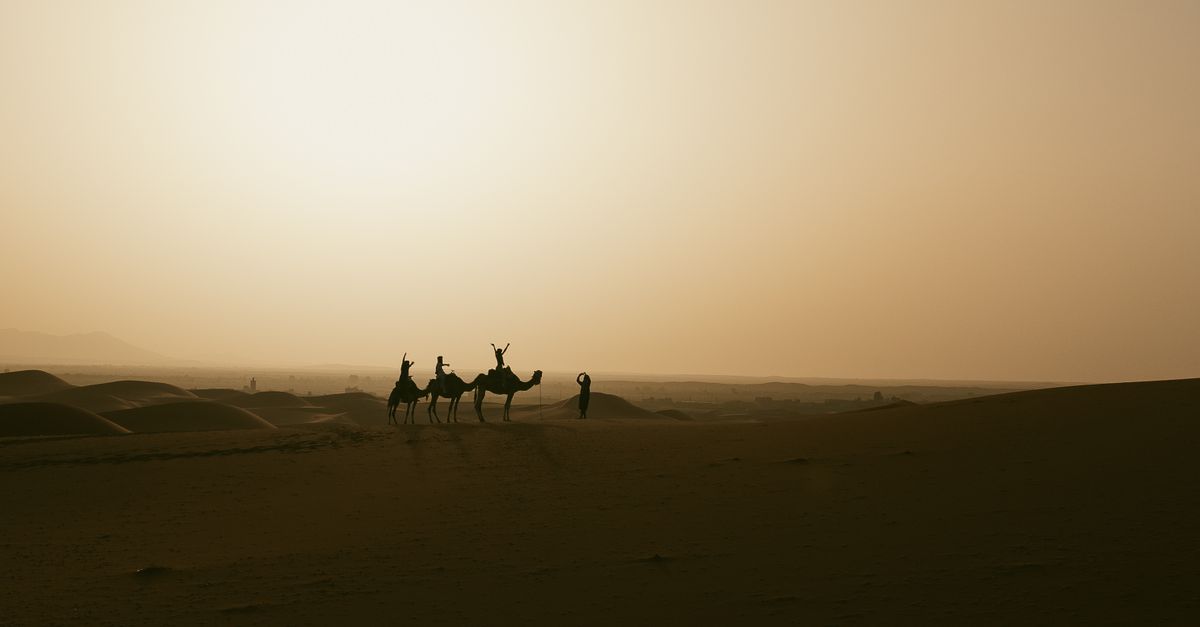
Sunset camel trek into the Erg Chebbi dunes — this is the image you came to Morocco to make.
This tour solves a specific problem. You want the Sahara — the real Sahara, with 150-metre dunes and a night under the stars — but you also want to continue north to Fes rather than losing a full day driving back to Marrakech. By ending in Fes, you turn what would be a backtrack into forward momentum. You arrive in Morocco's spiritual and cultural capital with two nights of desert experience behind you and the rest of your journey ahead.
Morocco Live Trips runs this route regularly. Our drivers know when the light hits the Dades formations, which lunch stop serves the best tagine between Ouarzazate and Tinerhir, and exactly what time to leave Merzouga so you reach the camel staging point as the sun begins to soften.
Why a 3-Day Desert Tour Ending in Fes Makes Sense
Most desert tours from Marrakech return to Marrakech. That means Day 3 is almost entirely a long drive back along roads you already traveled. This tour takes a different approach. You see everything a classic 3-day desert tour covers — the High Atlas, Ait Ben Haddou, Dades Valley, Todra Gorge, the Erg Chebbi dunes — but on the final day you head north through the Middle Atlas instead of west, arriving in Fes by evening. You save a day of backtracking and you arrive in one of the world's great medieval cities, ready to explore.
The Route at a Glance
Day 1: Marrakech → High Atlas (Tizi n'Tichka) → Ait Ben Haddou → Ouarzazate → Dades Valley
Day 2: Dades Valley → Todra Gorge → Merzouga → Camel Trek → Erg Chebbi Desert Camp
Day 3: Merzouga Sunrise → Ziz Valley → Midelt → Azrou Cedar Forest → Ifrane → Fes
3 Day Tour to Merzouga Desert — At a Glance
| Duration | 3 days / 2 nights |
| Starts In | Marrakech (hotel/riad pickup at 07:30) |
| Ends In | Fes (riad/hotel drop-off by early evening on Day 3) |
| Route | Marrakech → High Atlas → Ait Ben Haddou → Dades → Todra Gorge → Merzouga → Ziz Valley → Middle Atlas → Fes |
| Tour Style | Private tour with dedicated driver-guide — your vehicle, your pace |
| Accommodation | 1 night Dades Valley guesthouse + 1 night luxury Sahara desert camp in Erg Chebbi |
| Meals | 2 breakfasts + 2 dinners included (guesthouse + desert camp) |
| Transport | Private air-conditioned Toyota Prado 4x4 or Minivan |
| Fitness Level | Easy to moderate — short walks at sites, camel ride requires basic mobility |
| Ideal For | Travelers continuing north, first-time visitors, couples, families, solo travelers, photographers |
| Languages | English, French, Arabic, Spanish |
| Operated By | Morocco Live Trips — locally owned, fully licensed Moroccan travel agency |
Full Itinerary — Day by Day
1 Marrakech → High Atlas → Ait Ben Haddou → Ouarzazate → Dades Valley
Your driver collects you from your Marrakech riad or hotel at 07:30. The city is still waking up as you head southeast toward the mountains. Within an hour you begin the climb into the High Atlas on the N9 road — hairpin bends carved into rust-coloured rock, Berber villages clinging to the mountainsides, roadside stalls selling saffron and rose water.
You cross the Tizi n'Tichka pass at 2,260 metres. Stop at the top. The air is thin and cool. The road snakes down the southern face of the Atlas in a series of switchbacks that look impossible until you drive them.
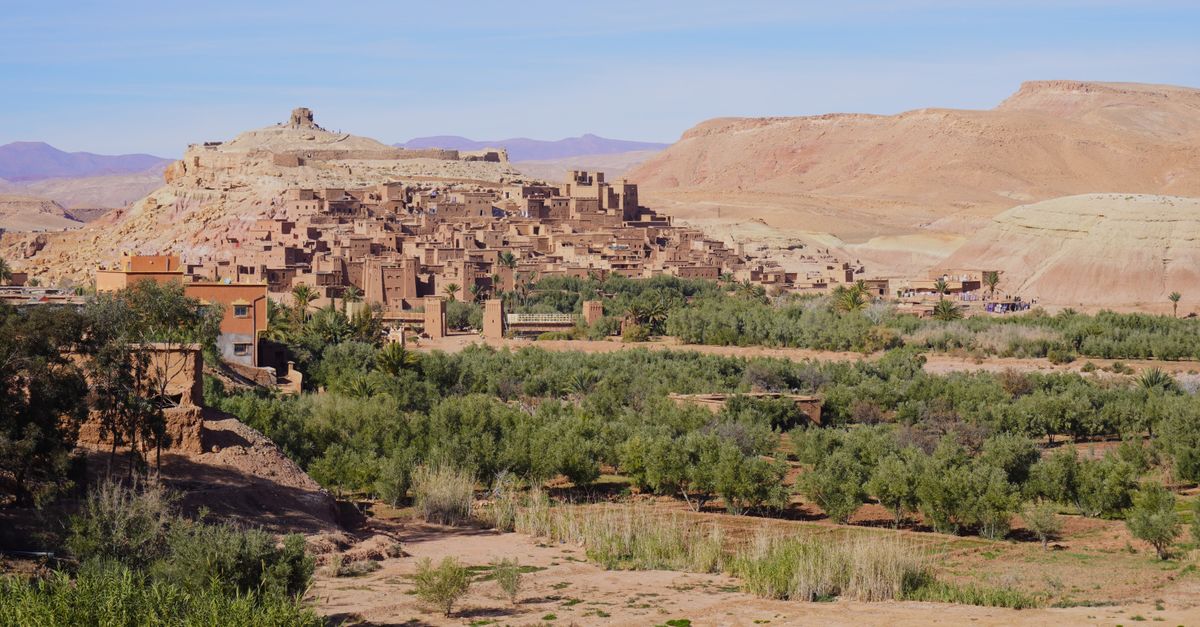
By late morning you reach Ait Ben Haddou, the most famous ksar in Morocco and a UNESCO World Heritage site. This fortified village of earthen towers has stood since the 17th century and has appeared in Gladiator, Lawrence of Arabia, and Game of Thrones. You walk the narrow passages to the hilltop granary, cross the dry riverbed for the classic photograph looking back at the ksar, and take your time — this is not a rushed photo stop.
After lunch near Ouarzazate — Morocco's film capital — the landscape opens into the Skoura palm grove. Ancient kasbahs rise out of the oasis. The road winds through Kelaat M'Gouna, the Valley of Roses, before reaching the Dades Valley by late afternoon. Your guesthouse sits on the edge of the gorge with views across the rock formations that light up gold in the evening sun.
Overnight: Dades Valley — comfortable Berber guesthouse with dinner and breakfast included.
2 Dades Valley → Todra Gorge → Merzouga → Camel Trek → Erg Chebbi Desert Camp

After an early breakfast, drive the winding road through the Dades Gorge — the "Monkey Fingers" rock formations glow in the morning light. Then continue to Todra Gorge, where sheer limestone walls rise 300 metres on either side of a narrow canyon floor. Walk along the Todra River with your feet in the cool water. Climbers scale the walls above you; Berber families picnic along the banks.
After lunch in Tinerhir, the landscape flattens and opens. By mid-afternoon you reach Merzouga, a small Saharan village at the edge of the Erg Chebbi dunes — Morocco's highest sand dunes, some reaching 150 metres. Leave your larger bags in the vehicle. Take only what you need for one night.
Your camel guide meets you for the sunset trek into the dunes. You ride for about an hour into the quiet heart of the erg. The light shifts from gold to orange to deep red. The only sounds are the camels' footsteps on the sand and the wind. Arrive at your desert camp as the sun drops below the horizon.
After a traditional tagine dinner under the stars, the camp staff bring out drums. The rhythms are Berber, passed down through generations. You can join in or simply sit and listen. Then the fire dies down and the stars come out. On a clear night in Erg Chebbi, the Milky Way stretches from horizon to horizon — no light pollution, no city glow, just the desert sky.
Overnight: Luxury desert camp in Erg Chebbi — private tent with bed, en-suite bathroom, dinner and breakfast included.
3 Merzouga Sunrise → Ziz Valley → Midelt → Azrou Cedar Forest → Ifrane → Fes
Wake before dawn. Climb the nearest dune in bare feet while the sand is cool. Watch the light creep across the desert — soft purple, then rose, then gold. This is why people cross the world to get here. After breakfast at camp, ride your camel back to Merzouga village or return by 4x4.
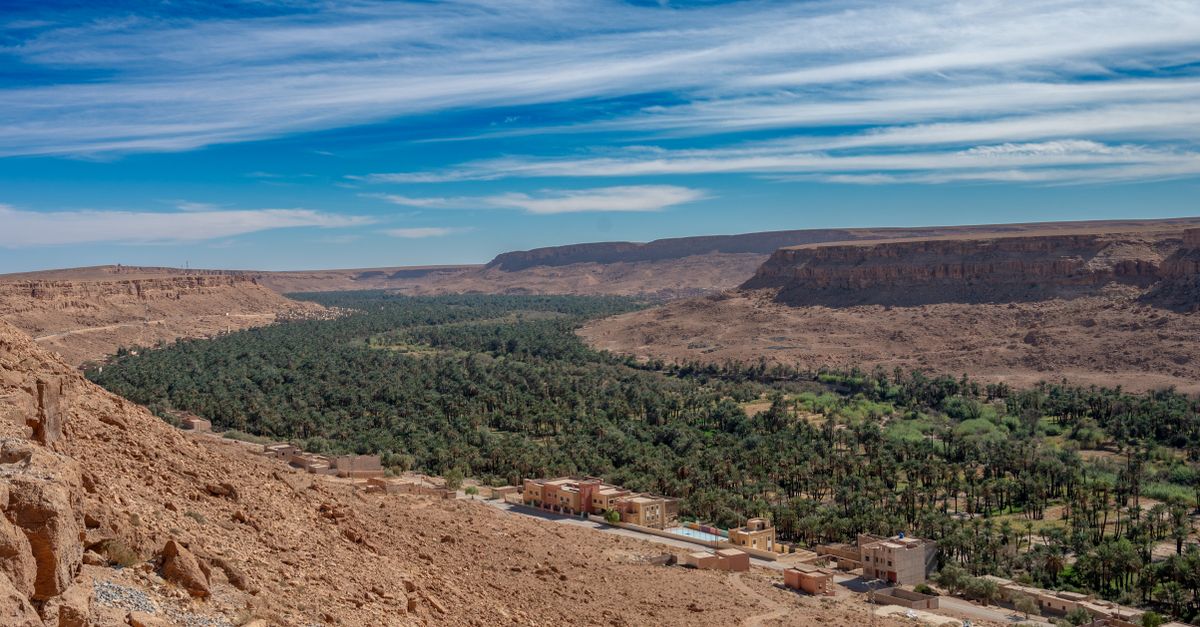
The journey north begins through the Ziz Valley, a long ribbon of date palm oasis stretching for miles along the Ziz River. Stop at a panoramic viewpoint above the valley — the contrast between the green palm grove and the arid mountains is one of the most dramatic landscapes in Morocco.
Continue through Errachidia and into the Middle Atlas Mountains. The scenery transforms from desert to cedar forest. At Azrou, stop to observe the Barbary macaques — Morocco's native monkeys — in their natural habitat. They are wild animals, accustomed to visitors but untamed. Your driver advises on respectful observation.
The road descends through Ifrane, Morocco's "Little Switzerland" — alpine-style architecture, clean streets, a ski resort operating in winter. It is a complete contrast to the Sahara you left behind this morning and a reminder of Morocco's geographic range. Arrive in Fes by late afternoon or early evening. Your driver drops you at your riad or hotel in the medina.
End of tour in Fes.
Three Days from Marrakech to Fes via the Sahara — What You Will Experience
- High Atlas Crossing — Drive the Tizi n'Tichka pass at 2,260 metres with panoramic mountain views
- Ait Ben Haddou Kasbah — Walk the UNESCO World Heritage fortified village featured in Gladiator and Game of Thrones
- Dades Valley — Wind through the "Monkey Fingers" rock formations and the Valley of a Thousand Kasbahs
- Todra Gorge — Stand between 300-metre limestone canyon walls with the Todra River at your feet
- Erg Chebbi Sunset Camel Trek — Ride into Morocco's highest dunes as the light turns gold
- Luxury Sahara Desert Camp — Sleep in a private tent under one of the clearest night skies in the world
- Desert Sunrise — Wake before dawn to watch the dunes emerge from darkness
- Ziz Valley Panorama — See Morocco's largest palm oasis from above
- Azrou Cedar Forest — Observe wild Barbary macaques in their natural habitat
- Arrival in Fes — End your desert journey in Morocco's cultural and spiritual capital, ready for the next chapter
What Is Included — and What Is Not
Included in Your Tour
- Private air-conditioned 4x4 or Minivan with professional English-speaking driver
- Fuel, tolls, and all transport costs for the full 3 days
- 1 night Dades Valley guesthouse with dinner and breakfast
- 1 night luxury Sahara desert camp in Erg Chebbi with dinner and breakfast
- Sunset camel trek into the dunes (approx. 1 hour)
- Sunrise camel trek back to Merzouga (or 4x4 transfer)
- Entry to Ait Ben Haddou kasbah
- Hotel/riad pickup in Marrakech and drop-off in Fes
- 24/7 WhatsApp support from Morocco Live Trips
Not Included
- Lunches (budget approx. 60–90 MAD per meal — your driver recommends clean, local spots)
- Drinks and personal purchases
- Tips for driver, camel guide, and camp staff (appreciated but never obligatory)
- Travel insurance (recommended)
Pricing — 3 Day Tour to Merzouga Ending in Fes
This is a private tour. The price depends on the number of travelers in your group and your accommodation preferences. As a general guide:
Standard (comfortable guesthouse + luxury desert camp): from approximately €280–€380 per person based on 2 people sharing. Larger groups benefit from reduced per-person rates. Solo travelers are welcome — a single supplement applies. For an exact quote, send your travel dates and group size. Morocco Live Trips responds within a few hours.
The price reflects the one-way nature of this route — you do not pay for a driver's empty return journey to Marrakech because the tour ends in Fes. This makes the 3-day Marrakech to Fes route more cost-effective than a round-trip desert tour when you are continuing north anyway.
Best Time for a 3-Day Desert Tour to Merzouga
| Season | Conditions | Our Take |
|---|---|---|
| March – May (Spring) | 20–28°C, wildflowers in the Atlas, comfortable desert nights | Ideal — perfect temperatures for walking and the desert camp is genuinely pleasant |
| June – August (Summer) | 35–45°C in the desert, cooler in the gorges | Hot but manageable — early starts, shade at Todra Gorge, desert camp has ventilation. Fewer tourists, lower prices |
| September – November (Autumn) | 22–32°C, golden light, date harvest in the Ziz Valley | Excellent — similar to spring with softer light for photography |
| December – February (Winter) | 10–20°C days, near-freezing desert nights | Clear and quiet — few tourists, magnificent star visibility. Bring warm layers for the camp and the Middle Atlas crossing |
Whatever the season, pack comfortable walking shoes, layered clothing for temperature swings (High Atlas pass is cool even in summer; desert nights are cold even in spring), sunscreen, sunglasses, and a reusable water bottle. A small overnight bag for the camel trek is essential — your main luggage stays in the vehicle.
Who Should Take This Tour
Travelers Continuing North from Marrakech
If your Morocco itinerary includes Fes, Chefchaouen, or Tangier after Marrakech, this tour is the logical choice. You see the Sahara and arrive in Fes without wasting a day backtracking. It turns the desert leg of your trip into forward progress.
First-Time Visitors to Morocco
Three days gives you the Atlas Mountains, the Sahara Desert, the gorges, and arrival in Fes — a compressed but complete introduction to Morocco's geographic and cultural range.
Couples and Honeymooners
The desert camp night — private tent, lanterns, campfire, and the Sahara sky — is one of the most romantic experiences Morocco offers. Arriving in Fes the next day puts you in the country's most atmospheric city for the next chapter of your trip.
Solo Travelers
A private 3-day tour gives solo travelers complete flexibility. Your driver provides company and local knowledge without the compromises of group travel. The one-way route to Fes is especially efficient for solo travelers covering Morocco independently.
Photographers
This route delivers four distinct photographic environments in three days: the High Atlas, the Dades and Todra rock formations, the Erg Chebbi dunes at sunset and sunrise, and the Middle Atlas cedar forests. Your driver stops whenever you need to — no group schedule to keep.
Why Book with Morocco Live Trips
We are a locally owned, fully licensed Moroccan travel agency based in Marrakech. When you book this tour, you deal directly with the team that will be driving you through the Atlas, guiding you to the best photo spots, and answering your questions on WhatsApp at any hour.
We run this route every week. Our drivers know every bend in the Tizi n'Tichka, every clean lunch stop between Ouarzazate and Merzouga, and exactly when to leave the Dades guesthouse so you reach the camels as the light turns gold. That knowledge cannot be faked — it comes from doing the route repeatedly.
Your tour is private. No strangers in the vehicle. No waiting for a group. The car, the driver, and the itinerary are yours. Spend an extra hour at Ait Ben Haddou. Skip the fossil shop. Stop for photographs whenever you want.
We use accommodations we trust. Every guesthouse and desert camp on this itinerary has been personally inspected by our team. We know the owners. We know which rooms have the best views. We know the camps that serve genuine food and maintain clean facilities.
One-way pricing that makes sense. Because the tour ends in Fes rather than returning to Marrakech, you do not pay for an empty return journey. The pricing reflects the actual route — fair, transparent, with no hidden extras.
Fully licensed and insured. Morocco Live Trips holds official Moroccan tourism registration. All vehicles carry passenger insurance. Our drivers hold government-issued credentials. Book with complete confidence.
What Travelers Say
★★★★★
"Ending in Fes instead of Marrakech was the smartest decision we made. We saved a full day of driving and arrived in Fes ready to explore. The desert camp was far beyond what we expected — private bathroom, hot shower, comfortable bed, and the stars were unreal."
★★★★★
"Three days felt like the perfect amount of time. We saw so much without ever feeling rushed. The driver knew exactly where to stop for the best views and the Dades guesthouse was charming. The camel trek at sunset was the highlight of our entire Morocco trip."
★★★★★
"I was traveling solo and the private tour was worth every euro. My driver was professional and genuinely good company. The one-way route to Fes made so much sense — I arrived with two incredible nights behind me and the whole north of Morocco ahead."
Frequently Asked Questions — 3 Day Tour to Merzouga Ending in Fes
Ending in Fes eliminates the long drive back to Marrakech on Day 3. Instead of retracing your route, you continue north through the Middle Atlas — seeing the Ziz Valley, cedar forests, and Ifrane — and arrive in Fes by evening. If you plan to visit Fes anyway, this saves you a full travel day and the cost of a separate transfer. The pricing also benefits you because you are not paying for a driver's empty return journey.
Day 1 (Marrakech to Dades Valley) involves about 5.5 hours of driving broken into segments of roughly 90 minutes each with sightseeing stops. Day 2 (Dades to Merzouga) is about 4 hours with the Todra Gorge stop in the middle. Day 3 (Merzouga to Fes) is the longest at approximately 7 hours, broken by the Ziz Valley panorama, the Azrou cedar forest, and lunch in Midelt. No day feels like just driving.
You stay in a luxury camp in Erg Chebbi. Your private tent has a real bed with quality linens, an en-suite bathroom with toilet, sink, and hot shower, solar-powered lighting, and a seating area outside. The camp serves a traditional Moroccan dinner and breakfast. After dinner the staff play Berber drums around the fire. It is comfortable without being staged — consistently the part of the tour guests talk about most.
Yes. The identical route runs in reverse: Fes → Merzouga → Dades → Marrakech over three days. If you are starting in Fes and heading south, this is the efficient way to see the Sahara on your way to Marrakech. Contact us for reverse-route pricing.
Yes. The tour works well for children aged 6 and above. The camel ride, desert camp, Todra Gorge walk, and monkeys in the Azrou cedar forest are naturally engaging. For families with younger children, we adjust the pace with shorter driving segments and more frequent stops. Let us know ages at booking.
Comfortable closed shoes for walking in sand and on uneven ground. Layered clothing — the High Atlas pass is cool even in summer, and desert nights are cold in all seasons. Sunscreen, sunglasses, a hat, and a reusable water bottle are essential. Pack a small overnight bag for the camel trek; your main luggage remains in the vehicle and meets you at the camp.
A standard round-trip 3-day tour covers the same sights on Days 1 and 2 but returns to Marrakech on Day 3 — a 9-hour drive mostly retracing roads you have already traveled. This tour instead heads north through new scenery (Ziz Valley, Middle Atlas, cedar forests) and ends in Fes. You see more and you arrive somewhere useful rather than back where you started.
We also offer the standard 3-day Marrakech to Merzouga round-trip tour. It covers the same route but returns to Marrakech on Day 3 rather than continuing to Fes. Let us know your preference when booking and we will quote the appropriate itinerary.
Send a message via WhatsApp at +212 601-339154 or fill in our contact form with your preferred dates and group size. We respond within a few hours with availability, accommodation details, and exact pricing. A small deposit confirms your booking; the balance is payable on departure in cash (MAD or EUR).
Book Your 3 Day Tour to Merzouga Desert Ending in Fes
Three days. The High Atlas. The Dades and Todra gorges. A sunset camel trek into the Erg Chebbi dunes. A night under the Sahara stars. And an efficient arrival in Fes — Morocco's cultural capital — rather than a long drive back to where you started. This is the desert tour that makes geographic sense.
Morocco Live Trips is a locally owned, fully licensed Moroccan travel agency. When you book, you deal directly with the people who will be driving you, feeding you, and answering your messages — not a booking platform or a call centre.
Prefer email? Write to Moroccolivetrips@gmail.com — we reply within a few hours, usually sooner.