2 Days to Zagora Desert — The Closest Sahara Experience from Marrakech
Tour Type: Short Sahara Desert Tour | Duration: 2 Days / 1 Night | Departure: Marrakech | Operated by: Morocco Live Trips
You do not need a week to reach the Sahara. The Zagora desert sits just 350 kilometres from Marrakech — close enough that two days gives you a genuine desert night under the stars, a sunset camel trek across real dunes, and the drive of a lifetime through the Draa Valley, all without spending your entire holiday in a car.
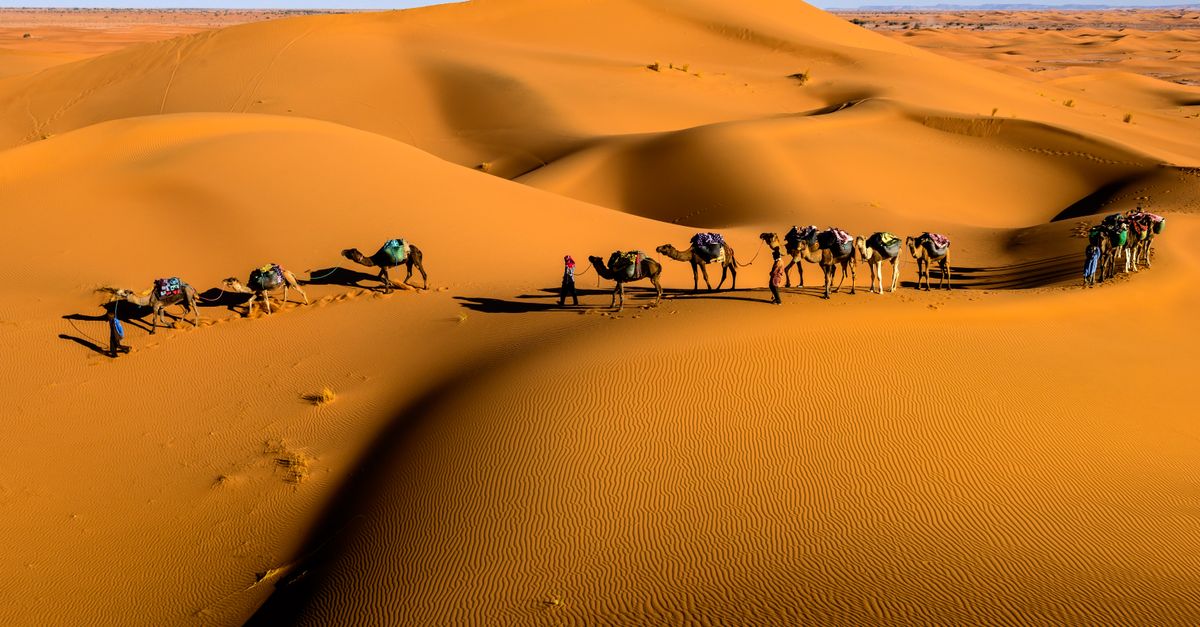
Sunset camel trek into the Zagora dunes — real Sahara, half the drive time of Merzouga.
Most travelers want the Sahara but struggle to find the time. The 2-day Zagora desert tour solves that problem. You cross the High Atlas, walk through a UNESCO kasbah, drive the legendary Draa Valley — a 200-kilometre ribbon of date palms and ancient fortresses — and arrive at the edge of the Sahara in time for a sunset camel ride. You sleep in a desert camp, wake to the dunes at sunrise, and return to Marrakech by evening. It is efficient without feeling rushed, and it costs a fraction of longer desert tours.
Morocco Live Trips runs this route regularly. Our drivers know every bend in the Tizi n'Tichka pass, every good lunch stop along the Draa, and exactly when to leave each site so you arrive at the dunes as the light turns gold.
Why Zagora — The Smart Sahara Choice for Short Trips
Not every traveler has five days for Merzouga. Zagora gives you the Sahara experience — real dunes, real camels, real desert camp — at half the distance. Here is how the two compare:
Zagora vs Merzouga — Which Desert Fits Your Trip?
| Zagora (This Tour) | Merzouga (Erg Chebbi) | |
|---|---|---|
| Distance from Marrakech | 350 km | 560 km |
| Drive time (one way) | 6–7 hours | 9–10 hours |
| Minimum trip length | 2 days | 3 days |
| Dune height | Up to 50 metres | Up to 150 metres |
| Landscape character | Intimate dunes, rocky hamada, Draa Valley palm groves | Vast dune fields, dramatic erg |
| Best for | Short trips, budget travelers, weekend getaways | Photographers, dune enthusiasts, longer stays |
| Price (approx.) | €80–€200 per person | €150–€350 per person |
Zagora is not a compromise. It is a different desert — rockier, more intimate, with the Draa Valley approach that many seasoned Morocco travelers consider the country's most beautiful drive. The dunes are smaller than Merzouga's but substantial enough for that classic silhouette photograph. And you sleep in the Sahara, which is the point.
2 Days to Zagora Desert — At a Glance
| Duration | 2 days / 1 night |
| Starts & Ends | Marrakech (hotel/riad pickup and drop-off) |
| Route | Marrakech → High Atlas (Tizi n'Tichka) → Ait Ben Haddou → Ouarzazate → Draa Valley → Zagora Desert → Return |
| Tour Style | Private or small-group — your choice at booking |
| Accommodation | 1 night: traditional Berber desert camp in Zagora dunes |
| Meals | Dinner + breakfast at the desert camp included |
| Transport | Private air-conditioned 4x4 or Minivan with professional driver |
| Fitness Level | Easy — short walks at sites, camel ride requires basic mobility |
| Ideal For | Short-stay visitors, weekend travelers, couples, families, solo travelers, backpackers |
| Languages | English, French, Arabic, Spanish |
| Operated By | Morocco Live Trips — locally owned, fully licensed Moroccan travel agency |
The Route — Two Days, One Unforgettable Drive
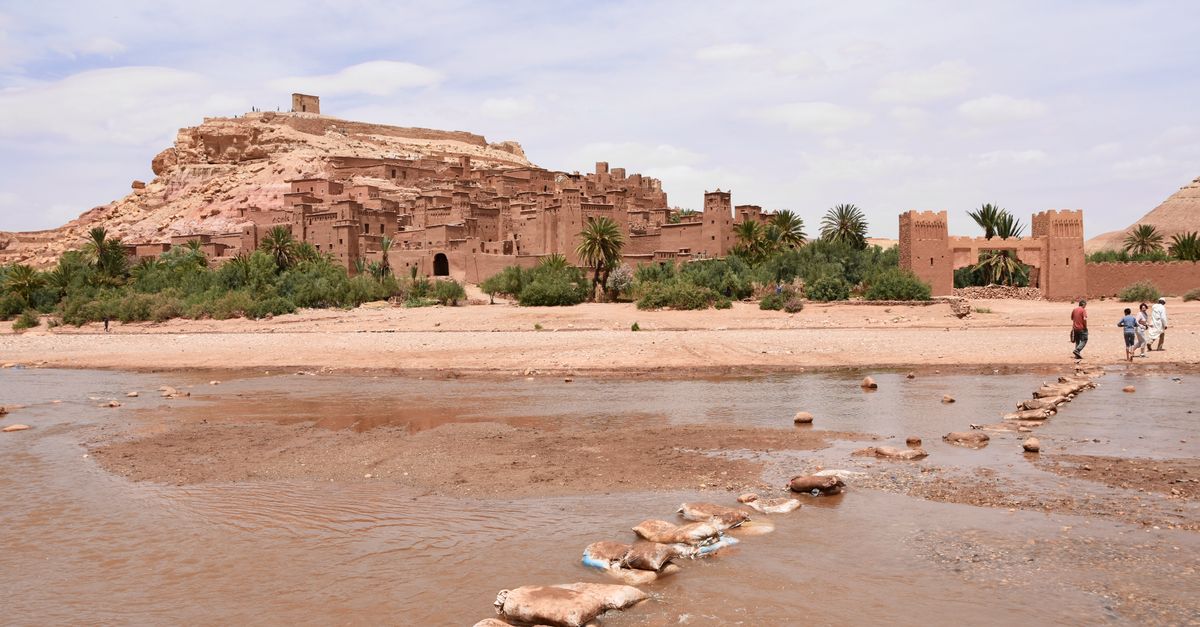
Ait Ben Haddou at midday — a UNESCO site and one of Morocco's most photographed landmarks, visited on Day 1.
The 350-kilometre route from Marrakech to Zagora traces one of Morocco's most historically significant corridors. For centuries, this was the caravan road connecting sub-Saharan Africa to the Mediterranean — gold, salt, and spices moved along these same valleys. Today the tarmac follows the old path, climbing over the High Atlas at 2,260 metres, dropping into the cinematic landscapes around Ouarzazate, and then tracing the Draa River south through the largest palm oasis in Morocco. Every hour the landscape changes. By the time you reach the dunes, you have traveled through four distinct geographies and a thousand years of human history.
Full Itinerary — Day by Day

Your driver collects you from your Marrakech riad or hotel at 07:00. The early start puts you ahead of the traffic and into the High Atlas while the morning light is still dramatic on the peaks.
Within ninety minutes you reach the Tizi n'Tichka pass at 2,260 metres — the highest major road in North Africa. The air cools noticeably. Berber women sell saffron and rose water at roadside stalls. Stop for photographs at the panoramic viewpoints where the switchback road snakes down the mountainside below you.
By late morning you arrive at Ait Ben Haddou, the UNESCO World Heritage fortified village that has appeared in Gladiator, Lawrence of Arabia, and Game of Thrones. Walk the earthen passageways to the hilltop granary. Cross the dry riverbed for the classic photograph back toward the ksar. Your driver gives you unhurried time here — this is not a ten-minute photo stop.
Continue through Ouarzazate, Morocco's film capital, where you can see the Taourirt Kasbah from the road. Lunch at a local restaurant (own cost) — your driver knows the clean, well-priced spots.
After lunch the landscape transforms. The Draa Valley stretches south for 200 kilometres — a continuous ribbon of date palms, ancient kasbahs, and Berber villages. This is Morocco's longest river oasis, and the drive through it is consistently rated one of the country's most beautiful road journeys. Stop at viewpoints where the palm grove stretches to the horizon in both directions.
Mid-afternoon arrival in Zagora. See the famous sign: "Timbuktu — 52 Days" — a reminder that this was once the gateway to the trans-Saharan caravan routes. Your camel guide meets you for the sunset trek into the dunes. You ride for about an hour through the desert, watching the light change from gold to orange to deep red as the sun drops below the horizon.
Arrive at your desert camp. After a traditional Moroccan tagine dinner, the drums come out. Then the stars. On a clear night in Zagora, the Milky Way is visible to the naked eye — no light pollution, no city glow, just the desert sky stretching in every direction.
Overnight: Traditional Berber desert camp in the Zagora dunes — dinner and breakfast included.
Wake before sunrise. Climb the nearest dune in bare feet while the sand is still cool. Watch the light creep across the desert — soft pink, then gold, then blazing white. This is the moment that makes the whole trip worthwhile.
After a traditional Moroccan breakfast at camp — fresh bread, olive oil, honey, eggs, and the obligatory sweet mint tea — ride your camel back to Zagora village or return by 4x4.
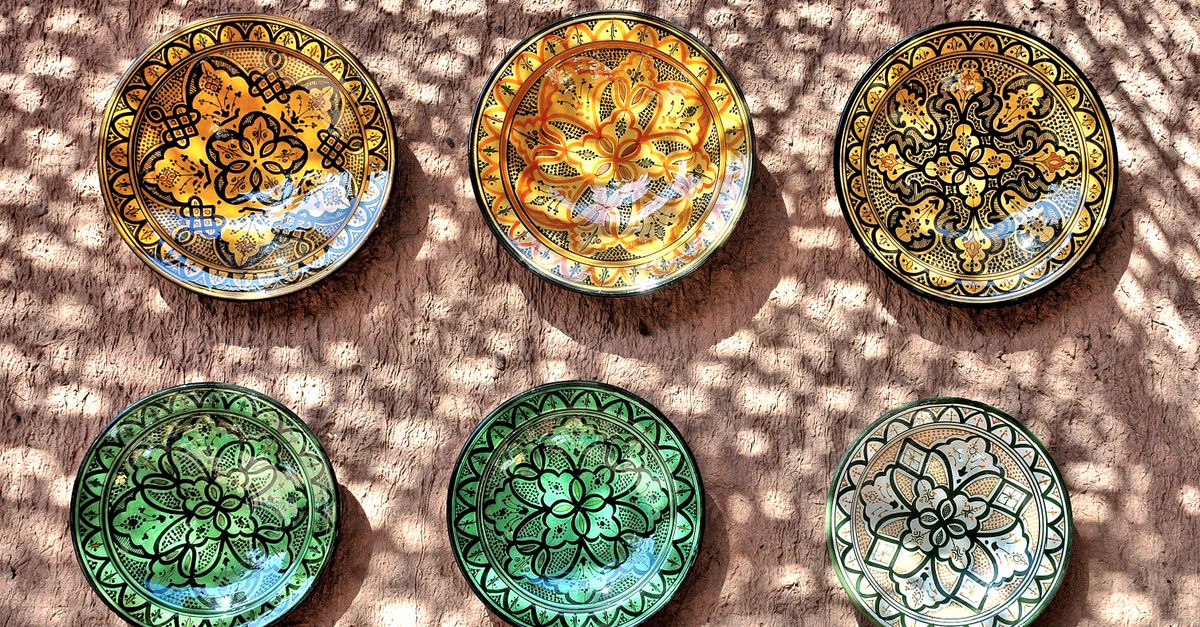
If time and interest permit, visit Tamegroute, a village 20 kilometres from Zagora known for two things: its distinctive green pottery, fired in underground kilns using techniques unchanged for centuries, and its historic library — the Zaouia Naciria — which houses ancient manuscripts of Quranic texts, astronomy, and medicine dating back to the 11th century. The pottery cooperative welcomes visitors and you can watch artisans at work.
The return drive follows the same route through the Draa Valley, but the morning light reveals details you missed on the way down — the geometry of the irrigation channels, the layers of the kasbahs, the way the palm groves create their own microclimate in the desert. Stop for lunch in Ouarzazate (own cost). Cross the High Atlas again, arriving back in Marrakech between 18:00 and 19:00. Your driver drops you at your riad, hotel, or the airport.
End of tour.
Two Days to Zagora — What You Will Experience
- High Atlas Crossing — Drive the Tizi n'Tichka pass at 2,260 metres with sweeping mountain views and Berber villages
- Ait Ben Haddou Kasbah — Walk the UNESCO World Heritage fortified village featured in Gladiator and Game of Thrones
- Draa Valley Drive — Trace Morocco's longest river oasis — 200 km of date palms, ancient kasbahs, and Berber settlements
- Zagora Dunes at Sunset — Ride a camel into the Sahara as the light turns gold over the sand
- Desert Camp Overnight — Sleep in a traditional Berber tent under one of the clearest night skies in North Africa
- Berber Drumming & Campfire — Share dinner and music around the fire with your camp hosts
- Sahara Sunrise — Wake early to watch the dunes emerge from darkness
- Tamegroute Visit (optional) — See the famous green pottery and the centuries-old library of ancient manuscripts
What Is Included — and What Is Not
Included in Your Tour
- Private air-conditioned vehicle with professional English-speaking driver
- Fuel, tolls, and all transport costs for the 2 days
- 1 night in a traditional Berber desert camp (private tent)
- Dinner at the desert camp (traditional Moroccan tagine)
- Breakfast at the desert camp
- Camel trek at sunset (approx. 1 hour into the dunes)
- Camel trek at sunrise (approx. 1 hour return)
- Hotel/riad pickup and drop-off in Marrakech
- Visit to Ait Ben Haddou kasbah
- 24/7 WhatsApp support from Morocco Live Trips
Not Included
- Lunches (budget approx. 60–80 MAD per meal — your driver recommends good local spots)
- Entry to Tamegroute library (approx. 20 MAD — optional)
- Drinks and personal purchases
- Tips for driver, camel guide, and camp staff (appreciated but never obligatory)
- Travel insurance (recommended)
Pricing — 2 Days to Zagora Desert
The price depends on your chosen style — shared group or private — and the camp comfort level. As a general guide:
| Tour Type | Price (per person) | Group Size | Camp Level |
|---|---|---|---|
| Shared Group | €80 – €120 | 8–15 people | Basic tents, shared facilities |
| Small Group | €150 – €200 | 4–7 people | Improved tents, better bathrooms |
| Private Tour | €200 – €400 | 1–3 people | Flexible schedule, upgraded camp |
| Premium Private | €400+ | 1–3 people | Luxury camp, en-suite bathrooms, hot showers |
Larger groups benefit from reduced per-person rates. Solo travelers are welcome — a single supplement may apply on private tours. For an exact quote, send your dates and group size via WhatsApp or the contact form. Morocco Live Trips responds within a few hours with a tailored price — no automated quotes, no hidden extras.
Best Time for a 2-Day Zagora Desert Tour
This tour runs every day of the year. Each season delivers a different desert:
| Season | Conditions | Our Take |
|---|---|---|
| March – May (Spring) | 22–30°C, green Draa Valley, comfortable nights | Best overall — warm days, cool nights, the palm groves are at their greenest |
| June – August (Summer) | 35–45°C in the desert, cooler in the mountains | Hot but doable — we adjust timing; the camp is shaded and evenings are pleasant. Fewer tourists, lower prices |
| September – November (Autumn) | 25–35°C, golden light, harvest season | Excellent — the Draa Valley date harvest happens in October, and the light is soft for photography |
| December – February (Winter) | 12–22°C days, near-freezing nights | Quiet and clear — very few tourists. Bring warm layers for the camp. The stars are spectacular in cold, dry air |
Whatever the season, pack comfortable closed shoes for the sand, a warm layer for desert evenings (even in summer), sunscreen, sunglasses, and a reusable water bottle. The High Atlas pass is cool year-round — keep a jacket within reach.
Who Should Take This Tour
Travelers Short on Time
If you have a weekend, a short Morocco stopover, or just two days free in your Marrakech itinerary, this tour fits. You experience the Sahara without sacrificing days of your trip to driving.
Budget-Conscious Travelers
The 2-day Zagora tour costs significantly less than longer desert trips. Shared group departures start around €80 per person — one of the most affordable Sahara experiences in Morocco — without cutting corners on the essentials: camels, dunes, camp, and stars.
Couples and Romantic Getaways
A sunset camel ride followed by dinner under the stars makes a genuinely romantic experience. The desert camp setting — lanterns, campfire, the quiet of the dunes — creates the kind of evening couples remember for years.
Families with Children
Children typically love the camel ride, the sand, and the novelty of sleeping in a tent. The 2-day format works well for families because it keeps the trip compact — less "are we there yet," more actual experience. Let us know children's ages at booking and we will adjust the pace.
Solo Travelers
Solo travelers fit naturally into shared group departures or can book a private tour for complete flexibility. The camp environment is social and welcoming — you share dinner with other travelers, swap stories around the fire, and still have your own tent for the night.
Why Book Your Zagora Desert Tour with Morocco Live Trips
We are a locally owned, fully licensed Moroccan travel agency based in Marrakech. When you book the 2-day Zagora tour with us, you deal directly with the team that will be driving you, feeding you, and answering your messages — not a booking platform, not a middleman.
We know this road. Our drivers have crossed the Tizi n'Tichka pass hundreds of times. They know where to stop for the best photographs, which restaurants serve food that will not upset your stomach, and exactly when to leave each site to arrive at the dunes as the sun drops. That knowledge only comes from doing the route week after week.
Your tour, your pace. Private tours mean no strangers in the car. No waiting for a group to finish lunch. No rushing through Ait Ben Haddou because the bus is leaving. The vehicle, the driver, and the schedule are yours.
We use desert camps we trust. Not every camp in Zagora is equal. We work with camps that maintain clean facilities, serve genuine home-cooked food, and treat their staff fairly. We have stayed in these camps ourselves.
Transparent pricing from the start. What we quote is what you pay. No surprise fuel surcharges halfway through. No commission stops at carpet shops. No pressure to tip beyond what feels natural to you.
Fully licensed and insured. Morocco Live Trips holds official Moroccan tourism registration. All vehicles carry passenger insurance. Our drivers hold government-issued credentials. You book with complete peace of mind.
What Travelers Say About the Zagora Desert Tour
★★★★★
"Two days was perfect for us. We only had a long weekend in Marrakech and wanted to see the desert without spending the whole time driving. The Draa Valley drive was unexpectedly beautiful and the camp was simple but comfortable. Waking up to the sunrise over the dunes was the highlight of our trip."
★★★★★
"I was traveling solo and a bit nervous about the desert. The driver made me feel completely at ease. The camp staff were friendly without being pushy, the food was excellent, and sitting around the fire listening to Berber drums under that sky — I will never forget it. Booked the shared group and met great people."
★★★★★
"Traveled with our 8-year-old. He loved the camel ride and the campfire. The 2-day format was ideal — long enough to feel like an adventure, short enough that he did not get bored. The team at Morocco Live Trips adjusted the pace perfectly for a family."
Frequently Asked Questions — 2 Days to Zagora Desert
The drive covers approximately 350 kilometres and takes 6 to 7 hours each way with stops. You cross the High Atlas via the Tizi n'Tichka pass, visit Ait Ben Haddou, and drive through the Draa Valley — so the journey is part of the experience, not just transit. Stops are spaced roughly every 90 minutes for photos, toilets, and coffee.
Yes. In two days you cross the High Atlas, visit a UNESCO World Heritage site, drive the Draa Valley, ride a camel into the dunes at sunset, sleep in a desert camp under the stars, and wake to sunrise over the Sahara. You return to Marrakech by evening. It covers the essential desert experience without the long drives required for Merzouga. Most guests tell us it felt like much more than two days.
The camp consists of traditional Berber-style tents made from woven camel and goat hair. Each tent has a mattress, sheets, and wool blankets. Shared bathroom facilities include toilets and basic showers. The camp serves a traditional Moroccan dinner (tagine, bread, salad, fruit) and breakfast (bread, jam, cheese, eggs, mint tea). After dinner, the staff play Berber drums around the campfire. For an upgrade, premium camps offer en-suite bathrooms, hot showers, and more comfortable beds.
Zagora sits 350 kilometres from Marrakech with dunes reaching about 50 metres. Merzouga is 560 kilometres away with dunes up to 150 metres. Zagora works for a 2-day trip; Merzouga needs at least 3 days. The Zagora landscape is more varied — rocky hamada, the Draa Valley palm oasis, and intimate dunes. Merzouga offers the classic vast erg with towering sand formations. Both deliver a genuine Sahara experience.
Yes. Morocco Live Trips offers both shared small-group and fully private versions of the 2-day Zagora tour. A private tour gives you your own vehicle, dedicated driver, flexible pacing, and the ability to spend more time at any site. Contact us for private tour pricing based on your group size.
Comfortable closed shoes for sand walking, warm layers for the desert evening (even in summer), sunscreen, sunglasses, a hat, and a reusable water bottle. Pack a small overnight bag for the camp — your main luggage stays in the vehicle. A headlamp or torch is useful for navigating the camp after dark. Modest clothing covering shoulders and knees is respectful and practical.
Yes. The 2-day format works well for families. The camel ride, the sand, the campfire, and sleeping in a tent are naturally engaging for children. Let us know your children's ages at booking and we will adjust the driving pace and include extra breaks as needed.
You can reach the desert camp by 4x4 instead of camel. There is no judgment and no extra charge. Some guests have back issues, some dislike the idea of animal rides, some simply prefer the vehicle. Just let your driver know.
Send a message via WhatsApp at +212 601-339154 or fill in the contact form on our website with your preferred dates and group size. We respond within a few hours with availability, accommodation options, and exact pricing. A small deposit confirms your booking; the balance is payable on departure in cash (MAD or EUR).
Yes. Moroccan cuisine naturally includes vegetarian dishes — vegetable tagines, lentil soups, and fresh salads. Vegan, gluten-free, and other dietary needs can be accommodated. Please inform us at booking so we can notify the camp kitchen in advance.
Your Night in the Zagora Desert Camp
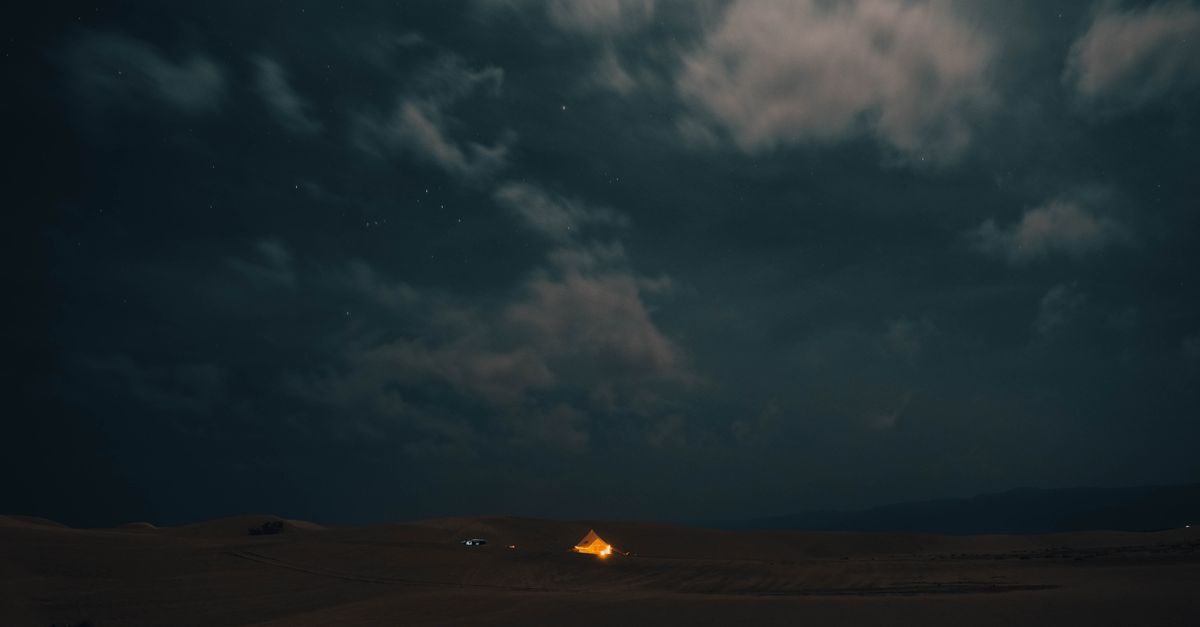
Your desert camp after dark — lanterns, campfire, and the Sahara sky.
The desert camp sits among the Zagora dunes, away from town lights. After dinner — a slow-cooked tagine with bread, salad, and fruit — the camp staff bring out drums and play traditional Berber rhythms around the fire. This is not a staged tourist performance. It is what they would be doing regardless. You are welcome to join in, try the drums, or simply sit back and listen.
Tents are traditional Berber style: woven fabric, comfortable mattresses, wool blankets. Shared bathroom facilities are clean and functional. For travelers wanting more comfort, upgraded camps offer private en-suite bathrooms, hot showers, and solar-powered lighting. Specify your preference when booking.
The camp has no light pollution. On a clear night the Milky Way is visible to the naked eye. If you are a photographer, bring a tripod and a wide-angle lens — the star photography opportunities here are exceptional, especially from April through September when the galactic centre is visible.
Book Your 2 Days to Zagora Desert Tour
The Sahara is closer than you think. Two days from Marrakech, one night under the stars, a camel ride at sunset, and the Draa Valley drive that seasoned travelers rank among Morocco's finest. All without eating into an entire week of your holiday.
Morocco Live Trips is a locally owned, fully licensed Moroccan travel agency. When you book with us, you talk directly to the people who will run your tour — not a call centre, not a booking platform.
Prefer email? Write to Moroccolivetrips@gmail.com — we reply within a few hours, usually sooner.