
Tour Type: Full-Day Excursion | Departure: Marrakech | Duration: 10–12 Hours
Ait Ben Haddou & Ouarzazate Day Trip from Marrakech – UNESCO Kasbah, Atlas Mountains & Hollywood of Africa
One Day. Two UNESCO Sites. A Thousand Years of History.
Operated by: Morocco Live Trips
Book Your Ait Ben Haddou Day TripThis is the most iconic day trip from Marrakech – and one of the great drives in Africa.
You cross the High Atlas Mountains on Morocco's highest mountain pass, walk a UNESCO World Heritage ksar that has stood for over a thousand years, and visit the film studios where Gladiator, Game of Thrones, and Lawrence of Arabia were made.
Perfect for photographers, history lovers, movie fans, and first-time Morocco travelers.
Tour at a Glance
| Departure | 07:00–07:30 from your Marrakech riad |
| Return | 19:00–20:00 to Marrakech |
| Distance | Approx. 200 km each way |
| Main Stops | Tizi n'Tichka Pass, Ait Ben Haddou, Atlas Film Studios, Taourirt Kasbah |
| Lunch | Included –traditional Moroccan restaurant |
| Group Style | Private or small group |
| Difficulty | Easy –flat walking at all sites |
| Best Season | March–May and September–November |
| Operated By | Morocco Live Trips |
Why Visit Ait Ben Haddou and Ouarzazate?
These two destinations sit at the heart of Morocco's southern identity –ancient, cinematic, and unlike anything north of the Atlas.
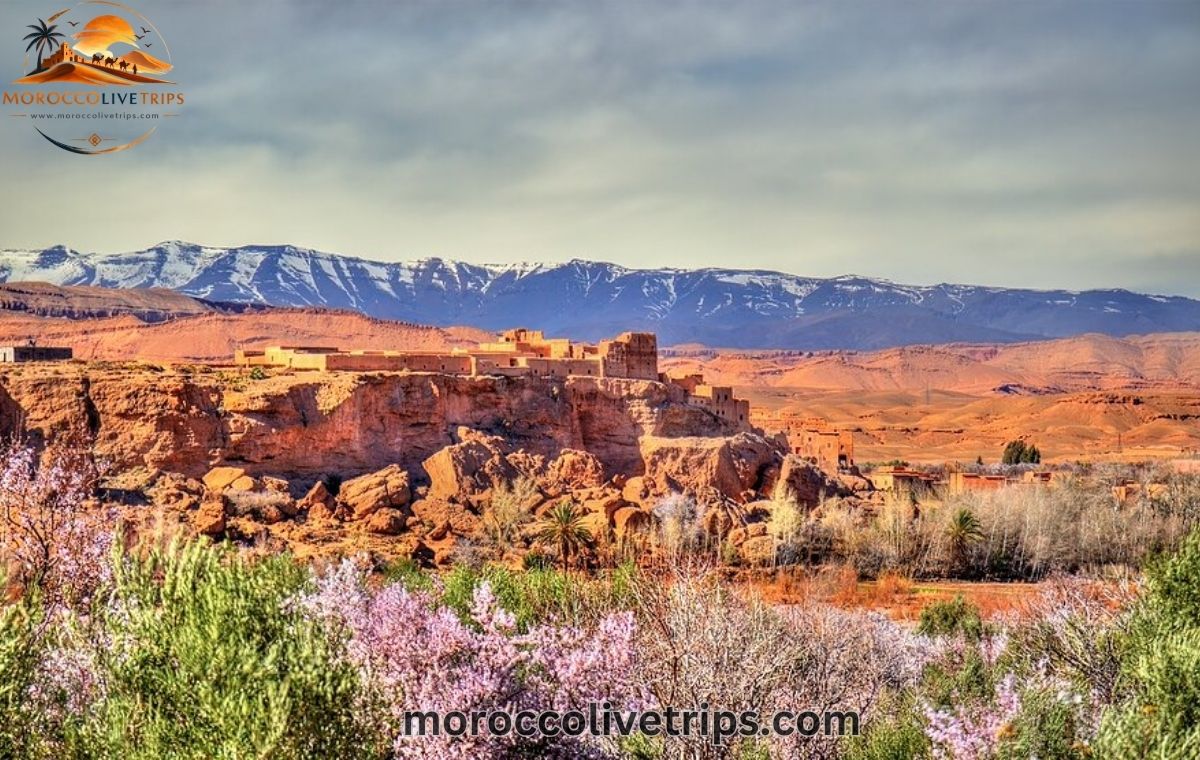
Ait Ben Haddou is the finest surviving example of earthen Berber architecture on earth. Caravans from Timbuktu rested here for centuries. Today it is a living UNESCO World Heritage Site where a handful of families still maintain the tradition of building with clay and straw.
Ouarzazate is where the desert begins. Founded as a French outpost in 1928, it became the accidental film capital of Africa –home to the largest film studio in the world by surface area and a landscape that Hollywood directors keep returning to.
Together, with the Tizi n'Tichka crossing connecting them, this day trip compresses a thousand years of Moroccan history into one perfectly paced day.

Day Trip Highlights

Cross the High Atlas via Tizi n'Tichka Pass
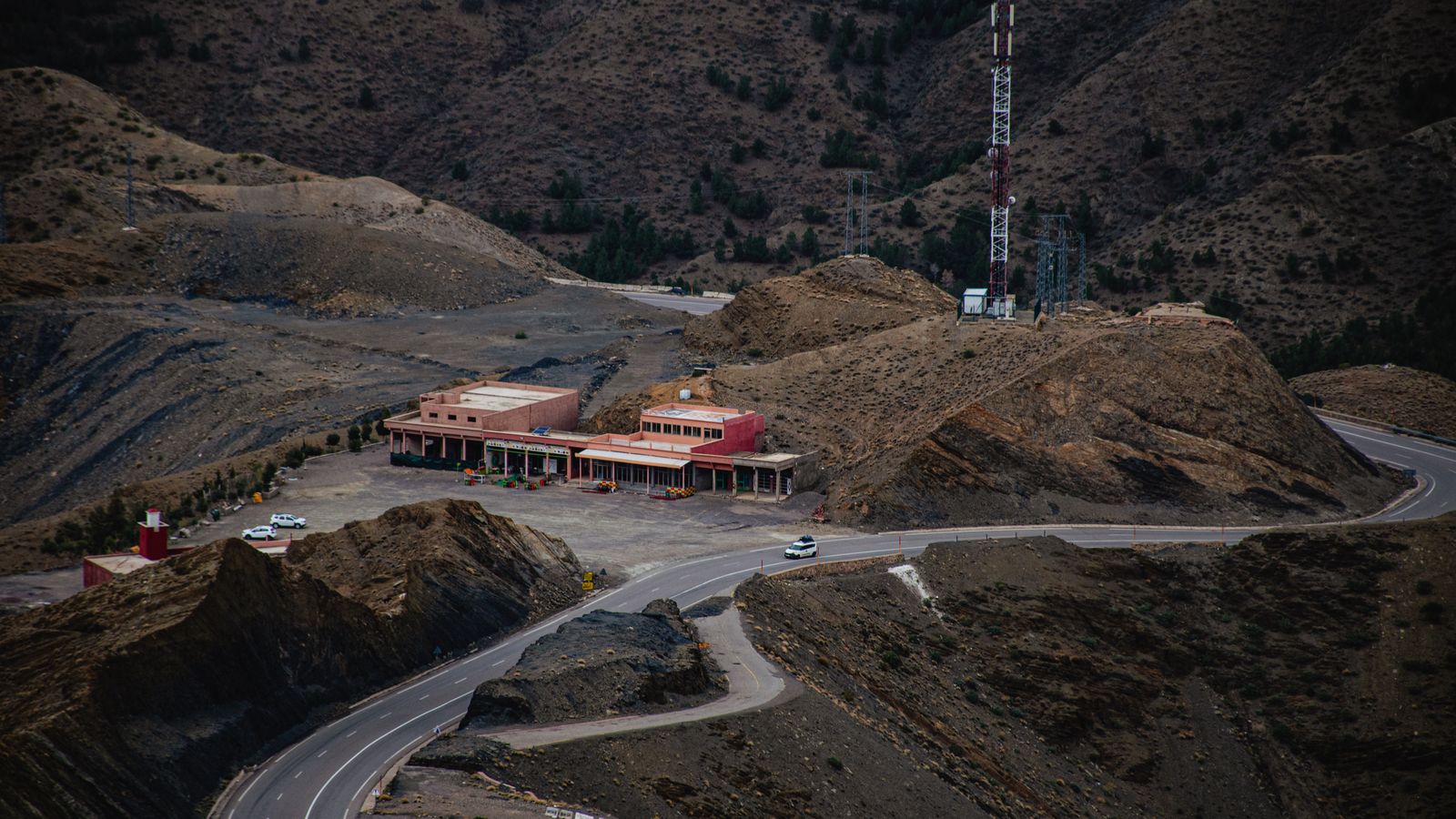
The drive south from Marrakech climbs to 2,260 metres –the highest paved mountain road in Morocco. Built by the French in the 1930s along the ancient Saharan caravan route, every bend opens a new panorama.
- Berber villages clinging to cliff faces
- Valleys of almond and walnut trees
- Snow-capped peaks from November through March
- Best photography stop of the entire drive

Explore the UNESCO Ksar of Ait Ben Haddou
Cross the Ounila River on foot and enter a fortified village built entirely from red clay, straw, and water –unchanged in technique for over a thousand years.
Your guide walks you through the narrow alleys, past ancient granaries and family homes, up to the summit viewpoint where the entire valley stretches out before you. UNESCO inscribed it in 1987 as the finest example of southern Moroccan earthen architecture in existence.
Films shot here:
- Gladiator (2000)
- Lawrence of Arabia (1962)
- The Mummy (1999)
- Game of Thrones (multiple seasons)
- Kingdom of Heaven (2005)
Visit Ouarzazate –Hollywood of Africa
Ouarzazate sits at the precise junction where the Atlas Mountains end and the Sahara begins. Over 300 days of sunshine per year and extraordinary desert scenery made it irresistible to filmmakers from the 1960s onward.
The Atlas Corporation Studios –covering over 300,000 square metres –is where many of the world's most recognisable desert film sets were built. Walking through it is unlike any museum experience.
Discover Taourirt Kasbah
In the centre of Ouarzazate, the Taourirt Kasbah was the seat of the Glaoui dynasty –the most powerful Berber family in southern Morocco in the 19th century.
The interior rooms, with hand-painted cedar ceilings, carved stucco, and zellige tilework, show what desert Berber architecture achieved at its finest. Most day trips skip this. We include it.

Eat Like a Local
Lunch is a proper sit-down Moroccan meal –slow-cooked tagine, fresh bread, Moroccan salads, and mint tea at a restaurant with kasbah views.
No tourist cafeterias. No commission arrangements. Vegetarian and vegan options fully available.
Full Day Itinerary
Pickup from your Marrakech riad or hotel
Drive south through the High Atlas foothills. Landscape changes dramatically within 30 minutes.
Photography stop at Tizi n'Tichka summit (2,260 m)
Descent into the pre-Saharan plains. First views of red clay kasbahs appear.
Guided exploration of Ait Ben Haddou ksar –the longest and most important stop of the day
Lunch at a traditional local restaurant
Ouarzazate: Atlas Film Studios, Taourirt Kasbah, free exploration time
Departure for Marrakech
Arrival back in Marrakech, drop-off at your riad
Tip: The return drive through the Atlas in late afternoon gives you completely different light –warmer, softer, and often more dramatic than the morning. Keep your camera out.
Ait Ben Haddou –History, UNESCO & Movie Fame
The Ancient Ksar
A ksar is a fortified earthen village –an entire community living within shared defensive walls, with family homes, communal granaries, a mosque, and a market inside. Ait Ben Haddou is the greatest surviving example in Morocco.
The construction technique –pisé (rammed earth) mixed with clay and straw –creates walls that are naturally insulating and have survived centuries of rain, wind, and heat. The towers rising from each corner served as watchtowers and status symbols simultaneously.
This ksar sat on the trans-Saharan caravan route connecting the gold and salt markets of sub-Saharan Africa to the royal cities of Morocco. The wealth that passed through here financed the extraordinary decoration inside.

Why Filmmakers Choose Ait Ben Haddou
It gives filmmakers something increasingly rare –a large-scale, ancient built environment with no modern infrastructure visible in any direction. The earthen towers read as medieval Islamic, ancient Roman, or biblical depending entirely on how the cinematographer frames them.
The surrounding Ounila Valley adds to this –treeless, roadless from the ksar side, with clear sightlines in every direction and no anachronistic detail to break the illusion.
Ouarzazate –Gateway to the Sahara
Ouarzazate is where Morocco's desert routes begin. The road south leads to the Draa Valley and Zagora desert tours. The road east leads through the Dadès Gorge toward Merzouga and the Erg Chebbi dunes. Further south lies Erg Chegaga –Morocco's most remote Sahara.
What you see on this day trip is a preview. Many guests return for a Ten-day Morocco desert tour after seeing Ouarzazate for the first time.
Key facts:
- 200 km from Marrakech –approx. 3 hours
- 1,160 metres elevation –cooler than the desert floor
- 300+ days of sunshine per year
- Largest film studio in the world by surface area
Is This Day Trip Worth It?
The honest answer: yes –with one condition. You need to be comfortable with approximately 6 hours of total driving time across the day.
The drive is not dead time. The Tizi n'Tichka crossing is genuinely one of the great mountain drives in the world. The descent into the pre-Saharan landscape –watching vegetation disappear, soil turn red, kasbahs appear –is travel in the truest sense.
This trip is right for you if:
- You have limited time and want Morocco's south without a multi-day tour
- You love ancient history, cinema, photography, or Berber culture
- You want to understand what lies beyond Marrakech
Consider a 2-day tour instead if:
- You want more unhurried time at each site
- You want to continue toward Zagora or the Sahara desert
- You prefer shorter daily driving segments
Best Time to Visit
| Season | Conditions | Notes |
|---|---|---|
| March – May | 18–30°C, clear skies | Best overall –ideal light and temperature |
| June – August | 30–42°C south of Atlas | Hot but manageable with early start |
| September – November | 18–32°C, quieter crowds | Excellent –warm light, fewer tourists |
| December – February | 5–18°C, possible snow on pass | Beautiful winter light. Check pass conditions. |
March – May
18–30°C, clear skies
Best overall –ideal light and temperature
June – August
30–42°C south of Atlas
Hot but manageable with early start
September – November
18–32°C, quieter crowds
Excellent –warm light, fewer tourists
December – February
5–18°C, possible snow on pass
Beautiful winter light. Check pass conditions.
What to Wear and Bring
Essential:
- Comfortable walking shoes –Ait Ben Haddou has uneven cobbled paths
- Sunscreen SPF 50+ –intense sun south of the Atlas
- Sunglasses –light reflection off red clay is sharp
- Light jacket –the Tizi n'Tichka pass is significantly cooler than Marrakech
Useful:
- Camera or fully charged phone –most photogenic day trip from Marrakech
- Cash in MAD –for craft shops inside the ksar
- Modest clothing –shoulders and knees covered in the ksar and Medina areas
Insider Tips from Our Local Guides
Best photography spots:
- Tizi n'Tichka summit –shooting south toward the pre-Saharan plain
- Ait Ben Haddou riverbank –the classic ksar view from across the Ounila River
- Ksar summit granary –360° panoramic view of the valley
- Taourirt Kasbah courtyard –carved stucco detail and painted cedar ceilings
Beat the crowds:
- Tour buses arrive at Ait Ben Haddou between 11:30 and 13:00. Our 07:00 departure gets you there first –better light, fewer people.
Shopping honestly:
- Craft items inside Ait Ben Haddou are genuine –fossils, silver jewellery, hand-woven textiles
- Start bargaining at 50–60% of the first price offered
- Our guides have zero commission arrangements with any shop
Avoid:
- Unofficial guides at the ksar entrance –they always end in pressure purchasing
- Roadside fossil sellers between Marrakech and the pass –quality is unreliable
Why Book with Morocco Live Trips
Morocco Live Trips is based in Marrakech –not in an overseas booking platform. We know this road, these sites, and these guides personally.
Licensed guides
Government-certified, English-speaking throughout
Same guide all day
No relay between driver and separate guide at each stop
Transparent pricing
No hidden entrance fees, no surprise costs
Small groups
Maximum 6–8 people, or fully private
We include Taourirt
Most competitors skip it to save time. We don't.
Fast responses
WhatsApp or contact form, reply within 2–3 hours
Real traveler reviews
Verified guests from USA, UK, Canada, and Europe on TripAdvisor
Get In Touch
Connect with Us to Embark on a Journey to Create Your Dream MoroccoLiveTrip Experience
Frequently Asked Questions
Approximately 190 km –a 3-hour drive via the N9 highway and Tizi n'Tichka Pass. Well-maintained paved road throughout.
Yes –with an early 07:00 departure you have enough time at both Ait Ben Haddou and Ouarzazate without rushing either. It is a long but consistently rewarding day.
Without hesitation. It is one of the most extraordinary places in Morocco –a living UNESCO site that has survived largely unchanged for over a thousand years. Almost every visitor says it exceeded their expectations.
Gladiator, Lawrence of Arabia, The Mummy, Game of Thrones, Kingdom of Heaven, Babel, Alexander, and Jewel of the Nile. The Atlas Film Studios in Ouarzazate contain additional sets from many of these productions.
Yes. Traditional Moroccan lunch at a local restaurant with kasbah views. Vegetarian and vegan options available –inform us at booking.
Yes. The N9 is a well-maintained paved highway used daily by thousands of vehicles. Our drivers know this route in all conditions. Winter snow on the pass is possible but closures are rare and brief.
A kasbah is a fortified family residence with defensive towers. A ksar is a fortified village –an entire community within shared walls. Ait Ben Haddou is a ksar. Taourirt in Ouarzazate is a kasbah.
Yes. The film history excites older children and the mountain drive keeps younger ones engaged. For children under 5, let us know at booking and we plan rest stops accordingly.
Yes –your own vehicle, your own guide, complete flexibility. Contact us for private pricing.
Approximately 6 hours total –3 hours each way –with stops at viewpoints and sites throughout.

Book Your Day Trip
Ait Ben Haddou at mid-morning. Tizi n'Tichka at sunset. A tagine lunch with a kasbah view. The film sets where Gladiator was made.
One day. Worth every kilometre.
WhatsApp us