Morocco 15 day grand tour from Tangier starts where Europe ends and Africa begins -and finishes having crossed every landscape Morocco contains. In 15 days you travel from Tangier through Chefchaouen’s blue streets, into the ancient medinas of Fes, across the Sahara Desert dunes, over the Atlas Mountains, through Marrakech and the Atlantic coast of Essaouira -ending in Casablanca. No other Morocco starting point gives you this geographic logic. At Morocco Live Trips, our Berber guides run this exact route every single week. This complete 2026 guide covers every day, every stop, and every cost.
Tour Overview
Detail | Information |
Duration | 15 days -14 nights |
Start point | Tangier -port, airport, or hotel |
End point | Casablanca, Tangier, Marrakech, or any Moroccan airport |
Destinations | Tangier, Chefchaouen, Fes, Merzouga, Dades, Ouarzazate, Marrakech, Essaouira, Casablanca |
Total distance | Approximately 2,200 kilometers |
Transport | Private air-conditioned vehicle throughout |
Guide | Licensed English speaking local guide |
Group size | Private -just your group |
Flexibility | Fully customizable -daily adjustments possible |
Best season | March to May and September to November |
Starting price | From $1,200 per person |
Why Start Your Morocco Grand Tour from Tangier?
Tangier -Gateway Between Two Continents
Tangier sits at the northwestern tip of Africa -just 14 kilometers across the Strait of Gibraltar from Spain. On a clear day you can see Europe from the Kasbah while standing on African soil. This geographical reality gives Tangier a character unlike any other Moroccan city –Andalusian architecture, Spanish street names, French café culture, and ancient Berber traditions all existing side by side in a city that has been a crossroads of civilizations for over 2,500 years. Starting your Morocco grand tour here means beginning at the most historically layered and geographically dramatic entry point into the country -and traveling south through every landscape Morocco contains, finishing in Casablanca with the full picture of the country behind you.
Tangier is also practically perfect as a starting point -direct ferry connections from Tarifa and Algeciras in Spain, a major international airport with connections across Europe, and a position that allows the most logical geographic flow through Morocco from north to south without backtracking a single kilometer.
Photo Gallery
Day by Day Itinerary -Morocco 15 Day Grand Tour from Tangier
Day 1 -Arrival in Tangier (Two Options)
Your Morocco grand tour begins the moment you arrive in Tangier -and you have two smart options depending on your energy and interests:
Option 1 -Explore Tangier and overnight here. Your driver meets you at Tangier Ibn Battouta Airport or Tangier Med Port -the most modern port in Africa, handling 7 million passengers annually. Afternoon exploration of Tangier’s Kasbah -the hilltop fortress district with narrow whitewashed streets, the Dar El Makhzen palace (now a museum of Moroccan arts), and panoramic views across the Strait to Spain. The Grand Socco square -where mountain Berbers historically came to trade -connects the old medina to the French colonial Ville Nouvelle. Overnight in Tangier.
Option 2 -Drive directly to Chefchaouen (2.5 to 3 hours). If Tangier is not your priority -your driver takes you directly south through the Rif Mountains to Chefchaouen. The drive through the Rif is genuinely beautiful -cedar forests, mountain villages, and the first views of the blue city appearing in the valley below. This option gives you more time in Chefchaouen and is the most popular choice for travelers with a specific focus on the blue city. Overnight in Chefchaouen.
Day 2 -Tangier (if staying) OR Chefchaouen Arrival
If you stayed in Tangier: Morning exploration continues –Cap Spartel where the Atlantic meets the Mediterranean, the Hercules Caves carved into the cliff face by the ocean, and the American Legation Museum (the only US National Historic Landmark on foreign soil -a gift from the Sultan of Morocco in 1821 commemorating America’s first recognition of Moroccan sovereignty). Then drive south to Chefchaouen arriving late afternoon. Overnight in Chefchaouen.
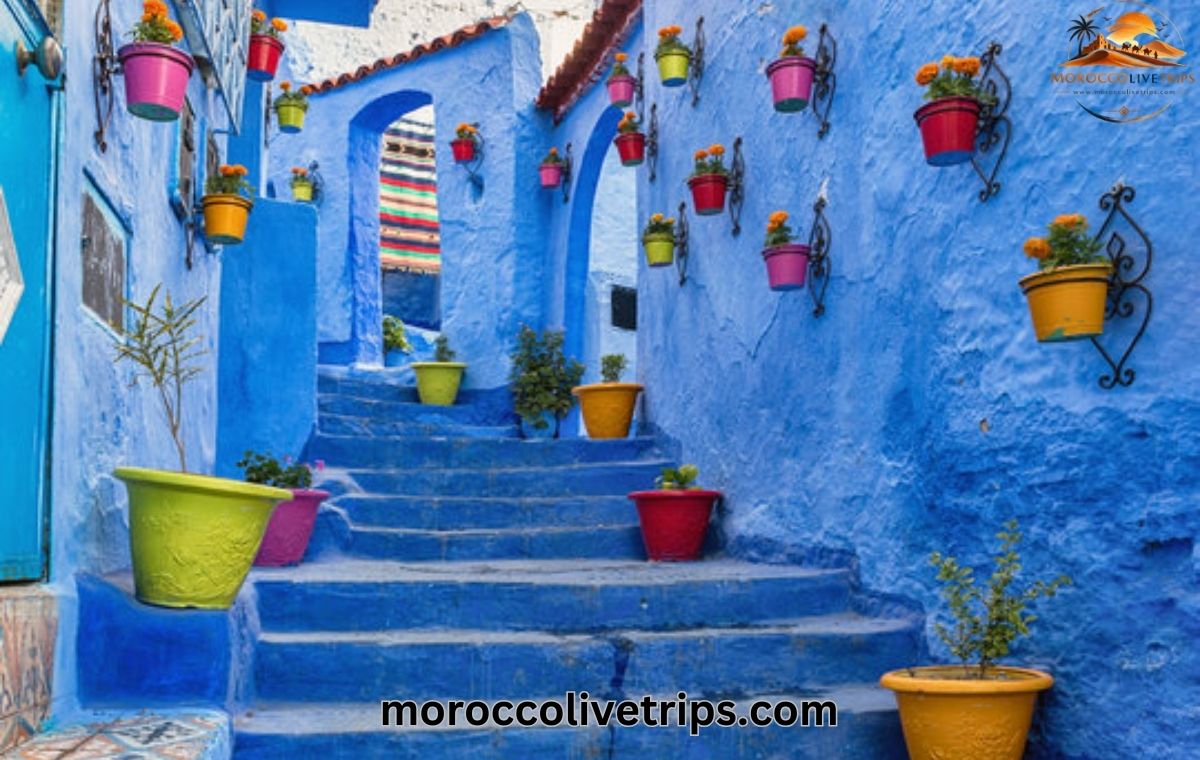
If you are already in Chefchaouen: A full day in the blue city -one of the most visually extraordinary urban environments in the world. Your guide walks you through the blue and white medina, the Plaza Uta el-Hammam where locals gather under ancient cedar trees, and the quieter upper streets where the blue is deepest and the tourist crowds thinnest. Afternoon hike to the Spanish Mosque for the panoramic view every photographer comes to Chefchaouen to capture. Overnight in Chefchaouen.
Day 3 -Chefchaouen to Fes
Morning in Chefchaouen -then a 4.5 to 5.5 hour drive east to Fes. The route crosses the Rif Mountains and drops through the rolling agricultural plains of northern Morocco. Stop at Ouazzane -a small pilgrimage town with an important zaouia (Islamic religious lodge) that most tours completely bypass. Arrive Fes late afternoon. Check into your riad inside Fes el-Bali -not in the new city. This single accommodation decision determines the quality of your Fes experience more than anything else. Evening orientation walk in the medina with your guide –Bab Bou Jeloud at golden hour, the blue gate lit from within. Overnight in Fes.
Day 4 – Fes (Full Visit)
The single most historically dense day of the entire 15 day tour. Fes el-Bali -the world’s largest car free urban area -has been continuously inhabited since 789 AD. Your licensed Fes guide (our guides grew up in these streets) takes you through the complete medina experience:
Morning: Chouara Tannery from the leather shop terraces -the hidden second terrace that shows all 100 vats simultaneously, working since the 10th century using saffron, poppy, and indigo dyes. Bou Inania Madrasa -14th century Marinid architecture of mathematical precision in zellige tilework and carved cedarwood. Al-Qarawiyyin University -founded 859 AD by Fatima al-Fihri, the oldest continuously operating university on earth.
Afternoon: The brass souk, spice quarter, and woodworkers’ district -each craft concentrated in the same streets it has occupied for centuries. Saffarine Square where brass workers hammer metal as their families have done since the medieval period. The Mellah -Fes’s historic Jewish quarter established in 1438.
Evening: Rooftop dinner overlooking the medina -the call to prayer echoing from 300 mosques simultaneously as the city lights up below. This is the moment most travelers say they fell completely in love with Morocco. Overnight in Fes.
Day 5 -Fes to Sahara Desert (Merzouga)
The longest driving day of the tour -and one of the most spectacular in Morocco. The route south from Fes to Merzouga passes through landscapes that change completely every hour:
Ifrane -a Swiss-style mountain town built by the French at 1,650 meters altitude where temperatures drop below freezing in winter and snow falls regularly. Azrou -stop here for the Barbary macaques that live in the cedar forests alongside the road, completely wild and completely habituated to vehicles stopping. Children and travelers alike find this unexpected -Africa’s only wild monkey species, living in a cedar forest at altitude in Morocco.
Midelt -the apple capital of Morocco, set dramatically beneath the Jebel Ayachi peak at 3,737 meters. Lunch here at a local restaurant where the apple juice is fresh-pressed and the tagine is cooked in a clay oven.
Ziz Valley -the descent from the Atlas into the pre-Saharan landscape is sudden and dramatic. One moment cedar forest. The next -an ocean of date palms stretching for 200 kilometers along a river valley that has sustained human life in the desert margins for millennia.
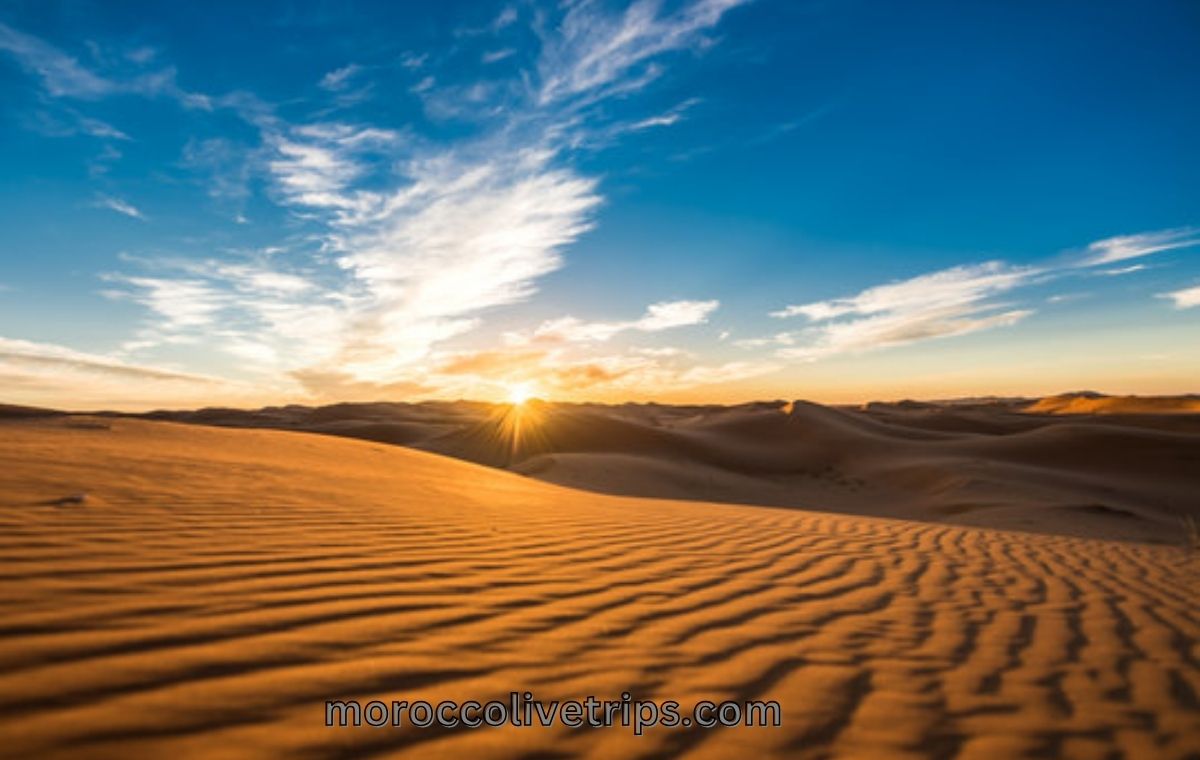
Arrive Merzouga late afternoon. First view of Erg Chebbi dunes rising 150 meters from the flat desert floor -the Sahara announcing itself. Late afternoon camel trek into the dunes -your Berber guide leads the camels single file as the light turns the sand from orange to deep red to purple. Reach your desert camp as the stars appear. Gnawa music around the fire. Berber dinner cooked in the sand. The Milky Way from horizon to horizon. Overnight in Sahara Desert camp.
Day 6 -Sahara Desert (Day 1)
A full day in the Sahara -structured around the reality that midday desert heat makes outdoor activity genuinely exhausting from June to August. Your guide builds the day around the light:
Early morning: Second sunrise from the dunes -climb a different dune from yesterday for a completely different angle on the light. The Sahara at 6 AM is the most silent place most travelers have ever experienced. Sandboarding down the dune faces -sitting, lying flat, or standing for the brave. Quad biking across the desert flats where the sand is packed and speed is possible.
Midday: Rest at camp during peak heat. Traditional Berber lunch. Henna decoration if desired. Time to read, sleep, and genuinely do nothing -which is harder than it sounds for most travelers until the desert teaches them how.
Late afternoon and evening: 4×4 desert safari through the wider Erg Chebbi area -visiting nomadic Berber families still living the traditional desert life, the fossil quarries where Devonian sea creatures from 350 million years ago are extracted from the desert rock, and the Gnawa musicians who play the traditional lute and drum for desert camp evenings. Overnight in Sahara Desert camp.
Day 7 -Sahara Desert (Day 2)
A second full Sahara day -because one night is never enough and two nights gives the desert time to properly affect you. Travelers who stay two nights consistently describe it as the best decision of the entire 15 day tour.
Morning: The sunrise camel trek back to the desert edge -watching the dunes change color as dawn light hits them from the east. The same dunes look completely different at sunrise than at sunset. Merzouga village walk with your guide -the real settlement where Berber families live year-round in the shadow of the dunes, running guesthouses, fossil shops, and camel operations that have been family businesses for generations.
Afternoon: Lake Dayet Srji -a seasonal salt lake that fills with water in winter and spring, attracting pink flamingos that create one of Morocco’s most unexpected wildlife spectacles. The contrast of pink flamingos against orange dunes against blue sky is genuinely extraordinary for photographers. Rest during the hottest hours.
Evening: Final desert sunset. Final night under the stars. Your guide knows which dune face catches the last light best and takes you there without being asked. Overnight in Sahara Desert camp.
Day 8 -Sahara to Dades Valley & Ouarzazate
Drive west out of the desert -the landscape shifting from pure Saharan sand to the dramatic pre-Saharan valleys that contain some of Morocco’s most beautiful and most photographed scenery:
Todgha Gorge -vertical rock walls rising 300 meters on both sides of a narrow river. Walk along the river at the bottom and look straight up. The gorge is at its most dramatic in morning light when the sun penetrates the narrow canyon floor. Local Berber families live and work in the gorge base -bread ovens, carpet weavers, and small restaurants serving fresh trout from the mountain stream.
Dades Valley -the Valley of a Thousand Kasbahs -100 kilometers of earthen fortresses, rose gardens, and ancient irrigation channels following the river through the Atlas foothills. The Dades Gorge road above the valley floor is one of Morocco’s most dramatic drives -hairpin bends over a canyon that makes the valley floor look impossibly far below.
Overnight in Dades Valley or Ouarzazate -two completely different atmospheres. Dades is rural, quiet, and deeply Berber. Ouarzazate is Morocco’s film industry hub -home to Atlas Corporation Studios where Gladiator, Game of Thrones, and Lawrence of Arabia were filmed.
Day 9 – Atlas Mountains To Marrakech
One of the most visually spectacular driving days in all of Morocco.
Morning -Aït Ben Haddou: The UNESCO World Heritage earthen kasbah rising from the desert floor near Ouarzazate -free entrance, freely walkable, and genuinely one of the most photogenic sites in North Africa. Your guide explains the earthen architecture -built without a single nail, maintained by the same families who have lived here for centuries, used as a backdrop by Hollywood directors for six decades because it looks exactly like ancient civilization should look.
The Tizi n’Tichka Pass: The highest paved road pass in North Africa at 2,260 meters -hairpin bends, snow-capped peaks visible in winter, views stretching 100 kilometers on clear days. Stop at Telouet Kasbah -the abandoned mountain palace of the Glaoui family, crumbling magnificently in the High Atlas with carved plasterwork and painted cedar ceilings still visible through the decay.
Arrive Marrakech late afternoon. First glimpse of the Djemaa el-Fna at dusk. The square at this hour -smoke rising from food stalls, musicians setting up, orange juice vendors calling out -is the sensory opposite of three nights in the silent desert. Both experiences make the other more meaningful. Overnight in Marrakech.
Day 10 – Marrakech (Full Visit)
Marrakech deserves a full day -minimum. Your licensed Marrakech guide takes you through the city properly:
Morning -Majorelle Garden: Book in advance -it sells out daily. Yves Saint Laurent’s personal garden -the distinctive Majorelle blue walls against tropical plants and the Berber Museum housed inside. The YSL Museum adjacent covers the designer’s lifelong love affair with Marrakech. Allow 90 minutes minimum.
Midday -Medina souks: The covered market streets of Marrakech’s UNESCO listed medina -brass quarter, leather goods, Berber carpets, spice pyramids of ras el hanout, saffron, and cumin, argan oil cooperatives, and woodworkers using foot-powered lathes unchanged since medieval times. Our guides know which vendors are honest and which are not -this matters significantly in Marrakech’s souk.
Afternoon -Bahia Palace and Saadian Tombs: The Bahia Palace -19th century palace built for a sultan’s favorite wife, with zellige courtyards and carved cedarwood ceilings. The Saadian Tombs -sealed for centuries after the dynasty fell and rediscovered by the French in 1917, now one of Marrakech’s most visited and most moving historic sites.
Evening -Djemaa el-Fna: Food stalls, musicians, storytellers, snake charmers, and the greatest outdoor spectacle in Africa -the square that UNESCO declared an Intangible Cultural Heritage of Humanity. Your guide knows which food stall has been operating since 1962 and which storyteller has been performing the same tale for 40 years. Overnight in Marrakech.
Day 11 – Marrakech (Second Day / Free Exploration)
A free day in Marrakech -deliberately unscheduled and genuinely necessary after 10 days of continuous movement. Use it however serves you:
For relaxation: A morning at a traditional hammam -savon beldi black soap, kessa glove scrub, argan oil massage. The La Mamounia hotel gardens are open for non-guests for afternoon tea -Winston Churchill painted the Atlas Mountains from here. A rooftop lunch watching the medina from above.
For exploration: The Mellah Jewish quarter -Marrakech’s historic Jewish neighborhood with its distinctive balconied architecture. The Koutoubia Mosque exterior and gardens -the 12th century minaret that has called prayer since 1158. The Gueliz neighborhood -Marrakech’s French colonial quarter with contemporary galleries, excellent restaurants, and a completely different architectural character from the medina.
For day trips: The Agafay Desert -40 minutes from Marrakech, dramatic rocky moonscape with Atlas Mountain views, camel rides, and quad biking without the long drive south. Overnight in Marrakech.
Day 12 – Marrakech To Ourika Valley
One hour south of Marrakech -the Ourika Valley is where the High Atlas Mountains begin their serious climb and the landscape transforms from ochre city to green mountain valley almost immediately. The drive follows the Ourika River through Berber villages where market days bring mountain communities down from higher altitudes to trade.
Setti Fatma -the valley’s highest accessible village -is the starting point for the seven waterfall hike up the gorge above the village. The lower falls are accessible in 30 minutes of moderate hiking -the upper falls require 2 to 3 hours and genuine fitness. Your guide takes the group as high as comfort and time allow. The waterfall pools are cold, clear, and perfect for swimming in summer.
Berber village visits along the valley road give travelers the authentic High Atlas community experience -women weaving Berber carpets on traditional looms, children returning from mountain schools, and the souk at Tnine Ourika on Mondays where the entire valley converges. Return to Marrakech for dinner. Overnight in Marrakech.
Day 13 -Marrakech to Essaouira
2.5 to 3 hours west across the Haouz plains to the Atlantic coast -and the sensory shift from Marrakech’s intensity to Essaouira’s calm is immediate and profound.
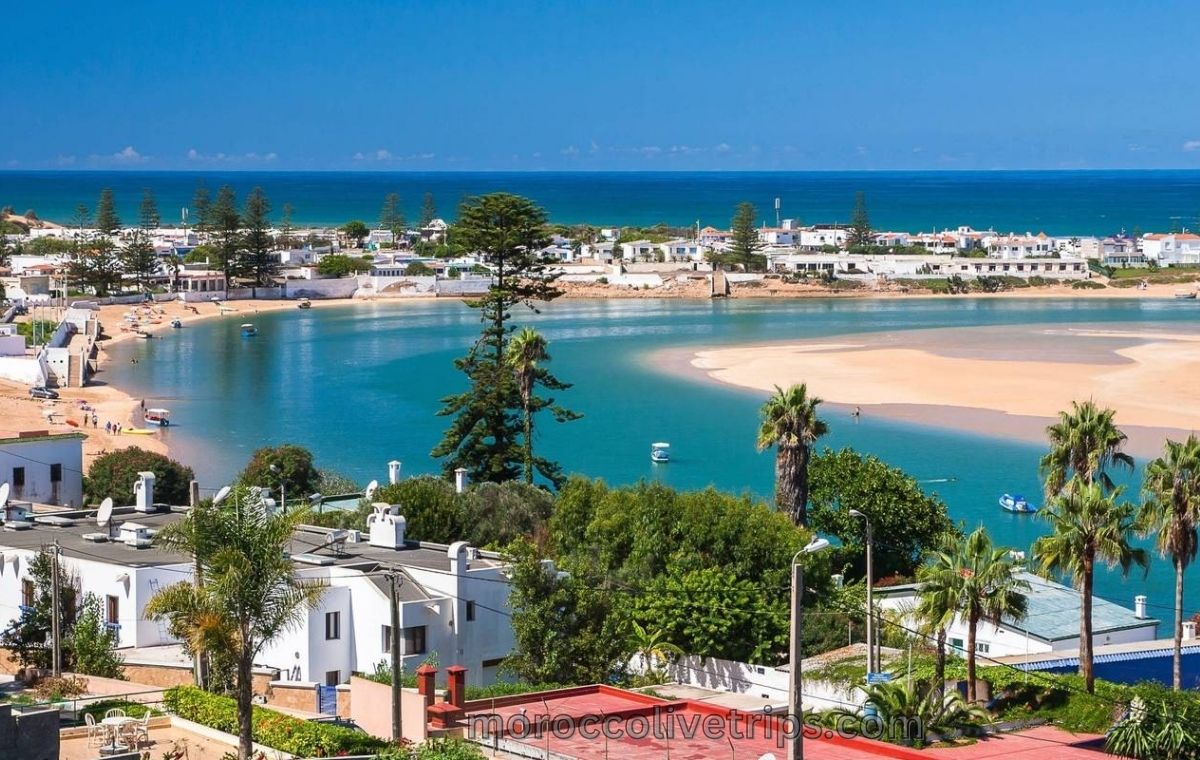
Essaouira is Morocco’s most atmospheric and most underrated coastal city -a UNESCO World Heritage fortified Atlantic port where blue fishing boats sit in the harbor, Gnawa musicians play at the port entrance, and the constant ocean wind keeps temperatures 10 degrees cooler than Marrakech even in midsummer. The ramparts walk along the Atlantic walls delivers dramatic ocean views and the best photography light on the entire Moroccan coast. The medina is calmer, less pressured, and more genuinely artistic than Marrakech -home to galleries, woodworking workshops using the distinctive thuya root burr wood found only in this region, and seafood restaurants serving the morning’s catch grilled fresh at the port. Overnight in Essaouira.
Day 14 -Essaouira to Casablanca
3.5 to 4 hours north along the Atlantic coast -the drive from Essaouira to Casablanca passes through the Doukkala agricultural plains and the coastal town of El Jadida with its Portuguese Cité Portugaise -a UNESCO listed 16th century fortress and cistern that most Morocco tours completely bypass.
Casablanca -Morocco’s economic capital and most cosmopolitan city -is often dismissed by travelers as a transit hub. One afternoon with our guide changes that perception completely. The Hassan II Mosque -the world’s tallest minaret at 210 meters, sitting directly over the Atlantic Ocean with a retractable roof and heated marble floors. Built by 10,000 craftsmen over six years. Non-Muslims permitted inside on guided tours -one of the most awe-inspiring interiors in the entire Islamic world. The Corniche -Casablanca’s oceanfront boulevard -for dinner at a seafood restaurant watching the Atlantic. Overnight in Casablanca.
Day 15 – Departure from Casablanca
Departure from Casablanca Mohammed V International Airport -or from Tangier, Marrakech, or any Moroccan airport depending on your international flight connections. Morocco Live Trips arranges all departure transfers and adapts the final day around your specific flight time. If your flight is afternoon or evening -your guide uses the morning for any final Casablanca sights, last-minute shopping at the Morocco Mall or Maarif district, or simply a relaxed final Moroccan breakfast before the airport.
NOTE:
- Departure is possible from Casablanca, Tangier, Marrakech, or any Moroccan airport depending on international flights
- The itinerary is flexible based on arrival and departure points.
Accommodation Options -Three Tiers
Standard -3 Star Hotels & Riads
Comfortable, clean, and characterful -standard tier accommodation places you inside the medinas of Chefchaouen, Fes, and Marrakech in well-maintained 3 star riads with en-suite bathrooms, daily cleaning, and breakfast included. Desert camp standard tier means traditional Berber tents -shared bathroom facilities, communal fire area, and the authentic desert camp experience that most travelers specifically seek. This tier delivers genuine Morocco without premium pricing -and in many ways gives the most authentic experience of all three options.
Luxury -Boutique Riads & 4 to 5 Star
Significantly upgraded comfort throughout -boutique riads with private courtyards, plunge pools, and personalized service in every medina city. Luxury tier desert camp means private ensuite tents -proper beds, private bathroom facilities, and a higher quality of Berber dinner and breakfast service. 4 to 5 star hotels in Casablanca and Essaouira. This tier is the most popular choice for couples, honeymooners, and travelers celebrating special occasions -delivering the authentic Morocco experience with genuine luxury comfort throughout.
High Luxury -Exclusive Riads & Premium Desert Camps
The finest Morocco available -exclusive riads with private pools and butler service in Marrakech and Fes, premium desert camps with private luxury tents, en-suite bathrooms, fine dining, and private Gnawa performances, and a dedicated private chauffeur throughout the entire 15 days. High luxury tier also includes private licensed expert guides in every city, access to exclusive experiences unavailable to standard and luxury travelers, and complete concierge service from Morocco Live Trips from the moment of booking to final departure. For travelers who want Morocco at its absolute finest -this tier delivers experiences that justify every premium dirham.
What Is Included & What Costs Extra
Included in Every Tier | Costs Extra |
Private air-conditioned transport throughout | International flights |
Licensed English speaking guide | Travel insurance |
All accommodation -14 nights | Lunches and dinners |
Sahara camel trek -3 evenings | Personal shopping |
Airport and port transfers | Tips for guides and drivers |
Most breakfasts | Optional activities |
All listed entrance fees | Alcoholic beverages |
24 hour Morocco Live Trips support | Ferry from Spain (if applicable) |
Zero hidden costs guaranteed | Single supplement (solo travelers) |
Flexible Arrival & Departure Options
Morocco Live Trips builds complete flexibility into every 15 day grand tour from Tangier -because international travel rarely fits a rigid schedule.
Arrival options:
- Tangier Ibn Battouta Airport (TNG) -direct flights from major European cities
- Tangier Med Port -ferry from Tarifa (35 minutes) or Algeciras (90 minutes) from Spain
- Casablanca Mohammed V Airport (CMN) -fly in, overnight in Casablanca, drive to Tangier next morning
Departure options:
- Casablanca CMN -the standard departure point and Morocco’s largest international airport
- Marrakech RAK -depart after Day 12 or 13 if your flight is from Marrakech
- Tangier TNG -return to start point if your routing requires it
- Any Moroccan airport -we adapt the final days to match your departure city
Itinerary flexibility: Every day on this tour can be adjusted -add a night, remove a stop, substitute a destination, or upgrade a specific experience. Contact our team with your requirements and we respond within 24 hours with a customized itinerary and confirmed price.
Book Your Tour with Morocco Live Trips
Morocco Live Trips is a locally owned and operated tour company -not an international booking platform managing your trip from a European office. Our drivers know every mountain road on this route. Our guides grew up in the medinas of Fes and Marrakech. Our desert camp partnerships in Merzouga have been built over years of trusted relationships with Berber families who have been hosting travelers in the Sahara for generations.
This 15 day grand tour from Tangier is the most complete Morocco experience we offer -and the one our returning travelers most frequently request for friends and family visiting Morocco for the first time.
Tell us your travel dates, group size, and preferred accommodation tier -and our local team sends your complete personalized itinerary and confirmed price within 24 hours.
Quick Booking
Tell us your travel dates, group size, and preferred accommodation tier -and our local team sends your complete personalized itinerary and confirmed price within 24 hours.