10 day tour from Casablanca to desert via Chefchaouen and Fes
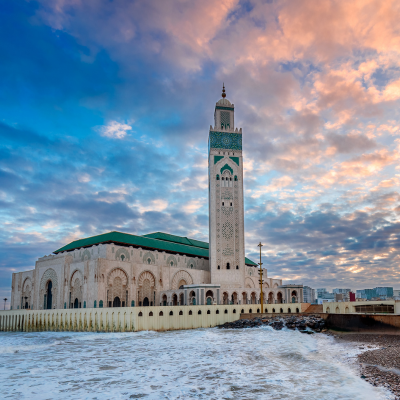
Morocco’s most rewarding 10-day route—a 10 day tour from Casablanca to desert via Chefchaouen and Fes—takes you from Atlantic shores through blue mountain villages, ancient medinas, and deep into Sahara territory before looping back through dramatic Atlas passes. Understanding This Cross-Country Morocco Circuit The journey spans roughly 2,400 kilometers connecting seven major destinations. You’ll spend about 40% of time exploring cities and sites, 30% experiencing desert and valleys, 20% traveling between locations, and 10% in mountain regions. Each segment brings completely different scenery, architecture, and local culture. Complete Day-by-Day Itinerary Breakdown Day 1: Landing in Casablanca and Coastal Orientation Hassan II Mosque dominates your first afternoon. Construction finished in 1993 after seven years of work. The prayer hall fits 25,000 people with another 80,000 on exterior grounds. Craftsmen used 53,000 square meters of wood, 67,000 square meters of marble, and hand-carved 10,000 square meters of zellige tilework. Your driver meets you at Mohamed V Airport with a name board, typically within 20 minutes of clearing customs. Day 2: Moving North Through Rabat to Chefchaouen Rabat stops include the Hassan Tower from 1195 (never completed), Mohammed V Mausoleum with royal guards in traditional dress, and the Kasbah fortifications overlooking the river mouth. The drive north takes 4 hours through farmland and small towns. Chefchaouen appears suddenly as the road climbs into Rif terrain. Founded by Moulay Ali Ben Moussa Ben Rached El Alami as a military fortress, the town now hosts around 200 guesthouses within half a square kilometer. Morocco Live Trips times arrival for late afternoon when shadows enhance the blue walls. Day 3: Free Exploration Day in Blue Pearl Territory Chefchaouen’s medina has no major monuments requiring guides or tickets. You navigate freely through residential areas where locals repaint walls annually in varying blue shades. Some use indigo, others add purple tones or turquoise. The practice started with Jewish refugees in the 1930s though several origin stories circulate. Spanish Mosque sits 30 minutes uphill on foot, abandoned since the 1920s but offering clear views across the valley. Day 4: Roman Ruins Stop and Imperial Meknes Before Fes Volubilis is 33 kilometers from Meknes off the main road. The site covers 42 hectares though only 40% has been excavated. You’ll see the Capitol, Basilica, Triumph Arch, and about 30 houses with intact floor mosaics. Orpheus charming animals, Dionysus discovering Ariadne, and acrobat performances appear in colored stone patterns. Meknes became capital under Sultan Moulay Ismail who ruled for 55 years. Bab Mansour gate took 12 years to build. Fes lie 60 kilometers east through rolling hills. Evening arrival leaves you rested for the medina intensity next day. Day 5: Navigating Fes El Bali’s Medieval Maze Fes el-Bali contains 9,400 lanes across 300 hectares making it Africa’s largest car-free urban area. Your guide meets at Bab Boujloud (Blue Gate) built in 1913 though looking medieval. Al-Qarawiyyin Mosque dates to 857 AD, expanded multiple times, now covering 2,700 square meters. The university section opened 859 AD, making it the world’s oldest continuously operating educational institution per UNESCO. Chouara Tannery uses three stone pools for different processing stages. Workers stand in pigeon dung, cow urine, and plant extracts to soften and dye leather. Artisan quarters separate by trade—blacksmiths in one zone, carpenters another, dyers elsewhere. Day 6: Atlas Mountains Crossing to Desert Gateway Ifrane appears after 60 kilometers of climbing. Built in 1929 by French colonial planners, it copies Swiss alpine towns with peaked roofs and stone facades. Azrou means “rock” in Amazigh referring to an outcrop in town center. Cedar forests begin 17 kilometers south where 300-year-old trees reach 40 meters. Barbary macaques approach vehicles expecting food. The road drops through Midelt at 1,500 meters, crosses Tizi n’Talremt pass at 1,907 meters, then descends into Ziz Valley where thousands of date palms line irrigation channels. Your route follows the river through gorges before reaching flat pre-Sahara terrain. Day 7: Sahara Desert Immersion and Overnight Camp Erg Chebbi stretches 28 kilometers north to south, 5-7 kilometers wide. Dunes reach 150 meters high. Morning options include driving to Khamlia village where Gnawa musicians descend from sub-Saharan slaves brought north centuries ago. Erfoud lies 50 kilometers north, known for fossil workshops cutting and polishing 300-million-year-old trilobites and ammonites. Afternoon camel caravans depart around 4 PM depending on sunset timing. You reach camps in 60-90 minutes positioned between dune ridges. Dinner includes soup, salad, tagine, fruit, and mint tea. Day 8: Todra Gorge Cliffs and Dades Valley Kasbahs Todra Gorge cuts through limestone creating 300-meter walls only 10 meters apart at the narrowest point. Rock climbers use over 400 bolted routes on the north face. Tinghir town marks the gorge entrance where palm groves fill the valley floor. Dades Valley extends 100 kilometers with earthen kasbahs at intervals along the river. Most dates from 1800s-1900s, built by wealthy families controlling water rights and trade routes. The valley shows Morocco’s dramatic geology—red sandstone, grey limestone, green vegetation contrasts. Day 9: Ait Benhaddou Film Location and High Atlas Crossing Ait Benhaddou represents Morocco’s most photographed site. The ksar contains 6 kasbahs and roughly 50 smaller buildings enclosed by defensive walls. UNESCO listed it in 1987. Lawrence of Arabia filmed here in 1962, followed by dozens of productions including Kingdom of Heaven, Prince of Persia, Gladiator, and Game of Thrones. Tizi n’Tichka Pass crosses High Atlas at 2,260 meters. The road has 35 hairpin turns with roadside vendors selling minerals, fossils, and nuts. Day 10: Marrakech Medina Tour and Departure Logistics Jemaa el-Fnaa square dates to the 11th century, originally used for public executions (the name means “assembly of the dead”). Now it hosts snake charmers, henna artists, orange juice sellers, and evening food stalls. Koutoubia Mosque from 1158 has a 77-meter minaret visible across the city. Bahia Palace belonged to Grand Vizier Si Moussa in the 1860s with 150 rooms and multiple courtyards. Souks divide by product type—spices in one section, leather in another, metalwork elsewhere, textiles in their own quarter. What Vehicle Types Handle This Route