Volubilis tour Morocco
Private history and culture tours in Morocco Volubilis Morocco: Explore the Ancient Roman Ruins Walk through one of North Africa’s most important Roman archaeological sites, see preserved mosaics and monumental ruins, and discover how Volubilis fits into Morocco’s long and layered history. A visit to Volubilis is best enjoyed as part of a private day trip from Fes or a cultural route combining Meknes and Moulay Idriss Zerhoun. Morocco Live Trips can help you plan a flexible tour around your interests, available time and travel route. Plan Your Volubilis Tour Ask on WhatsApp Tell us your dates, starting city, group size and interests for a personalised Volubilis itinerary. An ancient city in northern Morocco What Is Volubilis? Volubilis is an ancient archaeological site in northern Morocco, close to Meknes and the hillside town of Moulay Idriss Zerhoun. It is famous for its Roman ruins, wide stone streets, monumental arch, basilica, temple, olive presses and detailed mosaic floors. For many visitors, Volubilis is surprising because they do not expect to find a large Roman city in Morocco. Yet the site offers a clear view of how Roman, Amazigh, Mauretanian and later Islamic histories overlap in this part of North Africa. You can walk through the remains of public buildings, wealthy houses, workshops and civic spaces while looking across a fertile plain. Unlike a museum, Volubilis lets you see how an ancient city was arranged. The roads, foundations, columns and mosaics reveal the scale of daily life more directly than a display case ever could. Volubilis developed from an earlier settlement and later became an important Roman city in the province of Mauretania Tingitana. The site is also connected to the early Islamic history of Morocco through the nearby town of Moulay Idriss Zerhoun. This combination makes Volubilis a strong destination for history lovers, families, students, photographers and first-time visitors looking beyond Morocco’s better-known medinas and desert landscapes. For a concise overview of the site’s background, you can read about the history of Volubilis . The Arch of Caracalla is one of the best-known landmarks at Volubilis. Why Volubilis matters: It is not simply a stop to take photographs of old stones. It is a place where Roman urban life, Amazigh history, agricultural production, trade, architecture and Morocco’s later cultural development become visible in one landscape. More than a Roman ruin Why Visit Volubilis? Volubilis is worth visiting because it offers an experience that is very different from Marrakech, Chefchaouen, Fes or the Sahara Desert. You are not walking through a busy medina or following a modern city street. You are moving through the remains of an ancient Roman settlement surrounded by open countryside. Explore Morocco’s best-known Roman ruins Volubilis contains some of the most extensive Roman remains in Morocco. You can see a monumental arch, basilica, temples, public spaces, homes, workshops and stone roads. Discover ancient Roman mosaics The site is especially known for its mosaics. Many remain in their original locations, allowing you to see how decorative floors were used inside Roman houses. Walk through an ancient city The Decumanus Maximus, public buildings and residential areas help visitors understand how a Roman city functioned. A guide can bring the layout to life. Combine history with northern Morocco Volubilis works naturally with Meknes, Moulay Idriss Zerhoun, Fes or a longer cultural itinerary through northern Morocco. Enjoy open landscapes and views The ruins sit within a broad agricultural plain. The setting adds a quieter, more spacious atmosphere than Morocco’s crowded historic cities. Support deeper travel A Volubilis guided tour helps visitors see Morocco as a meeting point of African, Mediterranean, Amazigh, Roman and Islamic histories. Request a Private Volubilis Day Trip Ask on WhatsApp The monuments to look for The Most Important Places to See in Volubilis Volubilis is easier to appreciate when you know what you are looking at. The site includes public monuments, religious buildings, streets, houses, agricultural equipment and decorative details. You can explore independently, but a local guide helps connect each feature to the larger story of Roman Morocco. The Triumphal Arch The Arch of Caracalla is one of the first monuments many visitors recognise at Volubilis. It marks the importance of the city within the Roman world and creates one of the site’s most memorable viewpoints. Look beyond the arch itself. Notice its relationship to the main street, surrounding ruins and open countryside. A guide can explain why monuments like this were placed where they were and how public architecture communicated power. The Basilica The Basilica was an important civic structure. In Roman cities, basilicas often supported legal, administrative and commercial life. Standing near its columns and foundations helps visitors picture public meetings and formal activity within the city. The Basilica is close to other major monuments, making it a natural point in a guided Volubilis walking route. The Capitoline Temple The Capitoline Temple reflects the religious life of the Roman city. Its surviving elements help show the relationship between civic identity, public space and Roman belief. A guide can explain how religious buildings differed from homes, baths, commercial spaces and government buildings. This makes a visit much more meaningful for travellers interested in archaeology and Roman architecture. Ancient Roman Mosaics Volubilis is famous for its mosaic floors. The designs show animals, mythological scenes, geometric patterns and decorative borders. They offer a rare glimpse into the domestic spaces of wealthy Roman residents. Mosaics are fragile heritage. Stay on permitted paths, avoid stepping onto protected areas and follow site instructions. Good preservation allows future visitors to experience the same details. The Decumanus Maximus The Decumanus Maximus was the main east-west street of the city. Walking it gives you the strongest sense of Volubilis as an organised urban place rather than a collection of separate ruins. Notice how the road connects the arch, public buildings, houses and commercial areas. It offers a simple way to understand movement, trade and civic life in the Roman city. Roman Houses and Olive Presses Residential buildings and olive presses reveal ordinary economic
Morocco Heritage & Culture Tour – Complete Cultural Travel Guide 2026
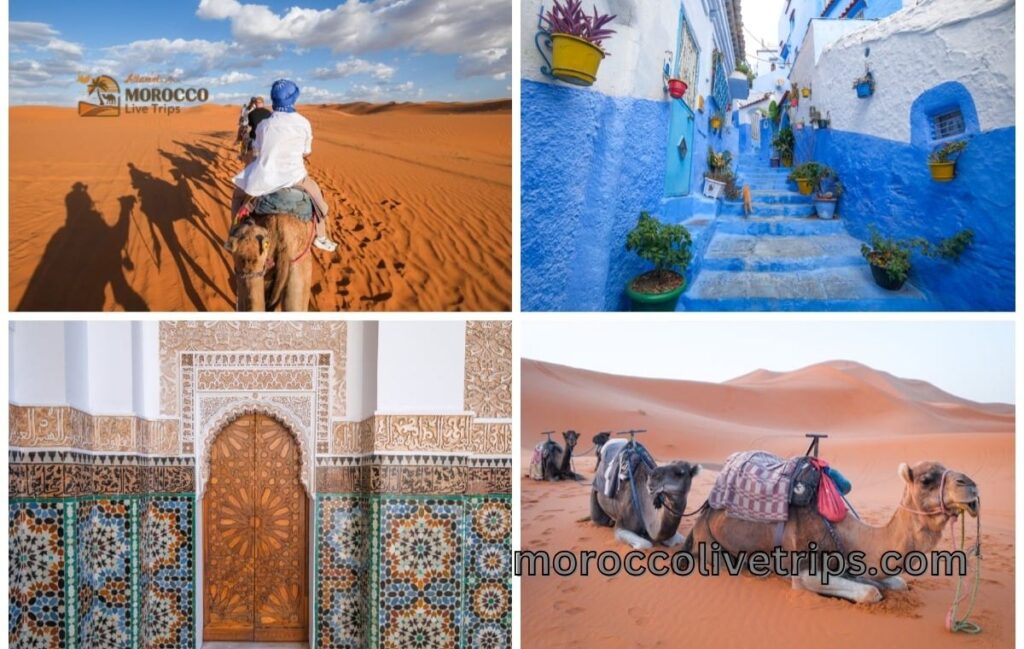
Imagine walking through ancient medinas, sipping mint tea in a traditional Moroccan riad, and watching the Sahara Desert glow gold at sunset – all in one trip. Morocco Heritage & Culture Tour is not just a vacation; it’s a life-changing experience that stays with you forever. At Morocco Live Trips, we take you deep into the heart of Morocco’s rich cultural heritage – from the UNESCO World Heritage Sites of Fes and Marrakech to the Berber villages of the Atlas Mountains. If you’re looking for an authentic Morocco travel experience in 2026, you’re in exactly the right place. Let’s explore, discover, and book your journey today. What Is a Morocco Heritage & Culture Tour? A Morocco Heritage & Culture Tour is a carefully designed travel experience that takes you through Morocco’s most historically rich cities, ancient ruins, and living cultural traditions. It covers iconic destinations like Fes, Marrakech, Chefchaouen, and the Sahara Desert, giving you a real taste of Moroccan history, architecture, food, music, and local lifestyle. Unlike regular sightseeing trips, a cultural tour of Morocco connects you with the soul of the country – its Berber heritage, Islamic art, colorful souks, and centuries-old medinas that have stood the test of time. Why Choose a Cultural & Heritage Tour in Morocco? Morocco is one of the few countries in the world where ancient history and modern life exist side by side. Every street, every building, and every face tells a story. From the medieval architecture of Fes Medina to the colorful blue streets of Chefchaouen, Morocco offers a cultural depth that very few destinations can match. It’s truly a must-visit heritage destination for travelers who want more than just a beach holiday. A Morocco cultural tour gives you the chance to experience things you simply cannot find anywhere else – hand-woven Berber carpets, traditional hammam rituals, Gnawa music performances, and authentic Moroccan cuisine cooked with generations-old recipes. You don’t just see Morocco, you feel it, taste it, and live it. That’s what makes it so special and so unforgettable. And the best part? Morocco is safe, welcoming, and incredibly affordable compared to other world-class cultural destinations. Whether you’re a solo traveler, a couple, or a family, a Morocco heritage and culture tour fits every travel style and budget. Once you experience it, you’ll understand why millions of travelers from around the world keep coming back. Top Destinations on a Morocco Heritage & Culture Tour Morocco is home to some of the world’s most breathtaking cultural landmarks and heritage sites. Each city has its own unique story, its own rhythm, and its own magic. Here are the top destinations you simply cannot miss on your Morocco heritage and culture tour. Fes — Morocco’s Spiritual & Cultural Capital Fes is the beating heart of Moroccan Islamic heritage and home to the world’s oldest university, Al-Qarawiyyin. Walking through the Fes el-Bali Medina – a UNESCO World Heritage Site – feels like stepping back 1,000 years in time, with its narrow winding alleys, ancient madrasas, leather tanneries, and handcraft souks. No Morocco cultural tour is truly complete without spending at least two days exploring this deeply spiritual and historically rich city. Marrakech — The Red City’s Living Heritage Marrakech is where Moroccan culture, architecture, and energy collide in the most spectacular way. From the iconic Jemaa el-Fna Square buzzing with storytellers, musicians, and street food to the breathtaking Bahia Palace and Koutoubia Mosque, every corner of this Red City is full of living heritage. It’s the perfect blend of traditional Moroccan lifestyle and modern travel comfort that keeps visitors coming back year after year. Meknes & Volubilis — The Forgotten Imperial City Meknes is one of Morocco’s four imperial cities and remains one of its most underrated cultural treasures. Its massive Bab Mansour gate, royal granaries, and medina are nothing short of extraordinary. Just a short drive away lies Volubilis, Morocco’s best-preserved Roman archaeological site and UNESCO World Heritage Site, where ancient mosaics and towering ruins tell the story of a civilization that flourished over 2,000 years ago. Chefchaouen — The Blue City and Rif Heritage Nestled in the Rif Mountains, Chefchaouen is one of the most photographed and culturally unique cities in the world. Its iconic blue-washed streets, Andalusian architecture, and Berber mountain culture create an atmosphere unlike anywhere else in Morocco. Beyond its stunning beauty, Chefchaouen is a gateway to Rif Berber traditions, local handicrafts, and authentic mountain lifestyle that tell a rich story of cultural fusion and heritage. Ouarzazate & Ait Ben Haddou — Kasbah Country Ouarzazate, known as the “Gateway to the Sahara”, is the heart of Morocco’s legendary kasbah country. The UNESCO-listed Ait Ben Haddou – an ancient fortified village rising from the desert – is one of the most iconic heritage landmarks in all of Africa, famously used as a filming location for Hollywood blockbusters. Together, these destinations offer a powerful window into southern Moroccan Berber architecture, desert culture, and centuries-old caravan history. Essaouira — Coastal & Gnaoua Heritage Essaouira is a charming coastal city where Moroccan, African, Berber, and European cultures have blended beautifully over centuries. Its UNESCO-listed medina, Portuguese ramparts, and vibrant blue fishing port make it one of Morocco’s most atmospheric heritage destinations. The city is also the world-famous home of Gnaoua music and culture, celebrated every year at the legendary Essaouira Gnaoua World Music Festival that draws visitors from across the globe. Historic Kasbahs, Medinas & Ancient Sites Morocco is a living museum of ancient civilizations, medieval architecture, and Islamic heritage. From labyrinthine medinas to towering desert kasbahs and Roman ruins, every site you visit on your Morocco heritage tour tells a powerful story of the past. These are the historic landmarks that make Morocco truly one of the world’s greatest cultural travel destinations. Most Famous Medinas in Morocco Morocco’s ancient medinas are among the most remarkable UNESCO World Heritage Sites in the entire world. The Fes el-Bali Medina, Marrakech Medina, Meknes Medina, and Tetouan Medina each offer a unique and deeply immersive