
Best Riad Marrakech Guide: Where to Stay for an Authentic Moroccan Experience (2026)
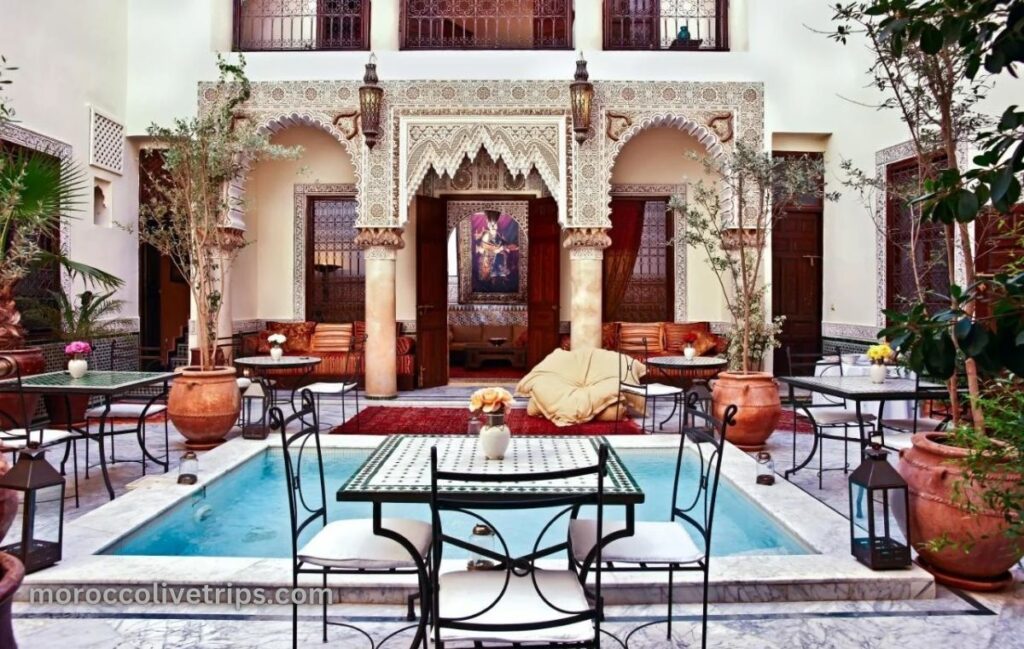
Marrakech is one of those cities that gets under your skin – the winding medina lanes, the smell of spices drifting from the souks, the call to prayer echoing across the rooftops at dawn. But where you sleep here changes everything about how you experience it. Skip the generic hotel and book yourself into a riad Marrakech instead – a traditional Moroccan courtyard house hidden behind an unassuming medina door – and suddenly you are not just visiting Marrakech, you are living it. Morocco Live Trips builds handpicked riad stays into every tour package we run, because we genuinely believe it is the only way to do this city properly. Read on and we will show you exactly why. What Is a Riad in Marrakech? A riad is a traditional Moroccan house built around a central interior courtyard, and staying in one is the single best accommodation decision most Marrakech visitors make. The word riad comes from the Arabic word for garden, and the defining feature of every riad is that private central space – sometimes a fountain, sometimes a garden, sometimes a small pool, always beautiful. From the outside, riads Marrakech reveal almost nothing. The street-facing walls are plain, the doors are often small and unmarked, and you would walk past dozens of them without a second glance. Step through the door and the contrast is extraordinary – noise and heat of the medina behind you, and ahead a quiet, cool, tiled courtyard that feels like an entirely different world. The History of Traditional Moroccan Riads Riads have been at the heart of Moroccan domestic architecture for centuries. The design was practical as much as beautiful – thick walls kept the heat out in summer and the warmth in during winter, while the central courtyard created airflow and gave the family a private outdoor space shielded from the street. All rooms opened inward toward the courtyard rather than outward toward the alley, which gave Moroccan families both privacy and a shared communal heart to the home. Many of the riads that exist in Marrakech today date back several hundred years. Some were family homes that fell into disrepair and were restored by European buyers in the 1990s and 2000s, turning them into boutique riad Marrakech guesthouses. Others have stayed in the same Moroccan family for generations. Either way, the bones of the building – the zellige tiles, the carved plaster, the cedar wood ceilings – are often genuinely old and genuinely remarkable. Unique Features of Riad Architecture Every traditional riad Marrakech shares certain architectural features that you will not find in any conventional hotel. The zellige tilework – intricate geometric mosaics cut by hand from fired clay – covers the lower walls and floors of the courtyard in patterns that can take master craftsmen months to complete. Above the tiles, carved plasterwork panels called tadelakt rise to the ceiling, and above those, hand-painted cedar wood beams carry the weight of the upper floors. The rooftop terrace is the other defining feature of any good riad. Most riads in Marrakech have a terrace where you can eat breakfast with a view across the medina rooftops, watch the sunset over the Koutoubia Mosque, or simply sit with a pot of mint tea and let the city wash over you from a comfortable distance. Why Choose a Riad Instead of a Hotel in Marrakech? This is a question worth answering properly, because the difference between a riad stay and a standard hotel stay in Marrakech is significant. It is not just about aesthetics or Instagram photographs, though both are excellent. It is about how the experience of the city feels from the inside. A hotel puts you at a distance from Marrakech. A riad puts you inside it. When you sleep in the medina, you wake up to the sounds of the city starting its day – bread sellers, motorbikes threading through the lanes, the neighbourhood mosque. You step outside your door and you are immediately in the oldest, most alive part of the city. That proximity to the real Marrakech is something no hotel on the edge of the new town can replicate. Authentic Moroccan Hospitality Moroccan hospitality is legendary, and nowhere does it show itself more naturally than in a well-run riad. Most riads are small – anywhere from four to twenty rooms – which means the staff know your name, remember your breakfast preferences, and genuinely want your stay to go well. It is the opposite of the anonymous, transactional experience of a big chain hotel. Arriving at a riad after a long journey and being met with a glass of Moroccan mint tea and a plate of dates and pastries is one of the small pleasures that seems like nothing and somehow means everything. It sets the tone for the whole stay. Beautiful Courtyards and Rooftop Views The Moroccan interior design of a well-restored riad is genuinely beautiful in a way that photographs cannot fully capture. The play of light in the courtyard changes through the day – bright and sharp at noon, golden and warm in the late afternoon, silver and cool after dark when lanterns light the tilework. Sitting in the courtyard of a good riad with a coffee in the morning is a perfectly complete travel moment. The rooftop views across the Marrakech Medina are equally special. You can see the Koutoubia Mosque minaret rising above the rooflines, the Atlas Mountains in the distance on clear winter days, and the whole tangled geography of the old city spread out below you in a way that helps it make sense. Cultural Experiences You Will Not Find in Hotels Staying in a traditional riad Marrakech is itself a cultural experience in a way that staying in a hotel simply is not. You are living inside a building type that has been central to Moroccan domestic life for centuries. Many riads offer hammam treatments in their private bathhouses, cooking classes in their kitchens, and guided medina walks