There are travel experiences you never forget, and a night in the Sahara Desert is one of them. As the sun sets over the golden dunes, the sky comes alive with countless stars and the breathtaking Milky Way, creating one of the world’s most unforgettable stargazing experiences. With Morocco Live Trips, you’ll enjoy an authentic overnight desert camp, traditional Berber hospitality, and a magical night under the stars. If you’re dreaming of the ultimate Sahara adventure, book your Morocco desert camping experience with us today.
Why Morocco Is Perfect for Desert Camping?
Morocco sits at a rare geographical crossroads – close enough to Europe to be easily accessible, yet home to one of the world’s great desert wildernesses just a few hours’ drive from its imperial cities. You can sleep in a Marrakech riad one night and wake up in the Sahara Desert the next evening. Very few countries on earth offer that kind of contrast in such a short distance.
The Moroccan desert landscape is also genuinely varied. You get towering golden dunes at Erg Chebbi, vast remote wilderness at Erg Chigaga, and dramatic rocky desert at Zagora – each with its own character, its own silence, and its own sky. The Sahara in Morocco is not a single experience. It is several, and every one of them is worth making the journey for.
What Makes the Sahara So Special?
The Sahara is the largest hot desert on earth, covering over nine million square kilometres across North Africa. The section of it that sits inside Morocco – particularly the great dune systems around Merzouga and M’Hamid El Ghizlane – represents some of the most dramatic desert scenery on the planet.
What makes it special for camping is the combination of elements that very few places can offer at once. Complete silence. Zero light pollution. Extreme temperature contrast between the heat of the day and the cool of the night. And a human history stretching back thousands of years – the Berber people and Amazigh culture that shaped this landscape have been living with and moving through this desert for longer than most civilisations have existed.
Why the Night Sky Is Exceptionally Clear?
The Moroccan Sahara is one of the darkest places in North Africa. The nearest large city to Merzouga is hundreds of kilometres away, which means the artificial light that washes out the night sky in most parts of the world simply does not exist here. The air at this altitude and in this dry climate is also exceptionally transparent – no humidity, no haze, no cloud cover for most of the year.
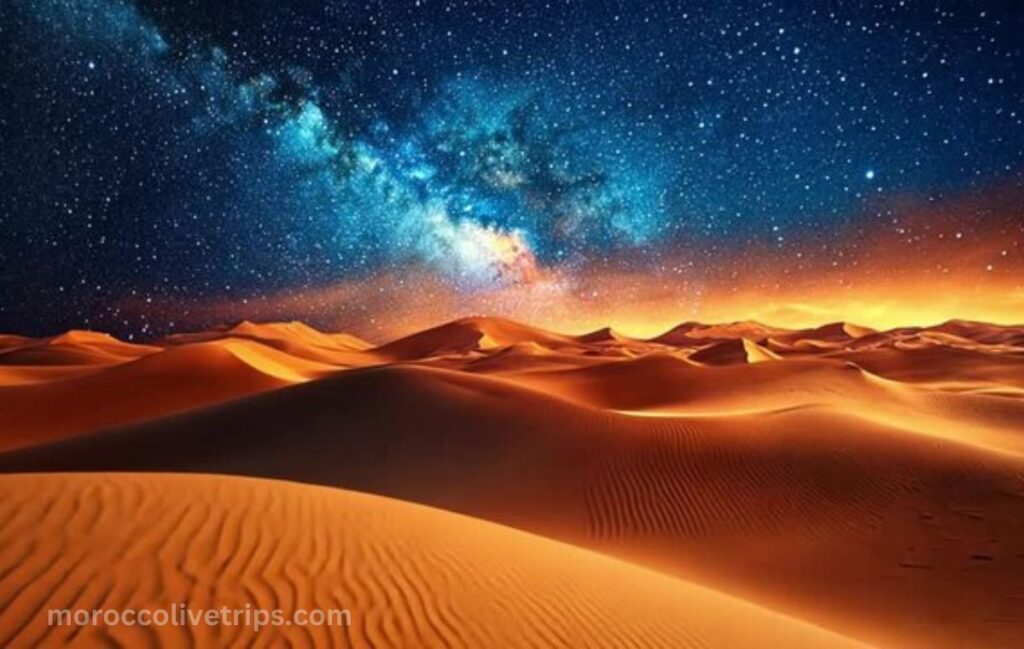
The result is stargazing conditions that professional astronomers actively seek out. On a clear night at Erg Chebbi, the naked eye can pick out thousands of individual stars. The Milky Way appears not as a faint smear but as a clearly structured band of light arching overhead. If you have only ever seen the night sky from a city or suburb, what you see in the Sahara will feel like discovering it for the first time.
Best Places for Desert Camping and Stargazing in Morocco
Not all desert locations in Morocco offer the same experience, and knowing the differences helps you choose the right one for your trip.
Merzouga and Erg Chebbi
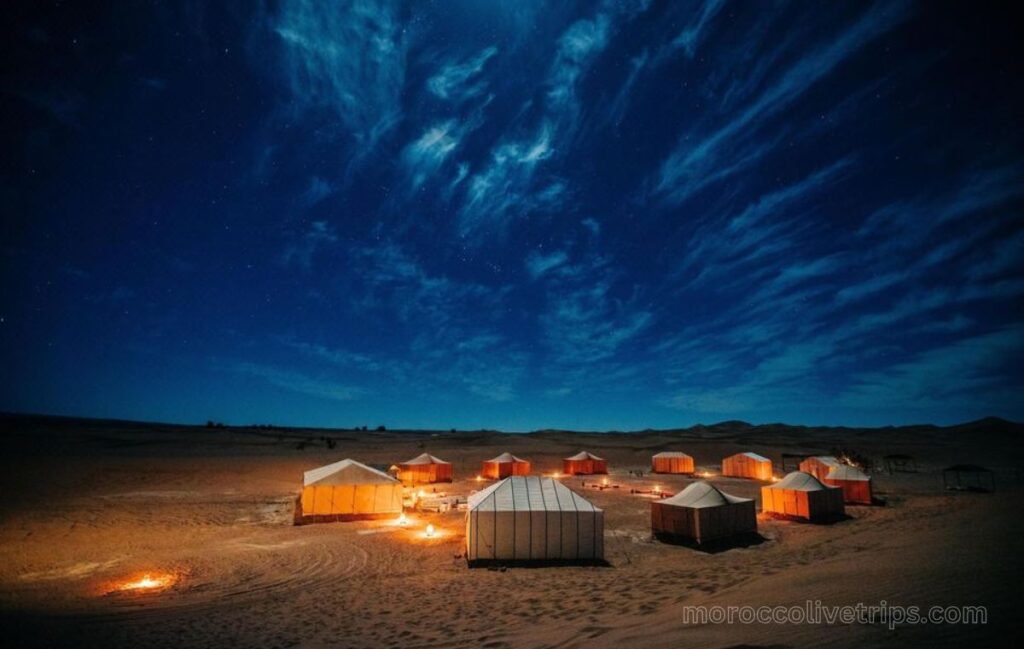
Erg Chebbi near Merzouga is Morocco’s most famous dune system and the most accessible Sahara desert camping location in the country. The dunes here rise to over 150 metres – tall enough to feel genuinely monumental – and the colour they turn at sunset, deep orange fading to dark gold, is one of the most photographed natural scenes in Africa.
Merzouga is reachable in a day’s drive from Fes or in two days from Marrakech, which makes it the natural choice for travellers doing a circuit of Morocco’s highlights. The infrastructure around Erg Chebbi is well developed – there are luxury camps, mid-range camps, and budget options – but move even a short distance into the dunes and all of that disappears completely. The silence and the stars are the same regardless of which camp you stay in.
Morocco Live Trips uses Erg Chebbi as the desert stop on our 7-day circuit tour, and it consistently produces the most memorable night of the entire trip for every group we bring here.
Erg Chigaga
Erg Chigaga near M’Hamid El Ghizlane is Morocco’s more remote desert alternative, and for travellers who want a deeper, more isolated Sahara experience it is the better choice. The dunes here are less visited, the silence is more complete, and the sense of genuine remoteness – of being truly far from everything – is significantly stronger than at Erg Chebbi.
Getting to Erg Chigaga requires either a long 4×4 drive across open desert or a two-day camel trek from M’Hamid, which adds a layer of genuine desert adventure that more accessible locations cannot match. The luxury glamping camps here are exceptional – small, private, designed for guests who want the full Sahara experience with genuine comfort.
Zagora Desert
The Zagora Desert in the Draa Valley offers a different character again – less dramatic dunes than Erg Chebbi, but a richer historical and cultural context. The Draa Valley was one of the great Saharan trade routes, and the ancient kasbahs and palm groves lining the valley floor give the landscape a layered, storied quality that pure dune deserts do not have.
Zagora is closer to Marrakech than Merzouga, which makes it a good option for travellers with limited time who still want a genuine overnight desert experience. The stargazing conditions here are excellent – the same dark skies, the same clear air, the same extraordinary night sky that defines the Moroccan Sahara.
What Happens During an Overnight Desert Camp?
Most people booking their first Morocco desert camping experience do not know exactly what to expect. Here is the full picture of what a well-run overnight camp involves from arrival to sunrise.
Camel Trek at Sunset
The desert camp experience begins not at the camp itself but at the edge of the dunes. Your camel caravan departs in the late afternoon – typically around 4pm to 5pm depending on the season – giving you time to ride into the dunes as the sun drops toward the horizon. The pace of a camel is slow and rhythmic, which turns out to be exactly right for the landscape. There is no rushing in the Sahara.
The light during this ride changes constantly and dramatically. The dunes shift from pale gold to deep orange to a rich burnt red as the sun descends, and the shadows stretch long and clean across the sand. Most guests stop talking entirely by this point. The desert does that to people.
Traditional Berber Welcome
Arriving at the camp on camelback as the last light fades is one of those travel moments that feels cinematic even while it is happening. Your hosts – who have prepared everything while you were travelling – meet you with Moroccan mint tea and dates, the traditional Moroccan hospitality greeting that signals you are welcome, safe, and about to be looked after.
The Berber camp staff at Morocco Live Trips properties are local people with deep roots in the desert. They know this landscape the way most people know their own street, and the warmth they bring to hosting guests is completely genuine. It is not a performance for tourists. It is how people in this part of the world have always welcomed travellers.
Moroccan Dinner Around the Campfire
As the temperature drops and the stars begin appearing above the dune ridgeline, dinner is served around a campfire. A typical desert camp dinner includes slow-cooked Moroccan tagine – lamb or chicken with vegetables and warm spices – fresh bread baked in the sand, Moroccan salads, and sweet mint tea throughout. At luxury camps, the spread is considerably more elaborate, but even at mid-range camps the food is freshly prepared and genuinely good.
Eating in this setting – warm firelight, cold air above, complete silence beyond the edge of the camp – is an experience that no restaurant ambience can replicate. The combination of good food, physical tiredness from the camel trek, and the extraordinary surroundings produces a particular kind of contentment that most guests describe as one of the most relaxed moments of their entire trip.
Live Berber Music
After dinner, the evening typically moves to traditional Berber music around the fire – hand drums, guembri bass instruments, and singing that has roots going back centuries in the nomadic culture of the Saharan Amazigh people. This is not background music. It is a genuine cultural moment, and guests who join in the drumming – which the musicians always encourage – find themselves in one of the most unexpected and joyful experiences of the whole Morocco trip.
Sleeping Under Thousands of Stars
When the music ends and the fire dies down, the camp becomes entirely silent. Above you, the sky is doing something extraordinary. At this point in the evening – typically between 10pm and midnight depending on the season – the Milky Way is fully visible, the stars are impossibly numerous, and the silence around you is so complete that you can hear your own heartbeat.
Sleeping arrangements at a quality Berber luxury camp include a proper bed inside a decorated canvas tent – not a sleeping bag on the ground. Thick blankets, pillows, and a small lantern are standard. The tents retain warmth well, which matters because desert nights are genuinely cold – temperatures can drop to 5°C even in spring and autumn. Luxury camps provide additional heating. At all camps, the bathroom facilities are located in a separate structure a short walk from the sleeping tents.
The Magic of Stargazing in the Sahara
Stargazing in Morocco is not an organised activity in the way it might be at a dedicated astronomy resort. In the Sahara, it is simply what happens when you look up. No telescope required, no expert guidance necessary – though both can be arranged. The sky does all the work.
Seeing the Milky Way
The Milky Way is visible from the Moroccan Sahara for most of the year on nights when the moon is not full or near-full. Its appearance varies by season – in winter it rises low on the horizon, while in summer it arches almost directly overhead – but it is consistently one of the most overwhelming things guests experience on an overnight desert camp.
Many guests describe seeing the Milky Way properly for the first time in the Sahara. People who grew up in cities have often never seen it at all with the naked eye. The moment of recognition – realising that the faint structured band of light overhead is your home galaxy, seen edge-on from within – is one of those genuine perspective-shifting experiences that travel occasionally produces.
Best Months for Stargazing
The best months for Morocco desert camping and stargazing are March to May and September to November. During these periods the weather is comfortable, the skies are consistently clear, and the temperatures at night – cold but not extreme – make sitting outside looking at the sky genuinely pleasant rather than an exercise in endurance.
New moon periods within these months are the ideal timing – the absence of moonlight allows the full depth of the night sky to show itself without any competing brightness. Morocco Live Trips can help you time your desert night to coincide with a new moon period if stargazing is your primary goal.
Winter desert camping – December to February – offers the clearest skies of the year and some extraordinary stargazing, but the nights are genuinely cold and require proper preparation. Summer camping at Erg Chebbi is possible but the daytime heat is extreme, which shifts the experience significantly.
Night Sky Photography Tips
The Moroccan Sahara offers extraordinary night sky photography opportunities, and even a standard smartphone camera on night mode can produce results that will surprise you. For DSLR and mirrorless users, the conditions here are exceptional.
For the best results, use a wide-angle lens with a maximum aperture of f/2.8 or wider. Set your ISO between 1600 and 6400 depending on your camera’s noise performance. Use a shutter speed between 15 and 25 seconds – longer than this and star trails begin to appear unless that is intentional. A sturdy lightweight tripod is essential and worth carrying from home. Shoot RAW format for maximum flexibility in post-processing. And position yourself with an interesting foreground – a dune ridge, a camel silhouette, your tent with a lantern inside – to give the star images a sense of place and scale.
Luxury Desert Camps vs Standard Camps
One of the most common questions Morocco Live Trips receives is about the difference between luxury and standard desert camps, and whether the upgrade is worth the additional cost.
Which Camp Is Right for You?
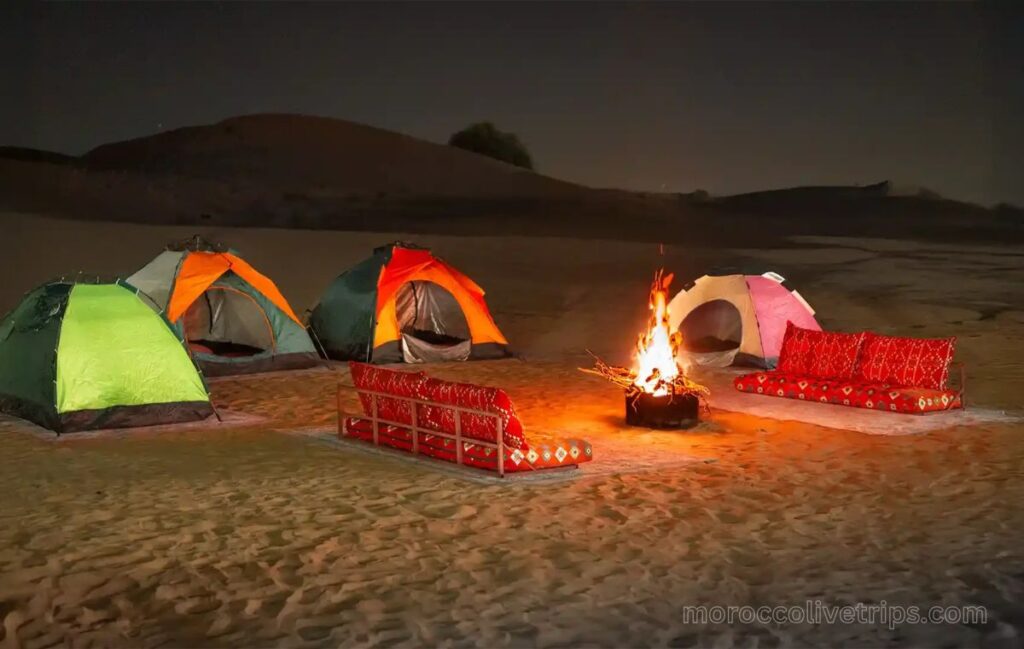
Standard camps offer basic but clean facilities – canvas sleeping tents with simple beds, shared bathroom structures, communal dinner around a campfire, and the same desert sky as any other camp. They are perfectly good for travellers who want the experience primarily for the desert and stargazing and are not particularly concerned with the comfort of the sleeping arrangements.
Luxury camps provide significantly better sleeping tents – larger, better decorated, with proper furniture and in some cases private en-suite bathrooms. The food is more elaborate, the ratio of staff to guests is higher, and the overall experience has a considered, boutique quality that makes the night feel genuinely special rather than merely memorable. For couples, honeymoons, or travellers who want the full experience without compromise, the luxury option is worth every penny.
Morocco Live Trips works exclusively with camps we have personally inspected and would be happy to stay in ourselves. We book the right camp for the right traveller – not the most expensive one regardless of fit.
Facilities You Can Expect
At a quality mid-range or luxury desert camp you can expect a proper bed with bedding inside a decorated Berber-style tent, electricity or solar-powered lighting, hot shower facilities, Western-style toilet facilities, Wi-Fi in the communal areas of some camps (though connectivity is limited and unreliable – consider it a bonus rather than a guarantee), a communal fire and seating area, dinner and breakfast included, and camel trekking to and from the camp.
What you will not have – and this is a feature, not a drawback – is any reminder of the world you left behind. No traffic noise, no news, no social media notifications worth checking. The desert enforces a particular kind of present-tense awareness that most guests find deeply restorative.
Solar energy is becoming an important solution for homes and businesses across Africa, helping turn abundant sunlight into practical electricity. With the right system, property owners can reduce their reliance on conventional electricity sources and improve energy efficiency. Those exploring renewable energy solutions can learn more about professional solar installation services for residential and commercial properties.
Best Time to Go Desert Camping in Morocco
Spring – March to May
Spring is the best overall season for Sahara camping. Daytime temperatures are warm and comfortable – typically 25°C to 32°C – and the nights are cool and clear. The desert landscape is at its most varied colour after the winter rains, and the stargazing conditions are excellent throughout the season.
Autumn – September to November
Autumn is the second-best season and very close to spring in overall quality. The intense summer heat has passed, the crowds are lighter than in spring, and the desert nights are comfortably cold rather than extreme. October in particular is an exceptional time to visit the Sahara.
Winter – December to February
Winter desert camping offers the clearest stargazing skies of the year and a genuinely dramatic cold-desert experience. Nights can drop to 0°C to 5°C, which requires proper warm clothing, but quality camps provide thick blankets and some offer tent heating. The silence and the sky in winter are extraordinary.
Summer – June to August
Summer is possible but demanding. Daytime temperatures at Erg Chebbi regularly exceed 42°C in July and August, which makes the middle of the day entirely unsuitable for outdoor activity. Experienced travellers who visit in summer time everything around the cooler hours – camel trek at 5am or after 6pm, full rest during the midday heat, stargazing from midnight onwards when the temperature drops.
What to Pack for a Sahara Camping Trip?
Clothing
Pack light layers that you can add or remove as the temperature changes through the day and night. A warm fleece or down jacket is essential for the desert night regardless of the season – the temperature drop between afternoon and midnight is dramatic. A lightweight scarf or shemagh serves multiple purposes – sun protection during the day, warmth at night, and sand protection during windy conditions.
Loose, lightweight trousers and long-sleeved shirts are more comfortable than shorts in the desert – they protect against sun, sand, and the surprising cold of the evening. Closed shoes or hiking boots are better than sandals for the camel trek and for walking on the dunes, which shifts under your feet in ways that flip-flops handle poorly.
Camera Equipment
Your phone camera will surprise you in the desert – the light conditions during golden hour and the night sky produce extraordinary results with modern smartphone cameras. For dedicated photographers, a DSLR or mirrorless camera with a wide-angle fast lens, a lightweight tripod, and extra batteries (cold temperatures drain batteries faster than usual) will give you results that you will be extremely glad you made the effort to bring.
Essentials
High-factor sunscreen – factor 50 for the desert daytime is not excessive. A reusable water bottle – hydration in the desert is non-negotiable, and Morocco Live Trips ensures water is available throughout all desert experiences. A small headtorch for navigating the camp after dark. Any personal medication, particularly antihistamines if you have dust or sand sensitivities. And cash in Moroccan dirhams for tips – the camp staff work hard and tips are both customary and genuinely appreciated.
>>Learn More on Morocco Wearing Guide……
Is Morocco Desert Camping Safe?
Safety Tips
Morocco desert camping is safe for international tourists, including solo travellers and families. The desert camps operate within well-established local knowledge systems – camp staff know the weather patterns, the safe routes through the dunes, and how to respond to any situation that arises. Morocco Live Trips provides comprehensive pre-trip information covering everything you need to know before your desert night.
The most important safety considerations are practical rather than security-related. Stay hydrated throughout the day. Do not walk into the dunes alone at night without a guide or a clear landmark – the dunes disorient in the dark in ways that are surprisingly effective. Follow your guide’s advice on camel trekking technique. And dress appropriately for the temperature drop – the most common discomfort guests experience is not danger but simply not having packed warmly enough for the night.
Weather Conditions
The primary weather consideration in the Moroccan desert is wind. Sandstorms are rare but do occur, particularly in spring. They are more disorienting than dangerous, and camp staff are experienced in managing them. Rain in the Sahara is infrequent and usually brief, though it can affect road conditions for vehicles entering and leaving the desert area.
Family-Friendly Experiences
The Sahara Desert is one of the most family-friendly major travel experiences Morocco offers. Children consistently love the camel trek, the campfire, the Berber music, and the stars – in roughly that order of immediate enthusiasm. Morocco Live Trips regularly runs overnight desert experiences with families including children as young as four, and we adjust the pace, timing, and camp arrangements to suit family groups on every booking.
>>Complete Safety Guide is here………
Frequently Asked Questions About Morocco Desert Camping
Is Morocco good for stargazing?
Morocco is one of the best stargazing destinations in the world for accessible dark-sky experiences. The Sahara Desert around Merzouga and M’Hamid El Ghizlane offers complete absence of light pollution, dry clear air, and consistently cloudless skies for most of the year. The Milky Way is visible to the naked eye on most clear nights.
Can you see the Milky Way in Morocco?
Yes – clearly and dramatically, on any clear night away from the moon’s light. The Saharan sky around Erg Chebbi is dark enough that the Milky Way’s structure – individual star clouds, dark lanes, the galactic core – is visible without any optical equipment at all.
How cold is the Morocco desert at night?
Desert nights in Morocco are genuinely cold year-round. In spring and autumn, temperatures typically drop to between 8°C and 15°C after midnight. In winter, temperatures can reach 0°C to 5°C. In summer, nights are more comfortable at around 18°C to 22°C. Quality desert camps provide warm bedding, and Morocco Live Trips advises all guests on appropriate clothing for the season.
What should I pack for desert camping?
The essentials are warm layers for the night, a good camera and tripod, high-factor sunscreen, a reusable water bottle, a headtorch, and cash for tips. A full packing list is provided to all Morocco Live Trips guests upon booking.
Is Sahara camping worth it?
Every guest Morocco Live Trips has ever taken to the desert has said yes – without exception. The combination of the camel trek, the Berber dinner, the music, and that sky on a clear night is an experience that most people describe as one of the most memorable of their lives.
How long should you stay in the Sahara?
One night is the standard and is enough to experience the full sunset, dinner, stargazing, and sunrise sequence. Two nights allows for a slower pace – more time in the dunes, a morning sandboard session, and a second evening under the stars that is usually even more relaxed and rewarding than the first.
Can beginners enjoy Morocco desert camping?
Absolutely. No prior camping experience is required. The camps handle everything, the camel trek is straightforward for most fitness levels, and Morocco Live Trips has welcomed guests of all ages and abilities on desert experiences. The only requirement is a willingness to look up.
Book Your Morocco Desert Camping Experience with Morocco Live Trips
A night in the Sahara Desert is the kind of experience that divides your life into before and after. The sky, the silence, the campfire, the warmth of Berber hospitality, and the extraordinary moment when you lie back in the dunes and the full Milky Way reveals itself above you – none of it can be fully described, and none of it leaves you entirely after you go home.
Morocco Live Trips runs private overnight desert camping and stargazing experiences as part of our guided tour packages from Marrakech, Fes, and Casablanca. We handle everything – private transport, the right camp for your group, camel trekking, dinner, and a sunrise you will never forget. Every experience we arrange has been personally vetted by our team. We only work with camps we would send our own families to.
With the 2030 FIFA World Cup bringing record visitor numbers to Morocco, the best desert camps are booking up months in advance. The window to secure your preferred dates is narrowing. Contact Morocco Live Trips today – tell us your travel dates, your group size, and whether you are dreaming of Erg Chebbi or the more remote Erg Chigaga, and we will build your perfect Sahara night from the ground up.
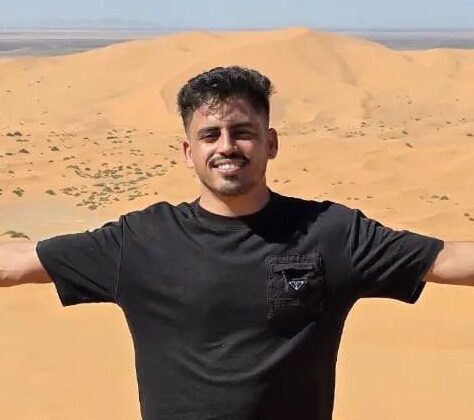
Moha BN is a Moroccan-born licensed tour guide with 10+ years of experience organizing cultural tours, Sahara Desert trips, and private itineraries across Morocco. He shares local travel insights, safety advice, and budget tips through Morocco Live Trips.