
Taghazout Morocco Tour: Surf, Beaches & Coastal Adventures
Ask Moha how he plans a tour, and he'll tell you the same thing every time: "The itinerary is a starting point, not a script. If the group wants to chase something else, we chase it." That's how he's worked for years on the desert routes - swapping in a salt mine detour here, a hidden gorge there, based on what the people in the car actually want to see rather than what a brochure says they should see. It's the same mindset he brings to the coast, just applied to a completely different kind of trip.
Because Taghazout isn't the desert. It's not dunes, camels, or Berber camps under the stars. It's the Atlantic - cold water, long waves, small whitewashed streets, and a pace of life that runs on tide charts instead of tour schedules. If you're adding it to a Morocco itinerary, it's worth understanding what you're actually walking into, because it's a genuinely different experience from the rest of the country.
What Taghazout Actually Is?
Thirty or forty years ago, Taghazout was a quiet fishing village on Morocco's southern Atlantic coast, the kind of place that shows up as a dot on the map and nothing more. That changed slowly through the 1960s and 70s, when traveling surfers chasing Atlantic swells worked their way down the coast and found long, peeling right-hand point breaks that barely anyone else knew about. Word got around, the way it always does among surfers - quietly, among people who knew exactly what they were looking for.
Today Taghazout is one of the best-known surf destinations in Morocco, arguably in Africa. Surf camps line the hillsides, small cafés serve banana pancakes and mint tea in the same breath, and the lineup at Anchor Point on a good day pulls in surfers from a dozen different countries. But underneath the growth, the town hasn't completely lost what made it worth finding in the first place. Fishing boats still get pulled up on the sand every morning. Daily life still runs on the tide and the forecast, not on tourist timetables. It's busier and louder than it was twenty years ago, but the Atlantic doesn't care about any of that - it keeps sending swell, and the town keeps showing up for it.
Geographically, Taghazout sits about half an hour north of Agadir along the coast road, and roughly three hours by road from Marrakech. That distance matters when you're planning a trip - Taghazout works well either as a standalone few days focused entirely on the coast, or as a deliberate contrast tacked onto a longer Morocco itinerary that also covers Marrakech, the Atlas Mountains, or the desert.
For a broader introduction to Morocco’s coastal and inland routes, explore our Morocco destinations.
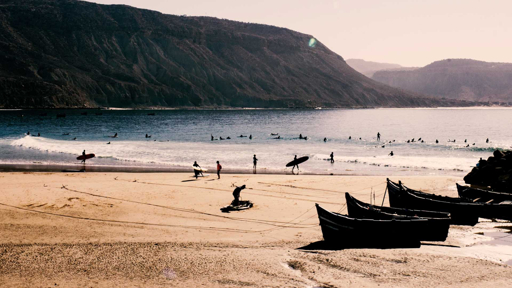
Taghazout combines surf culture, fishing-village character and long Atlantic views.
Who Taghazout Is Actually For?
This is worth being honest about upfront, because a lot of general Morocco content lumps every destination together as if they're interchangeable stops on the same kind of trip. They're not. If your mental image of Morocco is camel treks and dunes at sunset, that's a real and worthwhile trip - but it's the Sahara, not the coast, and it's a different part of the country with a different feel entirely.
Taghazout is for people who want:
- Time in or near the ocean, whether that means actually surfing or just watching people surf from a beachfront café
- A slower pace than Marrakech's souks and squares, without giving up good food and lively evenings
- A genuine surf culture, not a staged "surf lesson for tourists" experience - real surf schools, real locals in the lineup, real swell forecasts driving the day
- A coastal counterpoint to a desert or mountain leg of a longer trip
Taghazout is less suited to travelers who specifically want:
- The classic imperial cities experience, including Fes, Meknes and historic medinas
- The dramatic landscape of the Sahara with giant dunes and camel treks
- A traditional Moroccan medina with souks, tanneries and historic monuments
Those are worth visiting, just not what Taghazout offers.
If giant dunes are your priority, compare a coastal stay with a Marrakech to Merzouga desert tour. If you want mountain scenery, see our Atlas Mountains trip from Marrakech.
The Surf, In Plain Terms
You don't need any surfing experience to enjoy a few days in Taghazout, but it genuinely helps to understand the lineup before you get there, because the spots vary a lot in difficulty, and picking the wrong one on your first day can turn an exciting first surf into a frustrating one.
For Complete Beginners
The gentler, sandy-bottomed beach breaks are where you want to start. Spots like Panoramas and Crocodile Beach produce soft, forgiving waves that are far more comfortable to fall on than the area's rockier reef breaks, and they're wide enough that a first-timer isn't constantly getting in the way of more experienced surfers. Devil's Rock is another friendly option - a sandy-bottomed break with an easy paddle-out, well suited to someone catching their first whitewater wave.
For Intermediate Surfers
Hash Point, a right-hand reef break essentially in the middle of town, and Banana Point offer playful, manageable waves without the intimidation factor of the area's heavier breaks. This is usually the stage where surfers start working on flow and positioning rather than just staying upright.
For Experienced Surfers
Taghazout's reputation rests on Anchor Point - long, peeling right-handers often described as the "Holy Grail" of Morocco's point breaks, the wave that put this stretch of coast on the international surf map in the first place. Killers is the spot for surfers chasing something heavier still: a longer paddle out to a fast, barreling wave that isn't for anyone still finding their feet.
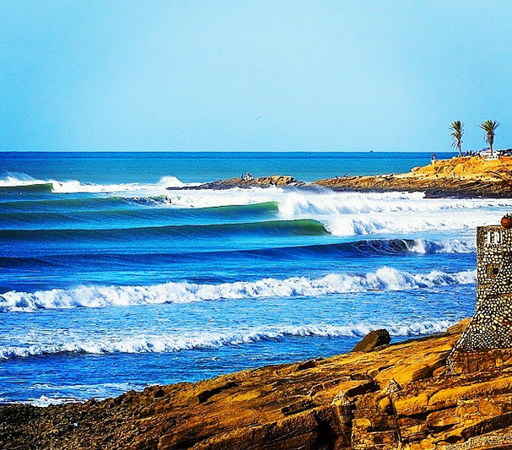
The Lesser-Known Breaks
There are dozens of smaller, lesser-known breaks scattered along the coast between Taghazout and neighboring villages, each with its own personality - some exposed and inconsistent, some sheltered and reliable depending on tide and swell direction. Part of what a local guide brings to a trip here isn't just knowing these spots exist, but knowing which one actually suits the day's conditions and the group's skill level, rather than sending everyone to the same beach regardless of what the ocean is doing.
When to Go?
Surf season along this stretch of Morocco's Atlantic coast runs roughly from October through March, driven by consistent winter swells rolling down from North Atlantic storm systems. This is when the waves are at their most reliable, and when serious surfers tend to plan their trips.
That said, Taghazout isn't a one-season destination. Summer brings calmer water, smaller and more forgiving waves, and a noticeably more relaxed beach-town feel - better suited to beginners, families, or anyone who wants to be near the ocean without chasing serious swell. Spring and autumn sit somewhere in between: still surfable, generally warmer than peak winter, without summer's flatter conditions.
Water temperature shifts noticeably across the year, ranging roughly between 16–22°C depending on season. In winter, a 3/2mm or light 4/3mm wetsuit keeps most people comfortable for a full session. By summer, you can often get away with boardshorts or the lightest wetsuit you own. It's worth checking current conditions close to your travel dates rather than assuming - Atlantic swell can be unpredictable week to week even within the "right" season.
Beyond the Waves
It's easy to talk about Taghazout purely in terms of surf breaks and swell charts, but that undersells the town. The streets are narrow and whitewashed, oceanfront cafés serve fresh grilled fish and slow-cooked tagine within sight of the water, and the sunsets over the Atlantic are genuinely worth setting aside an evening for, whether or not you've picked up a board that day.
For travelers who want a change of pace mid-trip, the surrounding area offers some worthwhile detours. Paradise Valley, a short drive inland, is a palm-lined gorge with natural rock pools that make for a good half-day away from the beach. Imsouane, further down the coast, is another surf town in its own right - quieter than Taghazout, known for one of the longest right-hand waves in Morocco, and a favorite day-trip for surfers looking for a change of scenery without leaving the coast entirely.
Yoga has become a fixture of the Taghazout scene too - many surf camps in the area pair morning sessions in the water with evening yoga on a rooftop terrace, which for a lot of visitors ends up being as much a part of the trip as the surfing itself.
Agadir, just half an hour south, offers a larger city experience with a modern marina, a large beach promenade, and a rebuilt medina worth a quick visit if you have extra time. The Souk El Had market in Agadir is one of the largest in the region - worth visiting if you want traditional Moroccan shopping without the intensity of Marrakech.
Essaouira, about three hours north along the coast, is another coastal gem worth mentioning. It's more historic - a UNESCO-listed medina with Portuguese fortifications - and offers a windier, more dramatic coastal experience.
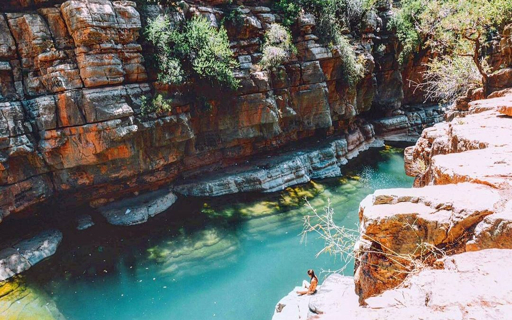
Paradise Valley offers a natural inland change of pace from Taghazout’s coast.
Getting There and Getting Around
By Air
Most visitors fly into either Marrakech or Agadir.
Agadir is the closer option by a wide margin - Taghazout sits roughly half an hour up the coast road from Agadir's airport, making it a straightforward, short transfer.
Marrakech is the more common entry point for travelers combining Taghazout with the rest of a Morocco itinerary, but it's a longer journey - around three hours by road - so it's worth factoring that travel time into how you structure the trip, rather than trying to squeeze Taghazout in as an afternoon add-on.
On the Ground
Within Taghazout itself, the village is small and walkable. Most surf spots, cafés, and accommodation sit within easy reach of each other on foot, though a car or private transfer becomes useful again if you're planning day trips out to Paradise Valley, Imsouane, or back toward Agadir.
Private Transfer vs. Rental Car
Private transfer is the most straightforward option - no navigation, no parking hassles, and the driver knows the best routes. Rental car gives you more flexibility for day trips but requires navigating coastal roads and finding parking in town, which can be tight during peak season.
Planning tip
Do not try to squeeze Taghazout into a short Marrakech schedule as a casual afternoon add-on. It works better as a deliberate coastal stay or a properly planned transfer with enough time to relax.
What's Included vs. What's Not
Typically Included in a Taghazout Tour Package
- Private transportation from Marrakech or Agadir
- Accommodation in Taghazout, including surf camp, riad, or hotel
- Daily breakfast
- Surf equipment rental, including board and wetsuit
- Surf lessons with certified instructors
- Local guide services
Typically Not Included
- Flights
- Travel insurance
- Lunches and dinners
- Alcoholic drinks
- Personal expenses and tips
- Additional activities, including yoga classes, quad biking and Paradise Valley entrance
Optional Add-Ons
- Extended surf lessons or private coaching
- Yoga sessions
Day Trips
- Paradise Valley day trip
- Imsouane day trip
- Agadir city tour
Extra Services
- Photography services
- Private transport upgrades
- Custom coastal itinerary planning
Accommodation Options in Taghazout
Surf Camps
The most common choice for travelers. These range from budget-friendly dorm-style hostels to mid-range private rooms. Most include surf lessons, equipment, and meals. Popular options include Surf Maroc, Amouage, and Hash Point Surf Camp.
Riads and Guesthouses
Traditional Moroccan accommodation with a coastal twist. Smaller, more personal, often with rooftop terraces overlooking the ocean. Good for couples or travelers wanting a quieter stay.
Boutique Hotels
A newer addition to Taghazout's scene. Places like Hyatt Regency Taghazout offer a more polished experience with pool access and spa facilities, though they're further from the town's center.
Budget Hostels
For solo travelers and backpackers - basic but social, with shared kitchens and common areas where you'll meet other travelers.
Moha's Take
"People ask me all the time if Taghazout is 'better' than the desert, or the mountains, or Marrakech. Wrong question. They're not the same trip, and they're not competing with each other. If someone tells me they want three days sitting in the water and eating fish every night, I tell them straight - do that first, properly, and see the desert after if you have time. Don't try to cram both into two days each. You won't actually enjoy either one if you're rushing between them. Taghazout rewards slowing down. That's kind of the whole point of it."
"Another thing I always tell people - don't judge Taghazout by the photos you see online. The Instagram shots show perfect sunset sessions and glassy waves. What they don't show is the wind that sometimes blows for three days straight, or the winter morning when the air is cold enough to make you question your life choices while pulling on a wetsuit. That's not a downside - it's just real. And when the conditions line up, the payoff is worth all of it."
A Sample 4-Day Taghazout Itinerary
Arrival and Orientation
Transfer from Marrakech or Agadir. Settle into accommodation, walk through the village to get your bearings. Evening meal at a local seafood restaurant. Sunset view from the cliffs overlooking Anchor Point.
Surf Introduction
Morning surf lesson at Panoramas or Crocodile Beach. Lunch at a local café. Afternoon free for relaxing or a second surf session. Evening yoga class if available.
Intermediate Surf or Day Trip
Depending on conditions and skill level - either another surf session at a different break, or a day trip to Paradise Valley for rock pools and lunch. Evening exploring the town's small shops and cafés.
Final Surf and Departure
Morning surf session. Transfer to Marrakech or Agadir for onward travel.
Safety Considerations
In the Water
- Always check the surf forecast and tides
- Pay attention to local advice about currents and rips
- Don't surf alone at remote breaks
- Beginners should stick to designated beach breaks with lifeguards
- Be aware of reef breaks - sharp rocks at low tide can cause serious injuries
On Land
- Taghazout is safe, but basic precautions apply
- Lock your accommodation and secure valuables
- Be respectful of local customs and dress modestly away from the beach
- The sun is strong year-round - use reef-safe sunscreen
Health
- Moroccan healthcare is good in major cities but limited in Taghazout
- Bring any prescription medications you need
- Travel insurance is strongly recommended
- Stay hydrated - you'll be more active than you think
How Morocco Live Trips Approaches a Taghazout Trip
This is where the "starting point, not a script" philosophy Moha applies to his desert routes carries over directly. Rather than locking every traveler into an identical fixed-spot, fixed-pace itinerary regardless of who they are, the day gets shaped around two things: current conditions and the group's actual skill level. A complete beginner and an experienced surfer chasing Anchor Point shouldn't be pointed at the same beach on the same morning, and a private, locally guided approach means that decision gets made based on what the ocean is actually doing that day - not a printed schedule written months in advance.
The same flexibility applies to everything around the surfing itself. Some travelers want three straight days in the water and nothing else. Others want one solid surf session, a slower afternoon in a café watching the swell, and a half-day detour to Paradise Valley. Both are reasonable ways to spend time in Taghazout, and a guide who's actually paying attention to the group - rather than running the same fixed package for everyone - is the difference between a trip that fits you and one that fits a brochure.
If you're already planning a broader Morocco trip and wondering whether to add a coastal leg, that's worth talking through directly rather than guessing - the right balance between Taghazout, Marrakech, and the desert really does depend on how many days you have and what you're actually looking for from the trip.
Planning a Taghazout Trip: What People Usually Ask
Do I need to already know how to surf?
No. Complete beginners are well suited to the gentler beach breaks around Taghazout - Panoramas and Crocodile Beach in particular are forgiving enough for a first-ever surf session. You don't need experience to get in the water here; you just need the right spot for your level.
Is Taghazout worth visiting if I have no interest in surfing at all?
Yes. Plenty of visitors come purely for the beaches, the food, the slower pace, and the evenings watching the sun go down over the Atlantic. Surfing is the town's reputation, but it's not a requirement for enjoying it.
How far is Taghazout from Marrakech, realistically?
Around three hours by road. It's a comfortable addition to a longer Morocco itinerary, but it's genuinely a half-day of travel each way, so it's worth planning for rather than treating as a quick side trip.
What's the best time of year to visit?
October through March for the most consistent, serious surf conditions. Summer for calmer water, smaller waves, and a more relaxed beach-focused trip - better suited to beginners or anyone prioritizing the ocean over serious surfing.
Can Taghazout be combined with a desert or Marrakech trip in one visit?
Yes, and it's a common way to structure a Morocco itinerary - but the coast and the desert are genuinely different environments and paces, so it's worth giving each leg enough time rather than rushing between them in the same short window.
What should I actually pack for a Taghazout surf trip?
A wetsuit appropriate to the season, reef-safe sunscreen, a hat for the beach and a rash guard. Remember to bring a second swimsuit so you're not putting on a cold, wet one the next morning.
How much does a Taghazout surf trip cost?
Budget around €30-€80 per day for basic accommodation and surf rental. Mid-range camps with meals and lessons run €80-€150 per day. Luxury packages with private coaching and boutique hotels start around €200+ per day. Private transfers from Marrakech add roughly €150-€250 each way depending on group size.
Is Taghazout safe?
Taghazout is safe and welcoming. Basic travel precautions apply - keep valuables secure, be aware of your surroundings, and respect local customs. The surf community is tight-knit, and locals are used to visitors.
Can I bring my own surfboard?
Yes. Most airlines allow surfboards as checked luggage, though fees vary. If you'd rather travel light, rental quality in Taghazout is good - plenty of shops have boards for all levels.
Do I need to speak French or Arabic?
Not at all. English is widely spoken in Taghazout, particularly in surf camps, restaurants, and shops. Learning a few Arabic or French phrases is appreciated but not required.
What's the food like in Taghazout?
Fresh fish is the highlight - caught daily and grilled simply with lemon and olive oil. Tagines are available everywhere too. The local pancake spots serve banana pancakes and smoothie bowls catering to surfers, alongside traditional mint tea and Moroccan pastries.
What happens if the surf is flat?
It happens occasionally. On flat days, travelers shift focus - Paradise Valley rock pools, Agadir city exploring, Imsouane day trips, or simply relaxing on the beach. A flexible itinerary built around a local guide means you're never stuck with nothing to do.
Is Taghazout wheelchair accessible?
Limited. The town's streets are narrow, uneven, and often stepped. Beach access requires navigating sand. Some newer hotels near the main road have better accessibility, but overall Taghazout presents challenges for travelers with mobility issues.
Thinking About the Coast Instead of the Desert?
If the ocean is calling louder than the dunes right now, get in touch and tell Moha what kind of trip you're actually picturing—how many days you have, what your surf experience looks like, whether you want Taghazout on its own or as part of a longer Morocco route. The itinerary gets built around that conversation, not the other way around.
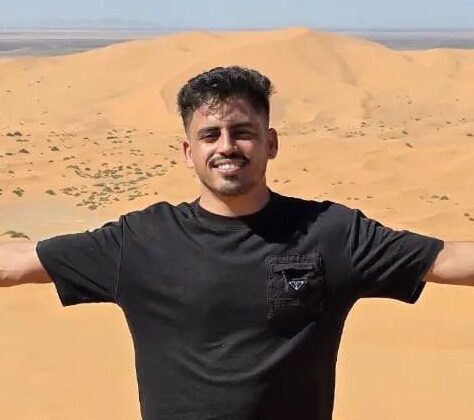
Moha BN is a Moroccan-born licensed tour guide with 10+ years of experience organizing cultural tours, Sahara Desert trips, and private itineraries across Morocco. He shares local travel insights, safety advice, and budget tips through Morocco Live Trips.