Best Morocco Tour Company for Americans in 2026 – The Complete US Traveler’s Guide

If you are an American planning a trip to Morocco, you already know the excitement – the Sahara Desert, ancient medinas, spice markets, and those blue streets of Chefchaouen you have seen on every travel feed. But you also have very specific questions that generic Morocco travel guides never answer properly. Do I need a visa? Can I pay in USD? Will I have an English-speaking guide the whole time? What happens if something goes wrong – is there someone I can call from my time zone? This guide was written specifically for American travelers. It cuts through the generic advice and tells you exactly what you need to know – from US flights to Morocco all the way to why Morocco Live Trips is the top-rated tour company serving Americans in 2026. American passport holders do not need a visa for Morocco. You can stay up to 90 days, pay in USD, and travel comfortably with a licensed local tour company that speaks fluent English. Morocco Live Trips specializes in exactly this. Can Americans Travel to Morocco Easily? (Yes – Here is What You Need to Know) Morocco is one of the easiest countries in North Africa for Americans to visit. There is no complicated visa process, no confusing entry requirements, and the country is very accustomed to welcoming US tourists. Visa Requirements for US Citizens American passport holders get visa-free entry into Morocco for up to 90 days for tourism or business. You do not need to apply for anything in advance. What you do need to bring: That is it. No embassy appointment, no forms to fill out, no advance visa fee. You land in Morocco, clear immigration in about 15 minutes, and your adventure begins. Pro tip: If you book your full trip with Morocco Live Trips, your tour confirmation letter serves as all the proof of accommodation and purpose-of-visit documentation you need at the border. US State Department Travel Advisory As of 2026, Morocco carries a Level 2 travel advisory from the US Department of State – the same level as many popular European destinations like France and Germany. This means exercise normal precautions. Morocco is considered safe for American tourists, especially when traveling with a licensed local operator. Morocco Live Trips is a fully licensed tour operator registered with the Moroccan Ministry of Tourism, which gives American travelers an extra layer of legal protection and accountability throughout their trip. Getting to Morocco from the USA – Flights, Airports, and Timing Flying from the US to Morocco is more straightforward than most Americans expect. Here is what you need to plan your arrival. Direct and Connecting Flights from the USA The only direct nonstop flight from the USA to Morocco is operated by Royal Air Maroc from New York JFK to Casablanca (CMN), with a flight time of around 7 hours. This is the fastest and most convenient option for East Coast travelers. If you are flying from other US cities, you will connect through a European hub. These are the most popular routes: Airlines most Americans use: Royal Air Maroc, Delta, United, Air France, Iberia, and British Airways are the top choices depending on your departure city. Which Airport Should You Fly Into? Morocco has two main international arrival points for American travelers: Best Time to Visit Morocco from the USA Why Americans Need a Different Kind of Tour Company Here is something the generic Morocco travel guides do not tell you. Booking with the wrong operator causes predictable, avoidable problems – and American travelers run into these more than most because of specific expectations around communication, logistics, and accountability. The Problems Americans Face with Generic Morocco Tour Companies What an American-Friendly Morocco Tour Company Looks Like Morocco Live Trips – The Best Morocco Tour Company for Americans in 2026 After evaluating every major tour operator serving American travelers in Morocco, Morocco Live Trips stands out clearly as the top choice. Here is why this matters and what makes them different. Who They Are Morocco Live Trips is a fully licensed, locally owned tour company based in Marrakech with over 10 years of experience. Their entire team is Moroccan-born, which means they bring genuine insider knowledge – not scripted tour narration. They have guided thousands of American travelers through Marrakech, the Sahara Desert, the Atlas Mountains, imperial cities, and the Atlantic coast. They are registered with the Moroccan Ministry of Tourism and carry all required operating licenses, which gives American travelers a legally protected booking and full accountability throughout the trip. Why American Travelers Specifically Choose Morocco Live Trips What Morocco Live Trips Offers American Travelers Private custom tours: 100% tailored to your dates, interests, budget, and travel style. You travel with your own dedicated driver-guide – no group dynamic, no strangers, no waiting. Popular American itineraries include: All private tours include: Morocco Live Trips vs. International Companies – The American Traveler’s View Company Best For English Support USD Pricing US Reviews Verdict Morocco Live Trips #1 for Americans Yes – native USD, cards 4.9/5 Best Intrepid Travel Budget groups Yes USD, cards 4.7/5 Good G Adventures Budget groups Yes USD, cards 4.6/5 Good Nomadic Tours Small groups Yes USD 4.5/5 Decent Viator operators Day trips only Varies USD 4.3/5 Limited The key difference is simple: large international operators like Intrepid and G Adventures are designed for group travel and fixed departure dates. Morocco Live Trips gives Americans a private, fully flexible experience built around their specific schedule, preferences, and expectations. For most American travelers – especially those visiting Morocco for the first time – this difference is transformative. Practical Guide for American Travelers – Money, Safety, and Culture Currency and Payments Morocco’s official currency is the Moroccan Dirham (MAD). As of 2026, 1 USD ≈ 10 MAD. Morocco Live Trips quotes all tours in USD so you always know exactly what you are paying. Is Morocco Safe for Americans? Yes. Morocco is one of the safest countries in Africa for American tourists.
Morocco Honeymoon Tour – The Complete 2026 Romantic Guide for Couples

A Morocco honeymoon tour is one of the most romantic travel experiences you can choose. Imagine watching the sunset over the Sahara Desert, enjoying a private candlelit dinner in a beautiful traditional riad, and riding camels together under a sky full of stars. The best part is that Morocco offers all of this at a much better value than destinations like the Maldives or Santorini. At Morocco Live Trips, we help couples plan private honeymoon tours in Morocco every week. This complete 2026 guide covers the best places to visit, ideal trip costs, and why Morocco honeymoon packages are perfect for couples looking for romance, comfort, and unforgettable memories. Why Morocco Is the Perfect Honeymoon Destination? Morocco brings together imperial cities, the golden dunes of the Sahara, charming Atlantic coastal towns, and peaceful mountain valleys in one trip. For couples, this means every few days feel different – romantic riads, desert sunsets, blue streets, and ocean views – all in one unforgettable Morocco honeymoon itinerary. Morocco vs Maldives, Santorini & Bali – Honest Comparison Factor Morocco Maldives Santorini Bali Average honeymoon cost $2,000 – $5,000 $8,000 – $20,000 $6,000 – $15,000 $3,000 – $8,000 Cultural richness Outstanding Minimal Moderate Good Landscape variety Desert, mountains, coast, medinas Ocean only Island cliffs Temples, rice fields Unique romantic experiences Sahara, riads, hammams, rose valleys Overwater villas Sunsets, wine Spa, temples Flight from USA/Europe 4 – 8 hours 10 – 16 hours 3 – 10 hours 15 – 20 hours Best for Adventure + luxury couples Pure relaxation Iconic views Spiritual + spa What Makes Morocco Unique for Honeymooners Morocco offers romantic experiences that exist nowhere else on earth – sleeping under the Sahara stars in a private luxury tent, walking empty blue streets at dawn in Chefchaouen, and sharing a traditional hammam ritual in a centuries-old riad. The country’s extraordinary sensory richness – the smell of orange blossom, the sound of the call to prayer echoing at sunset, the taste of a slow-cooked tagine by firelight – creates a honeymoon atmosphere that passive beach destinations simply cannot match. Best Romantic Destinations in Morocco for Honeymooners Marrakech – The Red City Romance Marrakech is Morocco’s most romantic city for couples who want intensity, beauty, and luxury in one place. A private riad with a rooftop plunge pool, a guided sunrise walk through the empty medina before crowds arrive, dinner on a candlelit terrace overlooking the Djemaa el-Fna square – Marrakech delivers romance at every hour of the day. The Majorelle Garden in soft morning light, a couples hammam at Les Bains de Marrakech, and a private cooking class in a traditional kitchen are all within walking distance of the city’s finest honeymoon riads. Sahara Desert – The Most Romantic Night on Earth No honeymoon experience in the world competes with a private Sahara Desert camp under the stars. The silence is complete. The Milky Way is visible from horizon to horizon with zero light pollution. Your private luxury tent has a proper bed, ensuite bathroom, and a terrace facing the dunes for the sunrise. A private camel trek at sunset leads you into Erg Chebbi as the sand turns from orange to deep red – your guide discreetly disappears at camp, leaving you both completely alone in the most dramatic natural setting on earth. Chefchaouen – The Blue City for Couples Chefchaouen is the most photographed romantic destination in Morocco – and in person it exceeds every photograph. An overnight stay transforms the experience – the blue medina at dawn, when day visitors have not yet arrived, belongs entirely to couples who stayed the night. The Plaza Uta el-Hammam square for morning coffee under the cedar trees, the Spanish Mosque viewpoint for golden hour photography, and a rooftop dinner as the blue streets change color in the fading light – two days in Chefchaouen is never enough. Essaouira – Sunset Walks on the Atlantic Coast Essaouira is Morocco’s most effortlessly romantic coastal city – a UNESCO World Heritage Atlantic port where the ocean wind keeps temperatures cool, the medina is calm and pressure-free, and the Corniche beach stretches wide and almost empty at sunset. Fresh seafood grilled at the fishing port, a walk along the 18th century ramparts as the Atlantic catches the last light, and a boutique riad with ocean views make Essaouira the ideal final stop on any Morocco honeymoon itinerary. The Gnawa music drifting from medina doorways as you walk back from dinner is a soundtrack no other coastal city offers. Rose Valley & Dades Valley – Morocco’s Most Romantic Landscape The Dades Valley – known as the Valley of a Thousand Kasbahs – stretches through the High Atlas foothills in a landscape of extraordinary beauty: pink earthen fortresses rising above terraced rose gardens, ancient irrigation channels, and almond orchards. In May the Damask rose harvest fills the valley with fragrance and color – the most romantic natural spectacle in Morocco and the backdrop for the annual Rose Festival in Kelaat M’Gouna. The winding Dades Gorge road above the valley floor at sunset is one of Morocco’s most cinematic drives for couples. Oualidia – Morocco’s Hidden Coastal Gem for Couples Oualidia is Morocco’s best-kept romantic secret – a sheltered Atlantic lagoon between Casablanca and Agadir where calm turquoise water sits protected from the ocean swell, flamingos wade at the water’s edge, and a handful of exceptional boutique restaurants serve the finest oysters in Morocco at wooden tables overlooking the water. Almost no international tourists visit Oualidia – making it genuinely exclusive in a way that expensive resorts only pretend to be. A single night here on the way between Essaouira and Casablanca transforms a standard itinerary into something remarkable. Most Romantic Experiences in Morocco – With Real Prices Private Camel Trek at Sunset – Erg Chebbi & Erg Chigaga A private sunset camel trek into the Erg Chebbi dunes – just the two of you and a Berber guide who leads the camels and then discreetly leaves you at a
Morocco Excursions from Fes – The Complete 2026 Guide by Local Experts

Morocco excursions from Fes are some of the best travel experiences in the country. From Fes, you can reach Roman ruins, cedar forests, the blue streets of Chefchaouen, authentic mountain towns, and even the gateway to the Sahara Desert in just a few hours.No other city in Morocco gives you this much variety so easily.At Morocco Live Trips, our Fes-based team runs these routes every week. This guide covers the best Morocco excursions from Fes, top day trips, Sahara tours, honest 2026 prices, and local tips you need to know before Booking your Tour. Why Fes Is Morocco’s Best Base for Excursions The biggest advantage of Fes is its location. From here, you can easily travel west to Meknes and Volubilis, north to Chefchaouen, south to Ifrane and the Middle Atlas, or continue toward Merzouga and the Erg Chebbi dunes. This central position makes Morocco excursions from Fes ideal for both short day trips and longer desert adventures, giving travelers maximum variety without changing hotels. Fes Geographic Advantage – Everything Is Close One of the biggest reasons travelers choose Morocco excursions from Fes is convenience. Most of the top destinations are within easy driving distance, which makes day trips smooth, flexible, and stress-free. Whether you want history, mountain scenery, or a desert adventure, Fes gives you fast access to some of Morocco’s best experiences without needing to change hotels. The most popular driving times from Fes are: This central location makes Fes excursions perfect for both short cultural trips and longer Sahara tours. In just one stay, travelers can explore Roman ruins, blue mountain towns, cedar forests, and the edge of the Erg Chebbi dunes, which is why Fes remains one of the smartest travel bases in Morocco. Best Day Trips from Fes Meknes & Volubilis – Most Popular Excursion from Fes This is easily the most rewarding day trip from Fes, especially for travelers who love history and architecture. Start with Volubilis, the finest Roman archaeological site in North Africa, famous for its mosaics, stone arches, and ancient streets. Then continue to Meknes, where Bab Mansour, the royal granaries, and the old imperial walls reveal a completely different side of Morocco. The route is smooth, historically rich, and perfect for first-time visitors who want culture without long travel times. Chefchaouen – The Blue City Day Trip A Chefchaouen day trip from Fes is one of the most photogenic experiences in Morocco. The drive through the Rif Mountains takes around 1 hour 45 minutes and is scenic the whole way. Once there, you can wander the blue medina, relax in Plaza Uta el-Hammam, and enjoy the famous panoramic viewpoint above the town. A day trip works very well, but staying overnight gives photographers the best chance to capture the blue streets in soft morning light before the crowds arrive. Ifrane & Azrou – Cedar Forests and Barbary Macaques This is the best nature day trip from Fes and a favorite for families. Ifrane feels surprisingly European, with alpine-style houses, lakes, and peaceful gardens that feel completely different from the medina atmosphere of Fes. A short drive later, the Azrou cedar forest offers one of Morocco’s most unique wildlife experiences: seeing Barbary macaques in their natural habitat. The forest is especially beautiful in autumn and winter, making it a great choice for nature lovers and photographers. Hidden Gems Near Fes – Sefrou, Bhalil & Moulay Idriss For travelers looking for something quieter, this route shows a more local and authentic side of Morocco. Sefrou is known for its relaxed medina and small-town charm, while Bhalil is famous for its cave homes carved into the hillside. Moulay Idriss adds a spiritual and historical layer with beautiful hilltop views and a peaceful atmosphere. This is one of the best off-the-beaten-path excursions from Fes for travelers who want less touristy places. Best Multi-Day Sahara Excursions from Fes Fes to Merzouga Sahara Desert – 2 Days 1 Night This is the shortest well-paced Sahara tour from Fes. The route passes through Ifrane, Azrou, Midelt, and the Ziz Valley, reaching Merzouga by late afternoon. After a sunset camel ride, spend the night in a desert camp under the stars and wake up to sunrise over the dunes. It is short, but it still delivers the classic Erg Chebbi desert experience most travelers dream of. Fes to Merzouga – 3 Days 2 Nights – Most Popular This is the most booked Fes desert excursion because it offers the best balance between comfort and adventure. With two nights, travelers enjoy extra time for sandboarding, nomad visits, sunrise photography, and relaxing in Merzouga. On the return route, stops at Todgha Gorge and the Dades Valley make the journey even more scenic. For most travelers, this is the best overall desert trip from Fes. Fes to Marrakech via Sahara Desert – 3 Days This route is perfect for travelers continuing to Marrakech after Fes. Instead of returning, the trip crosses the Sahara, visits Aït Ben Haddou, passes Ouarzazate, and continues through the stunning Tizi n’Tichka Pass into Marrakech. It combines desert, kasbahs, mountains, and changing landscapes, making it one of the most complete Morocco desert routes. Which Excursion from Fes Fits Your Travel Style Best? The best Fes excursion really depends on what kind of experience you want. If you love history and culture, the best choice is Meknes, Volubilis, and Moulay Idriss, where you can explore Roman ruins, imperial architecture, and one of Morocco’s most spiritual towns in a single route. For nature travelers, Ifrane, Azrou, and Sefrou offer cedar forests, mountain scenery, waterfalls, and the chance to see Barbary macaques in the wild. If photography is your priority, nothing beats Chefchaouen overnight for blue streets and soft morning light, while the 3-day Sahara tour gives you unforgettable sunrise and dune landscapes. First-time visitors usually get the best overall Morocco experience by combining Chefchaouen, Volubilis, and Merzouga, as these cover the country’s most iconic scenery, culture, and desert adventure. Excursion Prices from Fes – Real 2026 Prices The
Morocco Tours for Seniors: Comfortable Private Trips

Quick answer: Morocco is a rewarding destination for older travellers when the trip is paced well. The best approach is a private tour with your own air conditioned vehicle and driver, shorter driving days, two nights in each main city, hotels with lifts or ground floor rooms, and help with walking in the old medinas. Our most popular choices for senior travellers are the 7 day tour from Marrakech, the 10 day tour from Casablanca and the 4 day desert tour with two nights in the dunes, all of which can be slowed down further. Ask us about a comfortable itinerary on WhatsApp or send an enquiry. Many of our travellers are in their sixties, seventies and beyond. Some are retired couples ticking off a long held dream, some are travelling with grown children and grandchildren, and some are experienced travellers who simply want a well organised trip without the rush of a large coach tour. What they share is a wish to see Morocco properly while staying comfortable. This guide explains how to plan a Morocco tour for seniors: which routes work best, how much walking and driving to expect, where to stay, how to handle the desert, health and safety advice, the best time of year, and what a private tour includes. It is written by our team in Marrakech, based on the trips we plan for older travellers every season. Is Morocco a good destination for seniors? Yes, with the right planning. Morocco offers historic cities, mountain scenery, the Sahara and a warm, respectful culture in which older people are treated with particular courtesy. Good roads connect the main sights, and private drivers make it easy to travel at your own pace. The challenges are practical rather than serious: Uneven walking in the old medinas, where lanes are cobbled, narrow and sometimes steep. Long distances between some sights, especially to the desert. Stairs in traditional riads, many of which have no lift. Heat in summer and cold nights in the desert in winter. Each of these can be managed with the right route, accommodation and pace. That is the purpose of this guide. Why a private tour suits older travellers Private tour Large group or coach tour Vehicle Your own air conditioned car or minivan Shared coach or minibus Pace Set by you, with rest stops whenever needed Fixed timetable Start time Agreed each day, no early rush if you prefer Often very early Walking Guide adapts routes to avoid steep or long sections Group walks at one speed Hotels Chosen for lifts, ground floor rooms and comfort Fixed group hotels Changes Add a rest day or skip a stop Rarely possible Luggage Help at every hotel, door to door Often handled by you to the coach With a private tour, your driver collects you from the door of your hotel, carries luggage, and knows where the nearest clean toilets and good cafés are on every road. If you are tired, you stop. If you love a place, you stay longer. The best Morocco itineraries for seniors Marrakech and the Atlas: 4 to 5 days, minimal driving If long drives are not for you, base yourself in Marrakech and take day trips. A sample plan: Day 1: Arrive and rest. Day 2: A gentle guided morning in the medina, focusing on the Bahia Palace, the Ben Youssef area and Le Jardin Secret, with a café stop. Afternoon at leisure. Day 3: Majorelle Garden in the cool of the morning, then lunch and a rest. Day 4: A day trip to the Ourika Valley or the Atlas Mountains, with lunch by the river and no hard walking required. Day 5: A sunset dinner in the Agafay desert, about 45 minutes from the city, for a taste of the desert without the long drive. The desert at a comfortable pace: 4 days The classic 3 day desert tour from Marrakech includes a nine hour drive on the last day, which many older travellers find too much. The 4 day version breaks up the driving and adds a full day around the dunes. We can stretch it to 5 days with a night in Ait Ben Haddou or Skoura so that no day exceeds five or six hours on the road. One week from Marrakech Our 7 day tour from Marrakech combines the city, the High Atlas, Ait Ben Haddou, the Dades and Todra gorges and the Sahara. For senior travellers we usually adjust it with later starts, longer lunch stops, a luxury desert camp with a private bathroom and two nights in Marrakech at the end. Ten days from Casablanca Popular with North American travellers, this route covers Casablanca, Rabat, Chefchaouen, Volubilis, Fes, the desert and Marrakech. See the 10 day tour from Casablanca. For a gentler pace, we often extend it to 12 days with extra nights in Fes and Marrakech. Tell us how you like to travel: how much walking is comfortable, how long you are happy to drive each day, and any mobility needs. We will design the route around you. WhatsApp us or call +212 601 339154. How much walking to expect Walking is the part of Morocco that most affects older travellers, so it helps to know where it is easy and where it is harder. Place Walking level Notes Marrakech medina Moderate Mostly flat but busy, with uneven paving. A guide can choose quieter lanes and arrange taxi drops close to sights. Majorelle Garden, Bahia Palace Easy Flat paths, benches and shade. Fes medina Harder Steep lanes and steps, very large. Keep visits to half a day and enter from the upper gates to walk downhill. Chefchaouen Moderate Hilly, with steps. Beautiful even if you explore only the lower lanes and main square. Volubilis Easy to moderate Open site on gentle slopes, little shade. Ait Ben Haddou Moderate A climb to the top. The lower village and river views are easy. Todra Gorge Easy A short, flat walk between the canyon walls.
Can You Use US Dollars in Morocco? (Currency Guide for 2026 Travelers)
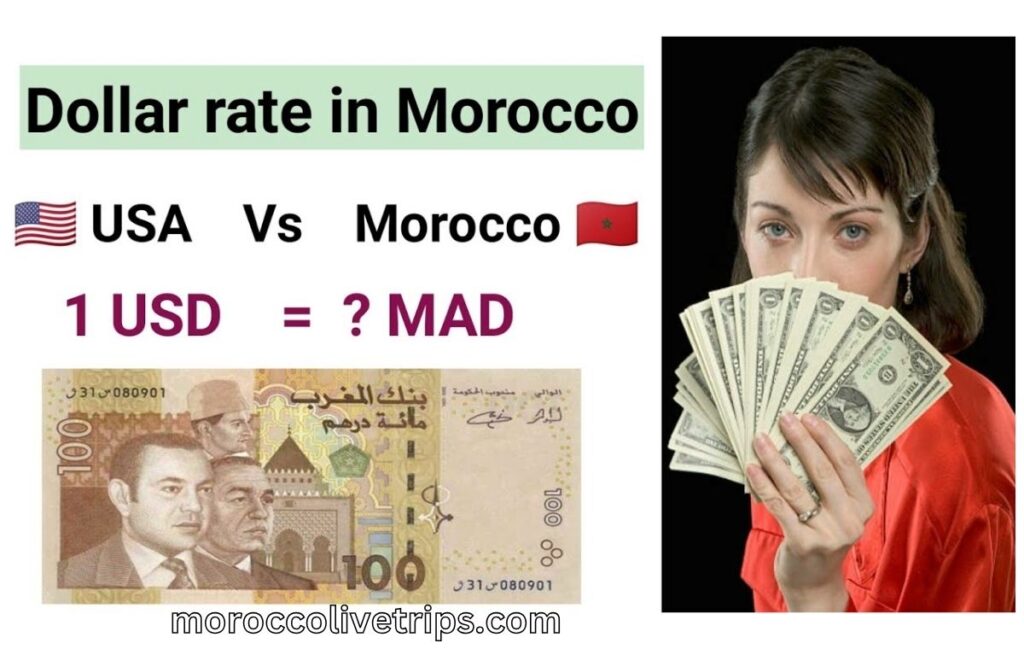
Yes, but US dollars are not widely accepted in Morocco. The official currency is the Moroccan Dirham (MAD), and most shops, restaurants, taxis, and local businesses only accept payment in dirhams. From our experience at Morocco Live Trips, some hotels, licensed tour operators, and desert camps may accept US dollars or euros – but usually at their own exchange rate, which may not be favorable. For the best value and convenience, we recommend exchanging your money into Moroccan dirhams or withdrawing cash from reliable ATMs upon arrival in Morocco. Can You Use USD in Morocco Tours? Yes, you can use USD for Morocco tours, but it depends on the tour company and location. Most tour operators, hotels, and desert camps accept US dollars for advance bookings, while local shops, restaurants, and small vendors usually prefer Moroccan Dirhams (MAD). Payment Method Widely Accepted? Best For Notes Moroccan Dirham (MAD) Yes All purchases Official currency US Dollars Limited Hotels & some tours Exchange rate varies Euros Sometimes Tourist areas Not guaranteed Credit Cards In cities Hotels & restaurants Not common in markets What Morocco Tour Operators Actually Accept? Most licensed Morocco tour operators -including Morocco Live Trips -quote prices in USD for American travelers and accept USD for online bookings, deposits, and full prepayments. Once you are on the ground in Morocco, your transport, accommodation, and guide are already covered. The remaining cash you need daily -lunches, tips, shopping, and taxis -all requires Moroccan Dirhams. USD vs MAD -Which Saves You More Money MAD always saves you more money. When vendors in Marrakech souks or Fes medina accept USD, they set their own exchange rate -and it is never in your favor. Paying 100 MAD for a tagine costs you roughly $9. Paying $10 in USD for the same tagine means the vendor pockets the difference. Convert to MAD first and you keep that difference every single time. Morocco’s Official Currency -What Every American Needs to Know? Understanding the Moroccan Dirham before you arrive removes most money confusion during your tour. The Moroccan Dirham (MAD) Explained The Moroccan Dirham (MAD) is Morocco’s only official currency -issued by Bank Al-Maghrib and used for every transaction across the country. Banknotes come in 20, 50, 100, and 200 MAD denominations. Coins run from 1 to 10 MAD. The simple mental math rule -divide any MAD price by 10 to get the rough USD equivalent -works reliably for everyday purchases throughout your Morocco tour. Current USD to MAD Exchange Rate 2026 1 USD equals approximately 10.8 to 11.2 MAD in 2026. This means $100 gives you roughly 1,080 to 1,120 MAD -a comfortable daily budget for food, transport, tips, and light shopping on a mid-range Morocco tour. Rates fluctuate slightly so always check before you travel. The “divide by 10” mental math rule keeps you close enough for everyday transactions without pulling out your phone constantly. Why the Dirham Is a Closed Currency -What This Means for You? The Moroccan Dirham is a closed currency -meaning you cannot buy or sell it outside Morocco. You cannot get MAD from your US bank before departure. You exchange USD for MAD after arriving in Morocco at banks, ATMs, or licensed bureau de change offices. Keep your exchange receipts -you need them to convert leftover MAD back to USD before leaving Morocco. Where You CAN Use US Dollars in Morocco? USD works in more places than most travelers expect -but rarely at a good rate. Morocco Tour Operators -USD Accepted or Not? Licensed tour operators accept USD for bookings, deposits, and full tour payments -particularly for American travelers booking from the US. Morocco Live Trips quotes all tour prices in USD on our website and accepts USD payments internationally. Once your tour is booked and paid, the majority of your on-the-ground expenses are already covered. Luxury Hotels and Riads High-end riads and international hotels in Marrakech, Fes, and Casablanca often accept USD alongside euros and British pounds. They apply their own exchange rate -usually 5 to 10% worse than the official bank rate. If you are paying a significant hotel bill in USD, the difference adds up. Paying in MAD or by card in MAD always gives better value. Major Tourist Areas and Souvenir Shops Some souvenir shops and tourist-facing businesses in Djemaa el-Fna square and the Marrakech medina accept USD. They quote prices in a way that makes USD payment sound convenient -but the implied exchange rate always benefits the vendor. Accept the convenience if the amount is small. For larger purchases, pay in MAD. Airports and Exchange Counters Casablanca Mohammed V Airport and Marrakech Menara Airport have official USD exchange counters before and after customs. You can exchange USD for MAD immediately on arrival. Airport rates are slightly worse than city bureau de change rates -but perfectly acceptable for getting your initial MAD for the first day of your tour. Where You CANNOT Use US Dollars in Morocco? Most of daily Moroccan life runs entirely on MAD. Keep this list in mind before your tour. Local Restaurants and Street Food Local Moroccan restaurants, street food stalls, and market food vendors accept MAD only -no exceptions. The harira soup at 8 MAD, the sardine sandwich at 12 MAD, the fresh orange juice at 5 MAD -these vendors have never handled USD and have no interest in doing so. Always carry MAD for food throughout your Morocco tour. Souks and Medina Markets The souks of Marrakech, Fes, and Chefchaouen operate entirely in MAD. Bargaining in souks requires MAD -quoting a USD price in a souk marks you immediately as an inexperienced tourist and undermines your negotiating position completely. Convert to MAD before entering any medina market for shopping. Taxis and Local Transport Petit taxis in Marrakech, Fes, and Casablanca accept MAD only. The meter runs in MAD. Grand taxis between cities charge MAD per seat. CTM and Supratours buses require MAD tickets. If your tour package includes all transport -which every Morocco Live Trips tour does -you do not need
How Much Does a Morocco Desert Tour Cost? Real Prices

Quick answer: A Morocco desert tour from Marrakech costs roughly €90 to €420 per person for 3 days with us, depending on whether you travel private or shared, how many people are in your group, and whether you sleep in a standard or luxury camp. On large booking platforms, comparable 3 day tours are listed from about US$280 to US$350 per person. Longer trips that include the desert, such as our 7 day tour from €480 and 10 day tour from €680 per person, spread the driving over more days and usually give better value per day. Ask for an exact price on WhatsApp, or send us your dates and we reply within 24 hours. If you are planning a trip to the Sahara, price is usually the first question and the hardest one to answer from a booking website. One listing says €90, another says $350, and a third says “contact us”. The difference is rarely about the dunes themselves. It comes down to five things: how many days you travel, who else is in the vehicle, where you sleep, what is included, and who you book with. This guide is written by a local team based in Marrakech that runs desert tours every week. It explains what you actually pay for, what a fair price looks like in each category, where costs hide, and how to compare offers so you book the trip that suits you rather than the cheapest headline price. What a Morocco desert tour usually includes Before comparing prices, it helps to know what a standard multi day desert tour from Marrakech covers. Most tours to the Merzouga dunes (Erg Chebbi) follow a similar shape, and the price you are quoted should include most of the following: Transport in an air conditioned vehicle with a driver, normally a 4×4 or a minivan, from your riad or hotel and back. Hotel or kasbah nights on the way, usually in the Dades Valley or Todra Gorge area on a 3 day tour. One night in a desert camp among the dunes, with dinner and breakfast. A camel ride into the dunes at sunset, and back at sunrise or by vehicle. Breakfast and dinner on most days. Lunch is usually not included. Stops along the route such as the Tizi n’Tichka pass in the High Atlas, Kasbah Ait Ben Haddou, Ouarzazate, the Dades Valley and Todra Gorge. What is usually not included: lunches, drinks, tips, entrance tickets to some kasbahs, local guides in Ait Ben Haddou or Todra if you want one, travel insurance and optional extras such as quad bikes or sandboarding equipment. Always check this list on any quote. A tour that looks €40 cheaper can end up costing more once you add four lunches and two paid entries. Desert tour prices at a glance The table below shows typical price ranges per person for the most common desert tours from Marrakech. Our own prices come from our published tour pages. Market prices come from public listings on large booking platforms in October 2026 and are shown so you can compare like with like. Tour Our price per person Typical market listing Best for 3 days Marrakech to Merzouga and back €90 to €420 depending on group size, private or shared, and camp About US$280 to US$350 on major platforms Travellers with a short trip who want the big dunes 3 days Marrakech to Fes via Merzouga (one way) Ask us for your dates About US$290 to US$345 on major platforms People continuing north to Fes and Chefchaouen 4 days from Marrakech with 2 nights in the desert From €400 per person (private) Varies widely A slower pace and more time in the dunes 7 day Morocco tour including the Sahara From €480 per person Varies by hotel level First time visitors who want cities and desert 10 day Morocco tour including the Sahara From €680 per person Varies by hotel level A complete loop at a comfortable pace Prices for a private tour depend heavily on group size because the vehicle and driver cost the same whether there are two of you or six. That is why the per person price for a private tour drops as your group grows. For an exact figure, send us your dates and group size on WhatsApp. The five things that decide the price 1. Private or shared This is the biggest single factor. On a shared tour you travel in a minivan with other travellers, often up to 14 to 17 people, on a fixed schedule. You split the cost of the vehicle and driver with everyone else, so it is cheaper. On a private tour the vehicle, driver and schedule are yours alone. You choose when to stop, how long to stay at Ait Ben Haddou, and whether to add a night. We run both. Here is how they compare in practice: Private tour Shared tour Vehicle 4×4 or minivan for your group only Minivan shared with other travellers Schedule Flexible. Stop where you want Fixed timings and stops Pick up From your riad or hotel Usually a central meeting point in the medina Driver Focused on your group Shared attention Price per person Higher, falls with group size Lower Best for Couples, families, older travellers, photographers Solo travellers and tight budgets A simple rule we give every traveller: if there are two or more of you, ask for both prices. The gap is often smaller than people expect, and the difference in comfort over three long driving days is large. 2. Number of days Merzouga is about 560 km from Marrakech. On a 3 day tour you drive roughly 6 to 7 hours on day one, a shorter day two into the desert, and around 9 hours back on day three with stops. A 4 day tour spreads that out and gives you a full extra day near the dunes. Each extra day adds a hotel or camp night, meals and driver time, so the
Morocco 15 Day Grand Tour from Tangier -Complete 2026 Itinerary

Morocco 15 day grand tour from Tangier starts where Europe ends and Africa begins -and finishes having crossed every landscape Morocco contains. In 15 days you travel from Tangier through Chefchaouen’s blue streets, into the ancient medinas of Fes, across the Sahara Desert dunes, over the Atlas Mountains, through Marrakech and the Atlantic coast of Essaouira -ending in Casablanca. No other Morocco starting point gives you this geographic logic. At Morocco Live Trips, our Berber guides run this exact route every single week. This complete 2026 guide covers every day, every stop, and every cost. Tour Overview Detail Information Duration 15 days -14 nights Start point Tangier -port, airport, or hotel End point Casablanca, Tangier, Marrakech, or any Moroccan airport Destinations Tangier, Chefchaouen, Fes, Merzouga, Dades, Ouarzazate, Marrakech, Essaouira, Casablanca Total distance Approximately 2,200 kilometers Transport Private air-conditioned vehicle throughout Guide Licensed English speaking local guide Group size Private -just your group Flexibility Fully customizable -daily adjustments possible Best season March to May and September to November Starting price From $1,200 per person Book Grand Tour Why Start Your Morocco Grand Tour from Tangier? Tangier -Gateway Between Two Continents Tangier sits at the northwestern tip of Africa -just 14 kilometers across the Strait of Gibraltar from Spain. On a clear day you can see Europe from the Kasbah while standing on African soil. This geographical reality gives Tangier a character unlike any other Moroccan city –Andalusian architecture, Spanish street names, French café culture, and ancient Berber traditions all existing side by side in a city that has been a crossroads of civilizations for over 2,500 years. Starting your Morocco grand tour here means beginning at the most historically layered and geographically dramatic entry point into the country -and traveling south through every landscape Morocco contains, finishing in Casablanca with the full picture of the country behind you. Tangier is also practically perfect as a starting point -direct ferry connections from Tarifa and Algeciras in Spain, a major international airport with connections across Europe, and a position that allows the most logical geographic flow through Morocco from north to south without backtracking a single kilometer. Photo Gallery Day by Day Itinerary -Morocco 15 Day Grand Tour from Tangier Day 1 -Arrival in Tangier (Two Options) Your Morocco grand tour begins the moment you arrive in Tangier -and you have two smart options depending on your energy and interests: Option 1 -Explore Tangier and overnight here. Your driver meets you at Tangier Ibn Battouta Airport or Tangier Med Port -the most modern port in Africa, handling 7 million passengers annually. Afternoon exploration of Tangier’s Kasbah -the hilltop fortress district with narrow whitewashed streets, the Dar El Makhzen palace (now a museum of Moroccan arts), and panoramic views across the Strait to Spain. The Grand Socco square -where mountain Berbers historically came to trade -connects the old medina to the French colonial Ville Nouvelle. Overnight in Tangier. Option 2 -Drive directly to Chefchaouen (2.5 to 3 hours). If Tangier is not your priority -your driver takes you directly south through the Rif Mountains to Chefchaouen. The drive through the Rif is genuinely beautiful -cedar forests, mountain villages, and the first views of the blue city appearing in the valley below. This option gives you more time in Chefchaouen and is the most popular choice for travelers with a specific focus on the blue city. Overnight in Chefchaouen. Day 2 -Tangier (if staying) OR Chefchaouen Arrival If you stayed in Tangier: Morning exploration continues –Cap Spartel where the Atlantic meets the Mediterranean, the Hercules Caves carved into the cliff face by the ocean, and the American Legation Museum (the only US National Historic Landmark on foreign soil -a gift from the Sultan of Morocco in 1821 commemorating America’s first recognition of Moroccan sovereignty). Then drive south to Chefchaouen arriving late afternoon. Overnight in Chefchaouen. If you are already in Chefchaouen: A full day in the blue city -one of the most visually extraordinary urban environments in the world. Your guide walks you through the blue and white medina, the Plaza Uta el-Hammam where locals gather under ancient cedar trees, and the quieter upper streets where the blue is deepest and the tourist crowds thinnest. Afternoon hike to the Spanish Mosque for the panoramic view every photographer comes to Chefchaouen to capture. Overnight in Chefchaouen. Day 3 -Chefchaouen to Fes Morning in Chefchaouen -then a 4.5 to 5.5 hour drive east to Fes. The route crosses the Rif Mountains and drops through the rolling agricultural plains of northern Morocco. Stop at Ouazzane -a small pilgrimage town with an important zaouia (Islamic religious lodge) that most tours completely bypass. Arrive Fes late afternoon. Check into your riad inside Fes el-Bali -not in the new city. This single accommodation decision determines the quality of your Fes experience more than anything else. Evening orientation walk in the medina with your guide –Bab Bou Jeloud at golden hour, the blue gate lit from within. Overnight in Fes. Day 4 – Fes (Full Visit) The single most historically dense day of the entire 15 day tour. Fes el-Bali -the world’s largest car free urban area -has been continuously inhabited since 789 AD. Your licensed Fes guide (our guides grew up in these streets) takes you through the complete medina experience: Morning: Chouara Tannery from the leather shop terraces -the hidden second terrace that shows all 100 vats simultaneously, working since the 10th century using saffron, poppy, and indigo dyes. Bou Inania Madrasa -14th century Marinid architecture of mathematical precision in zellige tilework and carved cedarwood. Al-Qarawiyyin University -founded 859 AD by Fatima al-Fihri, the oldest continuously operating university on earth. Afternoon: The brass souk, spice quarter, and woodworkers’ district -each craft concentrated in the same streets it has occupied for centuries. Saffarine Square where brass workers hammer metal as their families have done since the medieval period. The Mellah -Fes’s historic Jewish quarter established in 1438. Evening: Rooftop dinner overlooking the medina -the call to prayer echoing from 300
Morocco Photography Desert Tour: Complete 2026 Guide for the Best Sahara Photo Experience

A Morocco Photography Desert Tour is one of the best ways to explore the Sahara Desert in Morocco while capturing unforgettable images of dunes, kasbahs, medinas, mountains, and local culture. From the golden light of Erg Chebbi to the blue streets of Chefchaouen, the ancient beauty of Aït Ben Haddou, and the energy of Marrakech street photography, Morocco offers an incredible mix of landscapes and human stories for every kind of traveler. What makes a Morocco desert photography tour special is not just the destination. It is the timing, local knowledge, and access to the right places at the right moment. Whether you use a smartphone, DSLR, or mirrorless camera, a guided Sahara photography tour helps you avoid missed light, crowded angles, and ordinary tourist snapshots. Instead, you get a smoother travel experience and stronger images that truly reflect Morocco. At Morocco Live Trips, we create photography-focused journeys designed for travelers who want more than a standard desert trip. This guide covers everything you need to know about planning the best Morocco Photography Desert Tour in 2026. What Is a Morocco Photography Desert Tour? A Morocco Photography Desert Tour is a travel experience that combines a classic Morocco desert tour with location planning, light timing, and photography guidance. Instead of simply visiting the Sahara Desert, you travel with people who understand when the dunes look best, where to stand for stronger compositions, and how to reach the most photogenic places before the crowds arrive. A good Morocco photo tour is not only for professional photographers. It also works for couples, content creators, beginners, and travelers using phones who want better travel photos. With the right route and local support, you can photograph Merzouga dunes, Berber camps, camel trekking, desert sunrise, local markets, kasbahs, and medina life in a much more meaningful way. Why Choose a Morocco Photography Desert Tour? A normal desert trip shows you Morocco. A Morocco Photography Desert Tour helps you capture it properly. Key benefits of a dedicated photography tour in Morocco include: This is the difference between returning home with average holiday photos and coming back with a real Morocco travel photography portfolio. Who Is This Tour Best For? A Morocco Photography Desert Tour is ideal for many types of travelers, not just professionals. This tour is perfect for: Whether you are shooting with an iPhone or a full-frame camera, Morocco offers powerful scenes that reward good timing more than expensive gear. Best Places to Visit on a Morocco Photography Desert Tour 1. Erg Chebbi Dunes in Merzouga Erg Chebbi is the heart of most Morocco Photography Desert Tour experiences. These dunes near Merzouga are famous for their rich orange color, sweeping curves, and dramatic light at sunrise and sunset. For many travelers, this is the highlight of a Sahara Desert tour Morocco experience. Why photographers love it: 2. Erg Chigaga For travelers who want a more remote Morocco desert photography tour, Erg Chigaga offers a quieter and wilder desert setting. It is especially attractive for people interested in astrophotography in Morocco because there is less light pollution. Best for: 3. Aït Ben Haddou Aït Ben Haddou is one of the most iconic photography stops in Morocco. This ancient ksar is a UNESCO-listed site and one of the most photogenic places on any Morocco tour itinerary. Why it matters for photographers: 4. Draa Valley The Draa Valley adds variety to your Morocco Photography Desert Tour with palm groves, villages, kasbahs, and roadside viewpoints that feel completely different from the open dunes. It is excellent for: 5. Marrakech A strong Morocco photography tour should also include city photography. Marrakech offers colorful souks, rooftop views, tiled palaces, garden details, and night scenes in Djemaa el-Fna. Top photography subjects in Marrakech: 6. Fes and Chefchaouen If your route includes northern Morocco, Fes and Chefchaouen add even more value to your Morocco Photography Desert Tour. Sample 7-Day Morocco Photography Desert Tour Itinerary Day 1: Marrakech Arrival and Medina Photography Start your journey in Marrakech, where you can photograph souks, artisans, hidden alleys, and sunset views over Djemaa el-Fna. Evening is the best time for atmosphere, movement, and warm city light. Day 2: Marrakech to Aït Ben Haddou Travel through the Atlas Mountains and Tizi n’Tichka Pass, stopping for mountain landscapes along the way. Reach Aït Ben Haddou in time for soft afternoon light and sunset photography. Day 3: Aït Ben Haddou to Draa Valley and Todgha Gorge Continue through the Draa Valley, passing palm groves and kasbah scenery. Later, photograph the dramatic rock walls of Todgha Gorge, which offer powerful compositions and interesting light. Day 4: Todgha Gorge to Merzouga Arrive in Merzouga and prepare for the main desert experience. A late afternoon camel trek in Merzouga leads into the dunes for sunset images and an overnight stay in a Berber desert camp. Day 5: Sahara Sunrise and Desert Photography Wake before sunrise for the most magical part of your Morocco Photography Desert Tour. Photograph the changing colors of the dunes, desert textures, footprints, camel silhouettes, and local desert life. Day 6: Return Through Southern Morocco Travel back through villages and valleys, stopping for cultural images and landscape photography along the route. Morning and afternoon light can create very different moods in the same location. Day 7: Marrakech Street Photography and Departure Use your final day for more Marrakech photography, palace interiors, gardens, or last-minute shopping images before departure. Best Time for a Morocco Photography Desert Tour Timing matters a lot when planning a Morocco Photography Desert Tour. October and November These are among the best months for a Sahara photography tour. The temperatures are comfortable, the desert light is warm, and the crowds are often lower than peak spring travel. March to May Spring is also a strong season for a Morocco desert tour. The weather is pleasant, and travel conditions are good across most destinations. January and February Winter can be excellent for travelers interested in clearer skies and stronger astrophotography conditions. Nights are much colder, but
Best Time to Visit Morocco for Beaches -The Complete 2026 Guide

Morocco has over 3,500 kilometers of coastline -split between the wild Atlantic Ocean to the west and the calmer Mediterranean Sea to the north. That means golden sand beaches, world class surf breaks, sheltered lagoons, and wind-swept coastal towns that feel nothing like each other. The best time to visit Morocco for beaches depends entirely on which coast, which beach, and what you want to do when you get there. At Morocco Live Trips, we send travelers to Morocco’s beaches every single month of the year -and this complete 2026 guide tells you exactly when to go, where to go, and what to expect. Let’s go! Best Time to Visit Morocco for Beaches The best time to visit Morocco for beaches is June to September for Atlantic swimming and October to April for surfing. Agadir offers year-round sunshine. Essaouira is windiest in summer -perfect for windsurfers, less ideal for sunbathers. Taghazout delivers world-class waves from October through April. The Mediterranean coast around Al Hoceima peaks in July and August. No single month is perfect for every beach -but this guide breaks it all down precisely. Morocco Beach Season Summary Table Beach Best Months Water Temp Best For Agadir April to October 18°C to 23°C Families, swimming, sunbathing Essaouira September to November 18°C to 21°C Windsurfing, kitesurfing, culture Taghazout October to April 16°C to 20°C Surfing, beginners, surf camps Dakhla March to June, Sept to Nov 19°C to 23°C Kitesurfing, windsurfing Oualidia May to September 17°C to 22°C Lagoon swimming, families Asilah June to September 18°C to 22°C Swimming, culture, art Legzira May to October 17°C to 21°C Photography, scenic swimming Al Hoceima June to September 22°C to 26°C Mediterranean swimming, families Atlantic Coast vs Mediterranean Coast These are two completely different beach experiences -and most travelers do not realize this before they book. Factor Atlantic Coast Mediterranean Coast Water temperature Cooler -16°C to 23°C Warmer -20°C to 26°C Waves Powerful -world class surf Calmer -better for swimming Wind Strong -excellent for wind sports Lighter -more comfortable sunbathing Best season Year round -varies by activity June to September Key beaches Agadir, Essaouira, Taghazout Al Hoceima, Cala Iris, Badis Crowds Moderate -mostly international Heavy in summer -mostly Moroccan Best for Surfing, windsurfing, culture Swimming, snorkeling, relaxation The Atlantic coast is wilder, more dramatic, and more diverse. The Mediterranean coast is warmer, calmer, and more conventional. Most international travelers choose the Atlantic -it is what makes Morocco’s coastline unique in the world. Morocco Beach Weather & Sea Temperature by Month Month by Month Beach Conditions Table Month Air Temp Sea Temp Sun Hours Swimming January 17°C 16°C 7hrs Too cold February 18°C 16°C 7hrs Too cold March 20°C 17°C 8hrs Cool April 22°C 17°C 9hrs Cool May 24°C 18°C 10hrs Good June 26°C 19°C 11hrs Good July 28°C 21°C 11hrs Best August 28°C 22°C 11hrs Best September 26°C 22°C 10hrs Excellent October 23°C 21°C 8hrs Good November 20°C 19°C 7hrs Cool December 17°C 17°C 6hrs Too cold Best Months for Swimming June to September is the best window for swimming on Morocco’s Atlantic coast -water temperatures reach 21°C to 22°C and air temperatures sit comfortably between 26°C and 28°C. September specifically is outstanding -summer crowds thin out, water is still warm from three months of summer sun, and prices drop noticeably. On the Mediterranean coast around Al Hoceima -water temperatures peak at 24°C to 26°C in July and August -warmer and more immediately inviting than the Atlantic for casual swimmers. Best Months for Surfing October to April is Morocco’s surf season -when powerful Atlantic swells generated by North Atlantic storms deliver consistent quality waves to Taghazout, Anchor Point, Essaouira, and Safi. December, January, and February produce the biggest and most powerful waves -ideal for experienced surfers seeking serious swell. March and April offer slightly smaller but cleaner and more consistent waves -perfect for intermediate surfers progressing their skills. Summer surf is flat and disappointing on the Atlantic -July and August are genuinely the worst months for surfing in Morocco. Best Time to Visit Agadir Beach Agadir is Morocco’s most developed beach resort -with a magnificent 10 kilometer crescent of golden sand, year-round sunshine averaging 300 days per year, and warm sheltered conditions that make it genuinely enjoyable in every month of the year. It is the only Moroccan beach destination that truly delivers a consistent sun-and-sand experience without seasonal compromise. Agadir Month by Month January to March -Air temperature 17°C to 20°C. Cool but sunny. Perfect for escaping European winter. Water too cold for most swimmers but the beach is pleasant for walking and sunbathing in the midday warmth. Minimum crowds. Lowest prices of the year. April to May -Air temperature 22°C to 24°C. Warming up fast. Water reaching 17°C to 18°C -brave swimmers already in. This is Agadir’s most underrated period -good weather, reasonable prices, and the beach is not yet crowded with summer visitors. June to August -Air temperature 26°C to 28°C. Peak season. Water 19°C to 22°C -comfortable for most swimmers. The beach fills with Moroccan families, European tourists, and international visitors. Book accommodation 2 to 3 months in advance for July and August. Prices at their highest. September to October -Air temperature 24°C to 26°C. Water still warm at 21°C to 22°C from summer. This is Agadir’s sweet spot -summer warmth without summer crowds. Prices dropping. Beach still excellent. Our single strongest recommendation for Agadir beach holidays. November to December -Air temperature 20°C to 22°C. Cooling down but still genuinely pleasant. Water dropping to 18°C to 19°C. Agadir remains Morocco’s warmest beach destination in winter -still attracting European sun-seekers when everywhere else in Morocco feels cold. Best Time for Families in Agadir June to September is ideal for families -warm water, calm conditions, and full resort infrastructure operating at peak capacity. July and August are the busiest -the beach becomes genuinely crowded but the family atmosphere is lively and excellent. For families wanting warmth without crowds –May and October are outstanding choices -school holiday crowds absent, water comfortably
Morocco Public Holidays 2026: Complete Travel Guide (Dates & Tips)

Public holidays and holidays in Morocco 2026 include 13 celebrations – a mix of Islamic religious observances, Amazigh cultural festivals, and national commemorations that shape the rhythm of life across the entire country. Some holidays make Morocco more magical for visitors. Others require careful planning. All of them affect accommodation prices, attraction opening hours, and the overall atmosphere of every city from Marrakech to Chefchaouen to the Sahara Desert. At Morocco Live Trips, we plan tours around the Moroccan holiday calendar every single week. This complete guide tells you exactly what to expect – and exactly when to book. Let’s go! Morocco Public Holidays 2026 Morocco observes both fixed national holidays and moveable Islamic holidays -the Islamic holidays shift approximately 11 days earlier each year following the Hijri lunar calendar. This means Ramadan, Eid al-Fitr, and Eid al-Adha fall on different Gregorian dates every year. In 2026 –Ramadan began in late February, Eid al-Fitr falls in late March, and Eid al-Adha falls in late May. Plan your Morocco trip around these dates carefully -they affect everything from restaurant hours to accommodation prices to tour availability. Complete Holiday Calendar Table 2026 Date Holiday Type Traveler Impact January 1 New Year’s Day National Low -most things open January 13 Amazigh New Year (Yennayer) National/Cultural Low -authentic cultural celebrations February 17 Ramadan begins Islamic High -restaurant hours change March 20 Eid al-Fitr (approx) Islamic Very High -3 day closure May 1 Labour Day National Medium -some closures May 27 Eid al-Adha (approx) Islamic Very High -3 day closure June 16 Islamic New Year (Muharram) Islamic Low -quiet celebrations July 30 Throne Day National High -major national celebration August 14 Oued Ed-Dahab Day National Low -government holiday August 20 Revolution Day National Medium -national commemoration August 21 Youth Day National Low -minor celebrations August 25 Mawlid -Prophet’s Birthday Islamic Medium -religious celebrations November 6 Green March Day National Medium -national commemoration November 18 Independence Day National Medium -national celebrations Islamic holiday dates are approximate -confirmed by moon sighting Religious Holidays vs National Holidays -Key Difference Religious holidays -Ramadan, Eid al-Fitr, Eid al-Adha, Islamic New Year, and Mawlid -are determined by the Hijri lunar calendar and moon sighting. Dates shift every year. During these periods local restaurants, shops, and businesses significantly change their operating hours -some closing entirely during daylight hours in Ramadan. National holidays -New Year, Labour Day, Throne Day, Independence Day -fall on fixed Gregorian dates every year. Their impact on tourism is generally lower than religious holidays but still affects government offices, banks, and some attractions. How Public Holidays Affect Travel in Morocco? Understanding how public holidays in Morocco impact daily life is essential when planning your trip. While Morocco remains welcoming to tourists year-round, certain holidays-especially major Islamic holidays like Eid al-Fitr and Eid al-Adha-can temporarily change how cities operate. Here’s what you need to know: Transportation During major holidays, especially before Eid celebrations, trains, buses, and domestic flights become extremely busy as locals travel to visit family. Tickets for routes like Marrakech to Fes, Casablanca to Tangier, and desert connections often sell out several days in advance. Travel Tip: Book your ONCF train tickets, CTM buses, or private transfers at least 1–2 weeks before major holidays. Shops & Local Businesses On national holidays such as Throne Day or Independence Day, most shops remain open. However, during major religious holidays in Morocco, many family-owned businesses, neighborhood stores, and small boutiques close for 1–3 days. Large supermarkets in major cities usually reopen quickly, but traditional businesses may stay closed longer. Restaurants & Cafés Tourist restaurants in cities like Marrakech, Fes, and Chefchaouen typically remain open. However, smaller local eateries and traditional cafés often close during Eid holidays. During Ramadan in Morocco, many restaurants close during daytime but reopen after sunset (Iftar), when cities come alive with food and social gatherings. Souks & Medinas The biggest impact is felt in the souks and medinas. During Eid al-Adha, many market stalls close completely as families celebrate together. If shopping is a priority, avoid planning it on the first day of major religious holidays. National holidays usually have minimal effect on traditional markets. Museums & Attractions Most museums, historical monuments, and palaces remain open during national holidays. However, opening hours may change during religious celebrations. Some cultural sites close on the first day of Eid. Always check locally one day before visiting. Desert Tours & Guided Trips Organized Sahara desert tours, private excursions, and guided trips generally continue operating during holidays. Established tour operators plan in advance and adjust logistics accordingly. In fact, traveling with a tour during major holidays can make things easier, as transportation and accommodations are pre-arranged. Prices & Availability Holiday periods-especially Eid al-Adha and peak festival dates-can lead to: Booking early ensures better prices and smoother logistics. Crowds & Atmosphere Before major holidays, bus stations, train terminals, and shopping areas become crowded. During the actual holiday days, cities may feel quieter as families gather privately. However, holidays also offer a deeper look into authentic Moroccan culture, community traditions, and festive atmospheres you won’t see at other times of year. Final Insight Public holidays do not stop tourism in Morocco-but they do change the rhythm of daily life. With proper planning, flexibility, and advance bookings, you can enjoy a smoother and more culturally rich travel experience. Complete List of Morocco Public Holidays 2026 January -New Year’s Day & Amazigh New Year January 1 -New Year’s Day passed without significant disruption to tourism. Major hotels, tourist restaurants, and most attractions in Marrakech, Fes, and Chefchaouen remained open. Local businesses took the day off but tourist infrastructure operated normally. New Year’s Eve in Djemaa el-Fna square attracted large crowds -a genuinely spectacular way to welcome 2026 in Morocco. January 13 -Amazigh New Year (Yennayer) was celebrated across Morocco with traditional food, music, and community gatherings -particularly in Amazigh Berber communities of the High Atlas Mountains and Souss Valley. This holiday was officially recognized as a national holiday in 2024 -a historic acknowledgment of Morocco’s indigenous Amazigh heritage. Travelers who were in Morocco on January 13 experienced one of the country’s most authentic and least touristy cultural celebrations. February to March