Ouzoud Waterfalls Day Trip from Marrakech
Private nature escape from Marrakech Ouzoud Waterfalls Day Trip from Marrakech | Private Tour Leave the busy streets of Marrakech behind and spend a full day among cascading water, olive groves, mountain scenery and the natural pools of Ouzoud Waterfalls. Enjoy comfortable private transportation, hotel pickup, scenic countryside, waterfall viewpoints, optional walking, a traditional boat ride and time for a local Moroccan lunch. Your itinerary can be adjusted for couples, families, seniors and small groups. Plan Your Ouzoud Day TripAsk on WhatsApp Send your travel date, group size, hotel and preferred activities for a personalised proposal. A refreshing change of pace Escape Marrakech and Discover Ouzoud Waterfalls An Ouzoud Waterfalls day trip from Marrakech takes you into the Moroccan countryside and the Atlas region. The journey leads away from the Red City toward a greener landscape of valleys, olive groves, villages and dramatic cascades. Ouzoud is a strong choice when you want nature without committing to a multi-day Morocco itinerary. You can enjoy panoramic views from above, walk toward the base, take an optional boat ride, look for Barbary macaques and have lunch near the falls before returning to Marrakech. A private Ouzoud Waterfalls tour also solves the main planning problems. You do not need to compare transport connections, arrange a taxi from Azilal or worry about finding the best viewpoints alone. Your driver and guide can help shape a comfortable full-day route. Ouzoud offers a memorable nature escape from Marrakech. Book a Private Ouzoud Tour Is Ouzoud worth visiting? Why Visit Ouzoud Waterfalls? One of Morocco’s most beautiful natural escapes Ouzoud Waterfalls are known for their impressive cascades, green surroundings, river gorge and viewpoints. The changing light, mist and sound of falling water create a completely different experience from Marrakech’s medina, palaces and souks. A perfect day trip from Marrakech The falls are far enough away to feel like a real countryside escape but close enough for a long day trip. The drive is part of the experience, with views of rural Morocco, villages and the Atlas region along the route. Nature, activity and relaxation together You can choose how active you want to be. Walk along the viewpoints, descend toward the base, take photographs, enjoy a boat ride or sit at a riverside restaurant. A private schedule gives you more control over the balance. A different side of Morocco Ouzoud helps you see Morocco beyond its imperial cities and desert. The landscape, olive groves, local communities and river environment add depth to your Morocco travel experience. Our honest advice: Ouzoud is a full-day excursion with several hours of driving. It is worth visiting when you want nature and waterfalls, but travellers who prefer a shorter drive may prefer the Ourika Valley or Agafay Desert. Your day in the Atlas region What to Expect on Your Ouzoud Waterfalls Day Trip Scenic drive through Morocco Travel from Marrakech through changing countryside, rural villages and Atlas-region scenery in a comfortable private vehicle. Waterfall viewpoints See the cascades from different angles and take time for photographs, mist and panoramic landscape views. Walking paths Explore the trails and viewpoints at a pace that suits your group. Some paths include steps, slopes and uneven ground. Optional boat ride Small traditional boats may take visitors across the lower pool toward the falling water. Availability and payment are usually handled locally. Local wildlife Barbary macaques live around the area. Observe them responsibly and avoid feeding or touching wildlife. Lunch with a view Enjoy Moroccan food such as tagine or another suitable meal at a local restaurant, subject to your confirmed plan. Customize My Day Trip A practical full-day route Your Ouzoud Waterfalls Day Trip Itinerary This suggested Marrakech to Ouzoud day trip itinerary can be adjusted around your hotel, season, group and preferred activities. Exact timings depend on traffic, weather, walking pace and time spent at the falls. Morning Pickup from Marrakech Your private driver collects you from your hotel or riad. An early start is usually helpful because the route is long and gives you more time at the waterfalls. Bring water and comfortable clothing for the journey. Journey Scenic drive to Ouzoud Travel northeast through the Moroccan countryside toward Ouzoud village and the Azilal region. Add a comfort or photo stop where practical rather than rushing continuously. Arrival Explore the waterfalls Begin at a viewpoint above the cascades, then follow the walking paths toward the lower area if your group is comfortable with slopes and steps. Your guide can help you understand the route and choose suitable pauses. Midday Lunch and free time Enjoy a Moroccan lunch near the falls or at a riverside restaurant. Ask about vegetarian, vegan, halal, allergy-aware or other dietary requirements before the trip. Afternoon Boat ride, photographs or relaxation Take an optional boat ride if operating and suitable, continue photography, observe the landscape or relax with a view. Swimming may be possible in selected areas, but conditions, water safety and access should be assessed locally. Evening Return to Marrakech Leave Ouzoud with enough time for the return journey. Your driver drops you at your hotel or another agreed Marrakech location. Check Availability for My Date Choose your own experience Things to Do at Ouzoud Waterfalls Walk around the waterfalls Follow the paths above and below the falls to see how the views change. The descent and return can be tiring, so ask your guide to plan breaks and choose the right route for your group. Take a traditional boat ride Small boats may operate on the lower pool and approach the spray at the base of the cascades. It can be fun and refreshing, but you may get wet. Boat rides are usually optional and paid locally unless your package says otherwise. Enjoy nature and photography Capture water, rock, olive trees, river scenery and changing light. A private tour allows more time for photographs than a tightly scheduled group excursion. Discover local wildlife Barbary macaques are associated with the area. Watch them from a respectful distance, do not
Best Riad Marrakech Guide: Where to Stay for an Authentic Moroccan Experience (2026)
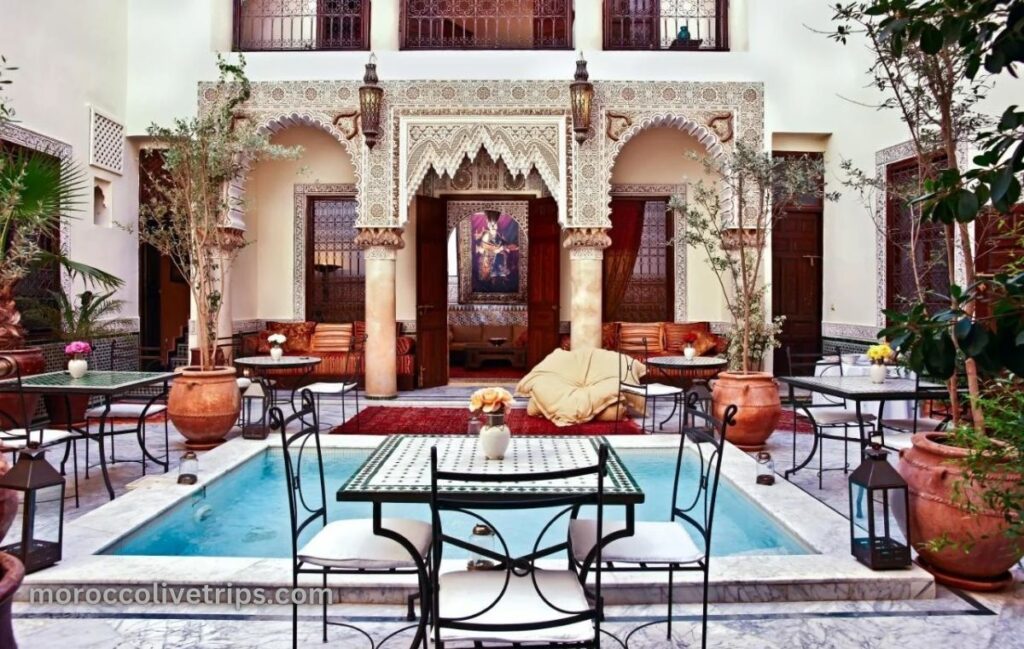
Marrakech is one of those cities that gets under your skin – the winding medina lanes, the smell of spices drifting from the souks, the call to prayer echoing across the rooftops at dawn. But where you sleep here changes everything about how you experience it. Skip the generic hotel and book yourself into a riad Marrakech instead – a traditional Moroccan courtyard house hidden behind an unassuming medina door – and suddenly you are not just visiting Marrakech, you are living it. Morocco Live Trips builds handpicked riad stays into every tour package we run, because we genuinely believe it is the only way to do this city properly. Read on and we will show you exactly why. What Is a Riad in Marrakech? A riad is a traditional Moroccan house built around a central interior courtyard, and staying in one is the single best accommodation decision most Marrakech visitors make. The word riad comes from the Arabic word for garden, and the defining feature of every riad is that private central space – sometimes a fountain, sometimes a garden, sometimes a small pool, always beautiful. From the outside, riads Marrakech reveal almost nothing. The street-facing walls are plain, the doors are often small and unmarked, and you would walk past dozens of them without a second glance. Step through the door and the contrast is extraordinary – noise and heat of the medina behind you, and ahead a quiet, cool, tiled courtyard that feels like an entirely different world. The History of Traditional Moroccan Riads Riads have been at the heart of Moroccan domestic architecture for centuries. The design was practical as much as beautiful – thick walls kept the heat out in summer and the warmth in during winter, while the central courtyard created airflow and gave the family a private outdoor space shielded from the street. All rooms opened inward toward the courtyard rather than outward toward the alley, which gave Moroccan families both privacy and a shared communal heart to the home. Many of the riads that exist in Marrakech today date back several hundred years. Some were family homes that fell into disrepair and were restored by European buyers in the 1990s and 2000s, turning them into boutique riad Marrakech guesthouses. Others have stayed in the same Moroccan family for generations. Either way, the bones of the building – the zellige tiles, the carved plaster, the cedar wood ceilings – are often genuinely old and genuinely remarkable. Unique Features of Riad Architecture Every traditional riad Marrakech shares certain architectural features that you will not find in any conventional hotel. The zellige tilework – intricate geometric mosaics cut by hand from fired clay – covers the lower walls and floors of the courtyard in patterns that can take master craftsmen months to complete. Above the tiles, carved plasterwork panels called tadelakt rise to the ceiling, and above those, hand-painted cedar wood beams carry the weight of the upper floors. The rooftop terrace is the other defining feature of any good riad. Most riads in Marrakech have a terrace where you can eat breakfast with a view across the medina rooftops, watch the sunset over the Koutoubia Mosque, or simply sit with a pot of mint tea and let the city wash over you from a comfortable distance. Why Choose a Riad Instead of a Hotel in Marrakech? This is a question worth answering properly, because the difference between a riad stay and a standard hotel stay in Marrakech is significant. It is not just about aesthetics or Instagram photographs, though both are excellent. It is about how the experience of the city feels from the inside. A hotel puts you at a distance from Marrakech. A riad puts you inside it. When you sleep in the medina, you wake up to the sounds of the city starting its day – bread sellers, motorbikes threading through the lanes, the neighbourhood mosque. You step outside your door and you are immediately in the oldest, most alive part of the city. That proximity to the real Marrakech is something no hotel on the edge of the new town can replicate. Authentic Moroccan Hospitality Moroccan hospitality is legendary, and nowhere does it show itself more naturally than in a well-run riad. Most riads are small – anywhere from four to twenty rooms – which means the staff know your name, remember your breakfast preferences, and genuinely want your stay to go well. It is the opposite of the anonymous, transactional experience of a big chain hotel. Arriving at a riad after a long journey and being met with a glass of Moroccan mint tea and a plate of dates and pastries is one of the small pleasures that seems like nothing and somehow means everything. It sets the tone for the whole stay. Beautiful Courtyards and Rooftop Views The Moroccan interior design of a well-restored riad is genuinely beautiful in a way that photographs cannot fully capture. The play of light in the courtyard changes through the day – bright and sharp at noon, golden and warm in the late afternoon, silver and cool after dark when lanterns light the tilework. Sitting in the courtyard of a good riad with a coffee in the morning is a perfectly complete travel moment. The rooftop views across the Marrakech Medina are equally special. You can see the Koutoubia Mosque minaret rising above the rooflines, the Atlas Mountains in the distance on clear winter days, and the whole tangled geography of the old city spread out below you in a way that helps it make sense. Cultural Experiences You Will Not Find in Hotels Staying in a traditional riad Marrakech is itself a cultural experience in a way that staying in a hotel simply is not. You are living inside a building type that has been central to Moroccan domestic life for centuries. Many riads offer hammam treatments in their private bathhouses, cooking classes in their kitchens, and guided medina walks
Morocco: What to See and Do – 25 Unmissable Experiences for First-Time Visitors (2026)
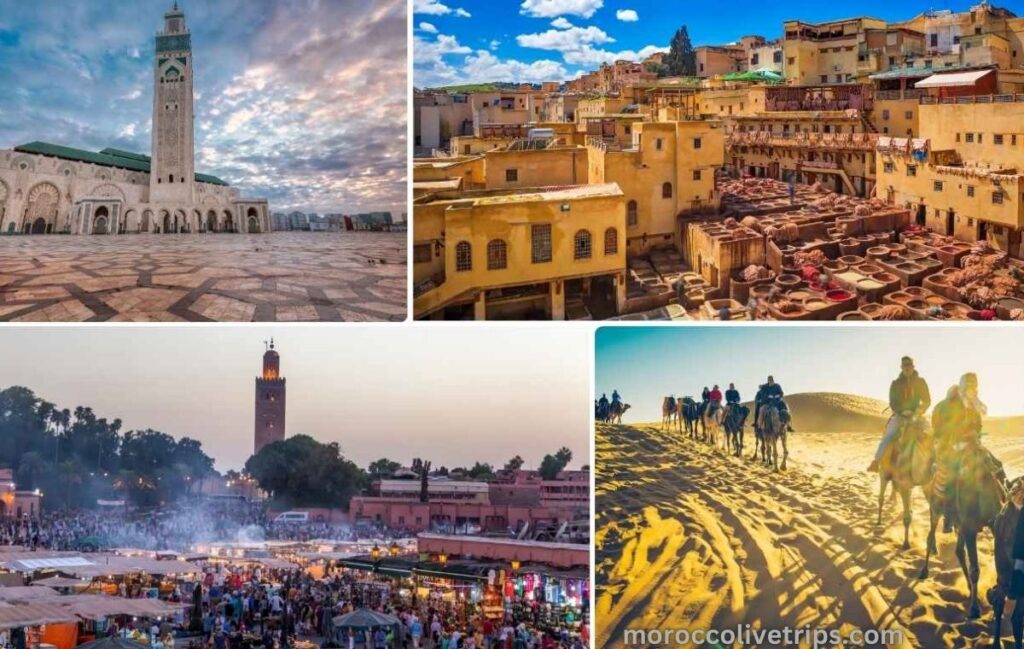
Morocco stops you in your tracks. One moment you are standing in a sun-drenched square surrounded by snake charmers and street musicians. The next you are gazing at a sea of golden sand dunes stretching to the horizon. Then you are sipping sweet mint tea inside a candlelit riad, wondering how a single country can hold this much. That is exactly what Morocco does to people. It is a place of wild contrasts – ancient and modern, desert and ocean, chaotic and deeply peaceful. If you are planning your first trip and wondering what to see and do in Morocco, this guide covers everything from the imperial cities to the Sahara Desert, the mountains, the coast, the food, and the culture. Morocco Live Trips has been running handcrafted tours across Morocco for years, and we have packed everything we know into this guide. Why Morocco Should Be on Every Traveller’s Bucket List? Morocco sits at the crossroads of Africa, Europe, and the Arab world. That position has shaped a culture unlike anywhere else on earth – a blend of Berber, Arab, Andalusian, and French influences that shows up in the food, the Moroccan architecture, the music, and the people. You get landscapes that shift from Atlantic beaches to alpine valleys to Saharan dunes, sometimes all in a single day’s drive. The 2030 FIFA World Cup is also coming to Morocco, and the country is buzzing with anticipation. Infrastructure is improving fast, new hotels are opening, and the best tour experiences are already booking up months in advance. There has never been a better time to visit before the crowds arrive and prices rise. Explore the Vibrant City of Marrakech No list of places to visit in Morocco starts anywhere else. Marrakech is loud, colourful, chaotic, and completely magnetic – it pulls you in from the moment you step out of your accommodation and does not let go until you leave. The city works on all your senses at once, and most visitors say they need at least two full days here to feel like they have scratched the surface. Visit Jemaa el-Fnaa Square Jemaa el-Fnaa is the heartbeat of Marrakech and one of the most famous public spaces in the world. By day it is a busy open-air market with orange juice stalls, henna artists, and snake charmers working the crowds. By evening it transforms into something between a carnival and a theatre – storytellers performing in Arabic, acrobats flipping through the air, and food stalls sending plumes of smoke into the warm night sky. Sitting at a rooftop café overlooking the square with a glass of mint tea is one of those simple travel moments that stays with you for years. UNESCO recognises Jemaa el-Fnaa as an Intangible Cultural Heritage of Humanity, and once you experience it at dusk, you will understand exactly why. Discover Majorelle Garden Majorelle Garden is one of the most peaceful spots in all of Marrakech, a striking contrast to the medina’s intensity just outside its walls. The garden was designed by French painter Jacques Majorelle and is famous for its vivid cobalt blue buildings set against lush tropical plants, fountains, and winding shaded paths. It was later purchased and restored by fashion designer Yves Saint Laurent, who fell in love with Morocco and is buried here. Allow at least an hour to walk through the garden slowly. It is genuinely beautiful at any time of day, though early morning gives you the best light and the smallest crowds. Shop in the Historic Medina The Marrakech Medina is a UNESCO World Heritage Site and one of the best-preserved medieval city centres in the Arab world. Its narrow lanes twist and turn past hidden workshops, neighborhood mosques, and Moroccan souks stacked floor to ceiling with hand-woven carpets, copper lanterns, leather bags, and aromatic spices. Do not be in a hurry when you explore it – the best discoveries always come when you wander without a fixed destination and get a little lost. Experience the Magic of the Sahara Desert If there is one experience that defines what to do in Morocco, it is a night in the Sahara. The desert is not just a landscape – it is a feeling, a silence so complete you can hear your own breathing. Most visitors say it is the single most powerful moment of their entire trip, and many describe it as one of the best experiences of their lives. Camel Trekking in Merzouga The village of Merzouga sits at the edge of Erg Chebbi, one of Morocco’s most dramatic dune systems, where the sand rises to over 150 metres in places. From here you mount a camel and ride into the desert as the late afternoon light turns the dunes deep orange and the shadows stretch long and clean across the sand. The pace is slow, the scenery is surreal, and the whole experience feels like stepping into a world that exists outside of normal time. Spend a Night in a Luxury Desert Camp Luxury desert camps in Morocco offer proper beds inside beautifully decorated Berber tents, warm showers, candlelit Moroccan dinners, and live traditional music performed around an open fire. The camps sit in the dunes away from any light pollution, which means the night sky above you is something most people in cities have never seen – thousands of visible stars laid out across the darkness in every direction. Morocco Live Trips can arrange private luxury camp stays as part of any custom tour package. Watch the Sunrise Over Erg Chebbi Waking up before dawn and climbing a dune to watch the sunrise over Erg Chebbi is non-negotiable if you are spending a night in the Sahara. The colours shift from deep purple to orange to pale gold in a matter of minutes, and the silence during that transformation is absolute. Photographs will not do it justice, but you will take hundreds anyway and they will still be your favourite photos from the entire trip.
Moroccan Hammam: The Ultimate Guide to Morocco’s Traditional Bath Experience
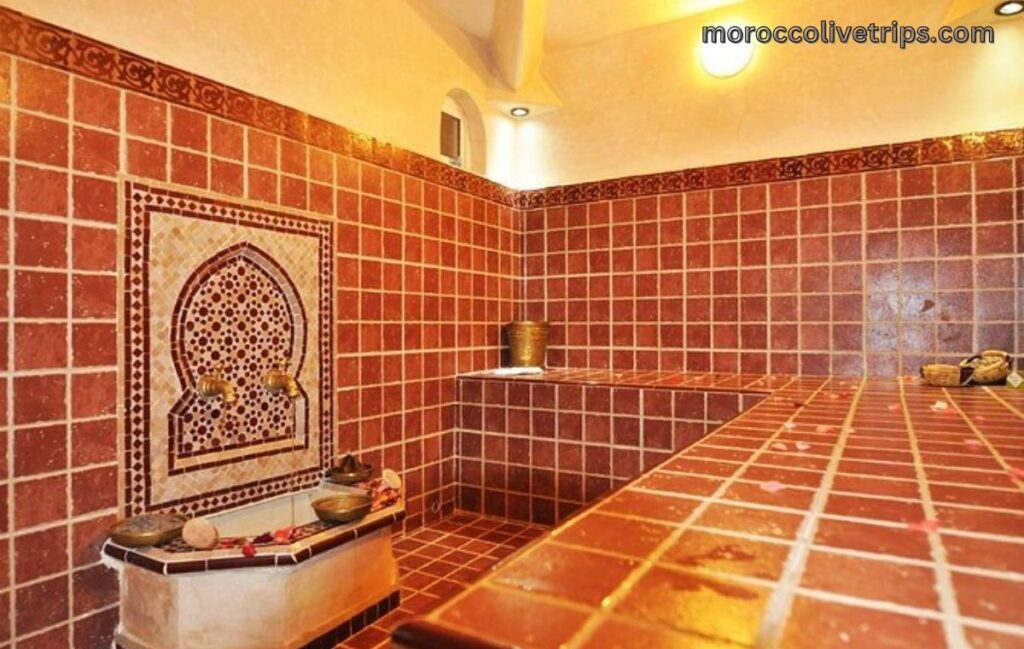
You walk through a carved cedar door into a world of warmth, steam, and silence. A few minutes later, someone is scrubbing years of dead skin off your body with a rough black glove, and you are wondering why you have never done this before. That is the Moroccan hammam – and it is unlike anything you have experienced at a Western spa. The hammam is not just a bath. It is one of Morocco’s oldest living traditions – a weekly ritual of cleansing, community, and self-care practiced by Moroccans of every background for over a thousand years. For travelers visiting Morocco, experiencing an authentic Moroccan hammam is consistently rated as one of the most memorable and culturally meaningful moments of any trip. Morocco Live Trips has guided hundreds of international visitors through their first hammam experience. In this complete 2026 guide, we walk you through everything: the history, the ritual step by step, what to wear, how much to pay, the best cities to visit, and exactly how to book the right experience for your trip. What Is a Moroccan Hammam? A Moroccan hammam is a traditional steam bathhouse where a full-body cleansing ritual takes place using heat, natural black soap, and physical exfoliation. Unlike a Western sauna or day spa, the hammam is not simply about relaxation – it is a structured ritual with cultural, social, and spiritual significance deeply rooted in Moroccan and Islamic tradition. The word hammam comes from the Arabic root meaning “to heat.” Every town and neighborhood in Morocco has at least one public hammam. In major cities like Marrakech and Fes, there are hundreds – some centuries old, hidden behind unmarked doors in the medina’s narrow alleys. The History of Moroccan Hammams The hammam tradition arrived in Morocco with the Arab conquests of the 7th century, drawing on Roman and Byzantine bathhouse culture and blending it with Islamic cleanliness rituals. Under Islamic law, ritual purity – known as taharah – is required before prayer. The hammam became the community’s answer to that spiritual need, long before running water reached private homes. Morocco’s oldest surviving hammams date back to the Marinid dynasty of the 13th and 14th centuries. The hammams of Fes Medina, the world’s oldest continuously inhabited medieval city, include structures built during this era – some still operating today with their original clay-fired heating systems running beneath the marble floors. For centuries, the hammam was where Moroccan society came together across class lines. Brides were prepared for their wedding nights in hammams. Business deals were made there. Friendships were formed. News was shared. The hammam was, in many ways, the social heart of Moroccan life. Why Hammams Are Central to Moroccan Culture? The hammam sits at the intersection of faith, beauty, and community in Morocco. Visiting the hammam at least once a week is considered a social norm and a mark of self-respect across all generations. Moroccan mothers bring their young children to the hammam. Elderly women maintain lifelong friendships forged in hammam steam rooms. Berber beauty rituals passed down through generations center on hammam ingredients: beldi soap made from olives, rhassoul clay from the Atlas Mountains, and argan oil from Morocco’s southwestern forests. These are not marketing terms – they are the actual products Moroccan women have used for personal care since long before the concept of the spa industry existed. For travelers, entering a traditional hammam means entering a living piece of Moroccan heritage. It is one of the few tourism experiences that connects you directly to how Moroccan families actually live, rather than a version staged for visitors. Traditional vs Luxury Moroccan Hammams There are two distinctly different hammam experiences available to tourists in Morocco – and choosing the right one depends on what you are looking for. Public Local Hammams Public hammams – known as hammam beldi or hammam sha’bi – are the neighborhood bathhouses used by local Moroccan families. They charge a fraction of tourist prices, typically between 15 and 30 Moroccan dirhams for entry, with black soap and kessa scrub services available for a few dirhams more. These hammams are gender-segregated, with separate sections or operating hours for men and women. The environment is basic – tiled rooms, marble slabs, communal washing areas, and a consistent heat that opens every pore in your body within minutes. Staff communicate in Arabic or Darija, and very little English is spoken. The experience is raw, authentic, and transformative. You are not a tourist here – you are a participant in something Moroccans do every week of their lives. Many seasoned travelers describe a public hammam as one of the most human, humbling, and memorable experiences of their time in Morocco. Private Tourist Hammam Experiences Private and luxury hammams are specifically designed for tourists and are often located in riads, boutique hotels, and dedicated spa facilities in Morocco’s major cities. They offer a fully guided experience in English, private rooms or semi-private booths, premium products, and add-on treatments like argan oil massage, facial rhassoul clay masks, and full-body Moroccan spa packages. Prices range from 200 to 800 dirhams for a full treatment, depending on the city and the facility. These hammams are a genuinely excellent experience – clean, comfortable, unhurried, and professionally run. The therapists are trained and accustomed to working with first-time visitors from the UK, US, and Europe. Which Option Is Best for First-Time Visitors? If you are comfortable with minimal facilities and basic communication barriers, a public local hammam delivers an irreplaceable cultural experience that no amount of money can replicate in a luxury spa setting. Go with someone who knows the ropes – a local guide or a friend who has been before. If you want a guided, comfortable, fully explained introduction to the hammam ritual – especially if you are traveling as a couple, with a family, or as a solo female traveler who prefers a private environment – a private tourist hammam is the right call. Many Morocco Live Trips tour packages include
Best Time To Visit Morocco From UK: Complete Seasonal Guide
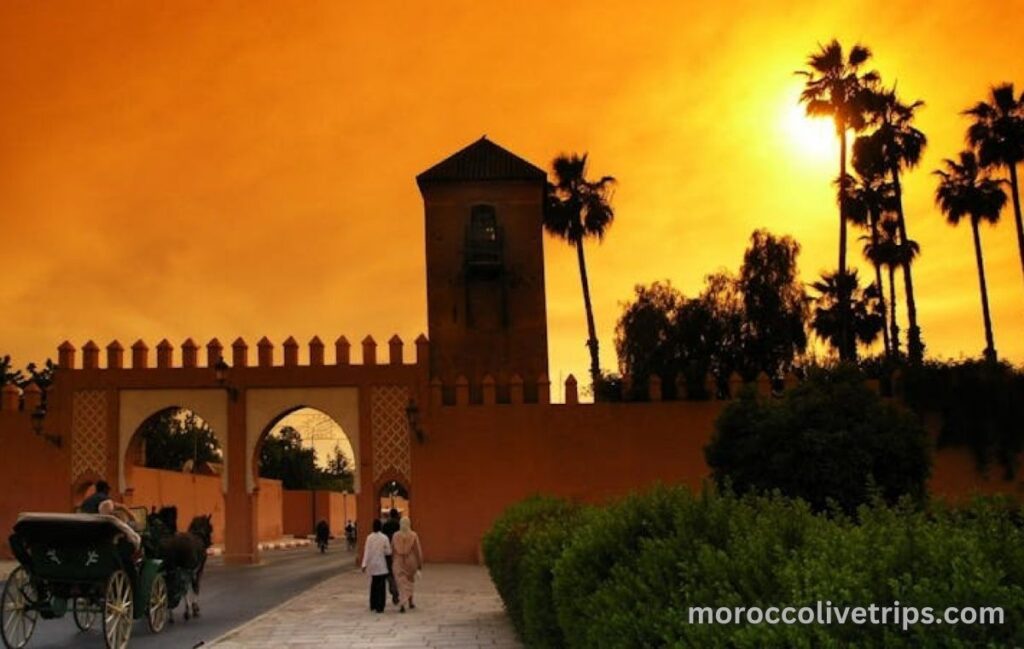
Planning a Morocco holiday from the UK? You are in the right place. Morocco sits just 3 hours by flight from London, yet it feels like a completely different world – ancient medinas, golden Sahara dunes, snow-capped Atlas Mountains, and vibrant imperial cities. But picking the best time to visit Morocco from the UK can make or break your experience. This guide breaks down Morocco weather by month for UK tourists, the best seasons for every type of traveller, and exactly when to book to get the best value. Whether you are planning a desert tour, a romantic couples escape, a family holiday, or a cultural city break, this complete Morocco travel guide for UK visitors has you covered. Ready to book? Morocco Live Trips offers handpicked Morocco tour packages from the UK designed around every season. Browse our tours and plan your perfect trip today. When Is The Best Month To Visit Morocco? The best months to visit Morocco from the UK are March, April, October, and November. Spring and autumn deliver the most comfortable temperatures, clear skies, and ideal conditions across all regions – from the Sahara Desert to the Atlas Mountains, Marrakech, Fes, and the Atlantic Coast. If you want winter sun, January and February are surprisingly warm and affordable. If you love beaches, July and August suit the Atlantic Coast and Agadir perfectly. Summer in Marrakech and the desert, however, reaches 40°C+ and is best avoided unless you handle extreme heat well. Morocco Weather By Season Morocco has four distinct travel seasons. Each one suits a different type of holiday. Here is what to expect. Spring (March–May): The Most Popular Time To Visit Spring is peak season for a reason. Temperatures across Morocco sit between 18°C and 28°C, wildflowers cover the valleys, and the Sahara is warm but not brutal. Marrakech weather in spring is at its most pleasant – warm days, cool evenings, and zero risk of heatstroke. The Atlas Mountains weather in spring is spectacular. Snow melts off the higher peaks by April, trekking trails open up, and the landscapes turn a vivid green. Chefchaouen – the Blue City – looks stunning against spring skies. Spring is also the best time for Morocco road trips from the UK – the Dades Valley blooms with roses in April, the Draa Valley turns golden, and the route through Ouarzazate and Ait Benhaddou sits in perfect light for photography. March is great for Easter holidays in Morocco from the UK. April and May are the sweet spot before crowds peak in summer. Best for: Desert tours, Atlas Mountains hiking, city breaks in Marrakech and Fes, couples, families, road trips. Summer (June–August): Best For Coastal Holidays Is Morocco too hot in summer? For inland cities – yes. Marrakech regularly hits 38°C to 45°C in July and August. Fes and the Sahara Desert are similarly intense. Casablanca temperatures are slightly cooler, sitting around 26°C–30°C due to Atlantic breezes. The Atlantic Coast of Morocco is the real summer winner. Essaouira stays breezy and pleasant thanks to trade winds, making it one of the best summer destinations for British tourists in Morocco. Agadir beaches are busy but lively, and sea temperatures along the coast hit a comfortable 22°C–24°C. Summer flights from the UK to Marrakech are frequent and direct. Easyjet, Ryanair, and British Airways all operate routes from London, Manchester, and Birmingham. Prices peak in July and August, so book early. Best for: Atlantic Coast holidays, Essaouira, Agadir, beach breaks. Avoid: Sahara Desert, Marrakech medina, Fes in peak July heat. Autumn (September–November): Perfect For Desert Tours Autumn is the second-best season to visit Morocco from the UK – and arguably the best time for Sahara Desert tours. By September, the desert heat drops from brutal to bearable. October delivers perfect camel trekking weather in Merzouga, with clear nights, warm days around 28°C, and zero tourist overcrowding. October Morocco holidays from the UK are incredibly popular for this reason. The Morocco climate in October mirrors spring – warm, stable, and dry. Marrakech, Fes, Chefchaouen, and the imperial cities are all comfortable for walking and exploring. November sees temperatures dip slightly but remains excellent for city breaks and cultural tours. Flight prices start to fall after school half-term, making November one of the cheapest times to visit Morocco with great weather. Best for: Sahara Desert camping, camel trekking, Merzouga, Marrakech, Fes, Chefchaouen, couples holidays, cultural tours. Winter (December–February): Morocco’s Winter Sun Escape Morocco is one of the best winter sun destinations from the UK. While Britain shivers through grey skies, Marrakech sits at a comfortable 18°C–22°C in December and January – warm enough for sightseeing, cool enough to be refreshing. Is Morocco warm enough in February? Yes – daytime temperatures in Marrakech average 20°C, the souks are quieter, and hotel rates drop significantly. The Sahara Desert in winter is actually magical – cold nights (4°C–8°C) mean you get a proper desert camping experience with stars above and silence all around. Christmas tours in Morocco from the UK are growing in popularity. Morocco stays open, restaurants serve food throughout December, and the festive crowds of Europe feel a world away. January and February are among the cheapest months to visit Morocco from the UK, with flights and riads available at very low prices. Best for: Winter sun breaks, budget travel, Sahara camping, Marrakech sightseeing, couples escapes from the UK. Best Time To Visit Marrakech From The UK The best month to visit Marrakech from the UK is March, April, October, or November. Marrakech weather in these months sits between 20°C and 28°C – perfect for walking the Djemaa el-Fna, exploring the souks, visiting the Bahia Palace, and taking day trips to the Atlas Mountains. Avoid July and August in Marrakech. The heat is serious – 40°C+ is common – and the medina becomes very crowded with European tourists. If you must visit in summer, book a riad with a pool and plan outdoor activities only in the early morning. Direct flights from London
Luxury Marrakech to Fes Desert Tour – Private Sahara Experience & Complete 2025/2026 Guide
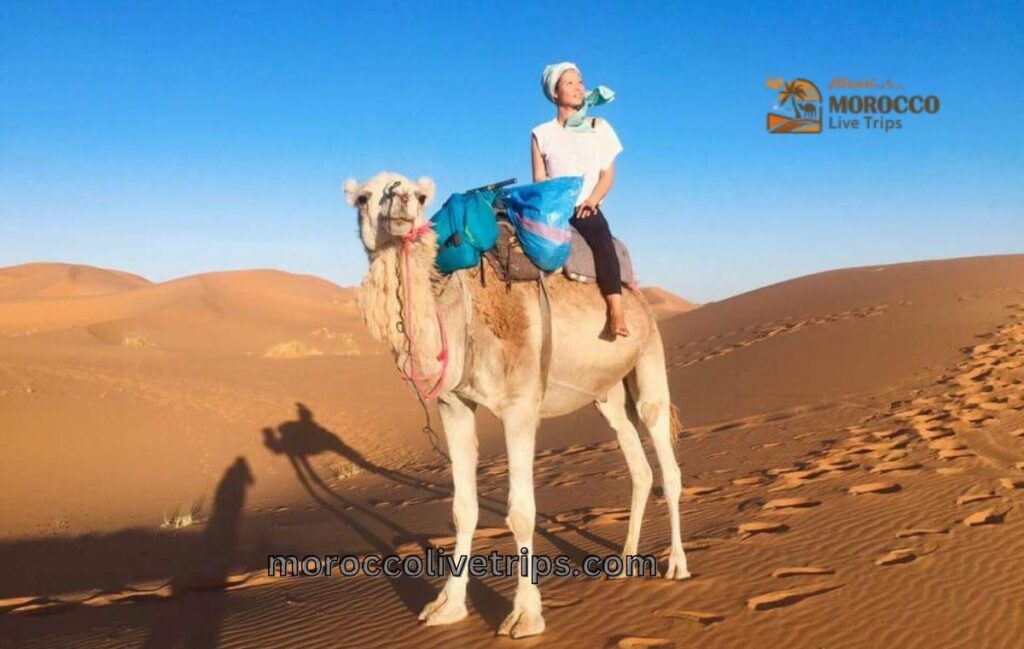
Picture yourself traveling from Marrakech in a private luxury vehicle, crossing the stunning High Atlas Mountains, exploring the breathtaking UNESCO Kasbah of Aït Ben Haddou, watching the Sahara Desert sunset from the top of a golden sand dune – and arriving in the ancient, magical city of Fes. A luxury Marrakech to Fes desert tour is the most beautiful and complete way to experience Morocco – comfortable, private, and absolutely unforgettable at every single stop. At Morocco Live Trips, we design every detail of your private luxury desert tour around you – so all you have to do is enjoy the most incredible journey of your life. This complete 2025/2026 guide has everything you need – let’s get started! What Is a Luxury Marrakech to Fes Desert Tour? A luxury Marrakech to Fes desert tour is a private, fully guided Morocco travel experience that takes you from Marrakech through the country’s most spectacular landscapes – including the High Atlas Mountains, UNESCO Kasbah Aït Ben Haddou, Dades Valley, Todra Gorge, and the Sahara Desert – before finishing in the ancient imperial city of Fes. It typically lasts 3 to 5 days and includes private VIP transport, dedicated expert local guides, premium riad accommodation, and a private luxury desert camp in Merzouga’s famous Erg Chebbi dunes. Unlike standard group tours, every detail of a luxury Morocco desert tour is fully personalized and exclusively crafted around your preferences, pace, and travel style. What Makes This Tour Truly Luxury – Not Just a Standard Desert Trip Luxury Desert Camp vs Standard Camp – The Real Difference A luxury Merzouga desert camp offers private ensuite tents with proper beds, elegant Moroccan furnishings, hot showers, and gourmet dining – a world away from the basic shared tents and communal facilities of standard camps. Every detail is thoughtfully designed to deliver comfort, privacy, and an authentic Saharan atmosphere simultaneously – making your overnight desert experience genuinely magical rather than merely memorable. Private VIP Transport vs Shared Group Tours On a luxury Marrakech to Fes desert tour, you travel in a fully private, air-conditioned 4×4 or luxury minivan with your own dedicated driver – stopping wherever you want, for as long as you like. There are no crowded buses, no fixed group schedules, and no compromises – just pure, comfortable, and completely flexible private travel through Morocco’s most breathtaking landscapes at your own perfect pace. What’s Included That Standard Tours Simply Don’t Offer A luxury Morocco desert tour includes handpicked premium riad stays, private ensuite desert camp, gourmet Moroccan dining, dedicated English-speaking expert guide, VIP airport transfers, and fully customized daily itineraries – all the thoughtful extras that transform a good trip into an absolutely extraordinary one. Luxury Marrakech to Fes Desert Tour – Complete 3 Day Itinerary Day 1 – Marrakech to Dades Valley via High Atlas Mountains, Tizi N’Tichka Pass & Aït Ben Haddou UNESCO Kasbah Your luxury desert journey begins with an early morning departure from Marrakech in your private VIP vehicle. You wind through the dramatic High Atlas Mountains and over the legendary Tizi n’Tichka pass at 2,260 meters – stopping at panoramic viewpoints that will take your breath away completely. The afternoon brings the magnificent UNESCO-listed Kasbah Aït Ben Haddou – one of the most beautiful and historically rich landmarks in all of Africa. You end the day in the stunning Dades Valley – settling into a handpicked luxury riad surrounded by dramatic canyon scenery and total tranquility. Day 2 – Dades Valley to Merzouga Sahara via Todra Gorge & Rose Valley Day two takes you through some of Morocco’s most dramatically beautiful landscapes. The towering Todra Gorge – with its 300 meter ochre rock walls – is a genuinely jaw-dropping stop that every traveler photographs endlessly. The fragrant Rose Valley of Kelaat M’Gouna adds a beautifully unique sensory dimension to the journey before the landscape gradually transforms into the golden desert as you approach Merzouga and the magnificent Erg Chebbi dunes. Your private luxury desert camp awaits – along with the most breathtaking sunset of your entire life. Day 3 – Merzouga Desert Sunrise, Erg Chebbi Camel Trek, Ziz Valley to Fes Wake before dawn for a private sunrise camel trek across the golden Erg Chebbi dunes – watching Morocco’s Sahara Desert wake up in an explosion of breathtaking golden light that no photograph can ever fully capture. After breakfast at your luxury camp, you journey northward through the stunning Ziz Valley and its endless palm grove oasis – stopping at fascinating highlights along the route before arriving in the ancient, soulful, and deeply magnificent city of Fes as the evening light falls beautifully over its legendary medina. Luxury Sahara Desert Experience in Erg Chebbi Dunes – Merzouga Sunset Camel Ride Across the Golden Sahara Dunes Your private sunset camel ride across the Erg Chebbi dunes is the single most magical and unforgettable moment of the entire tour. As your camel slowly carries you across the golden sand – the Sahara sky transforming into breathtaking shades of orange, pink, and deep red – you’ll understand completely why travelers from all over the world come to Morocco specifically for this extraordinary experience. Overnight Stay in a Private Ensuite Luxury Desert Camp Your private ensuite luxury desert camp is nothing like you’d expect from a desert – think elegantly furnished Berber tents with proper beds, soft linens, private bathrooms with hot showers, and thoughtful Moroccan design details that create an atmosphere of genuine luxury deep in the heart of the Sahara. It’s romantic, intimate, and completely extraordinary. Traditional Moroccan Berber Dinner and Live Desert Music Under the Stars As darkness falls over the Sahara, your private camp dining experience begins – a beautifully presented traditional Moroccan Berber dinner served under a breathtaking canopy of a million stars. Live Berber musicians create an atmosphere that is simultaneously ancient and magical – the kind of evening that stays with you for the rest of your life and makes you want to return to Morocco again
Morocco Desert Camel Ride Experience – Complete Guide & Authentic Sahara Adventure
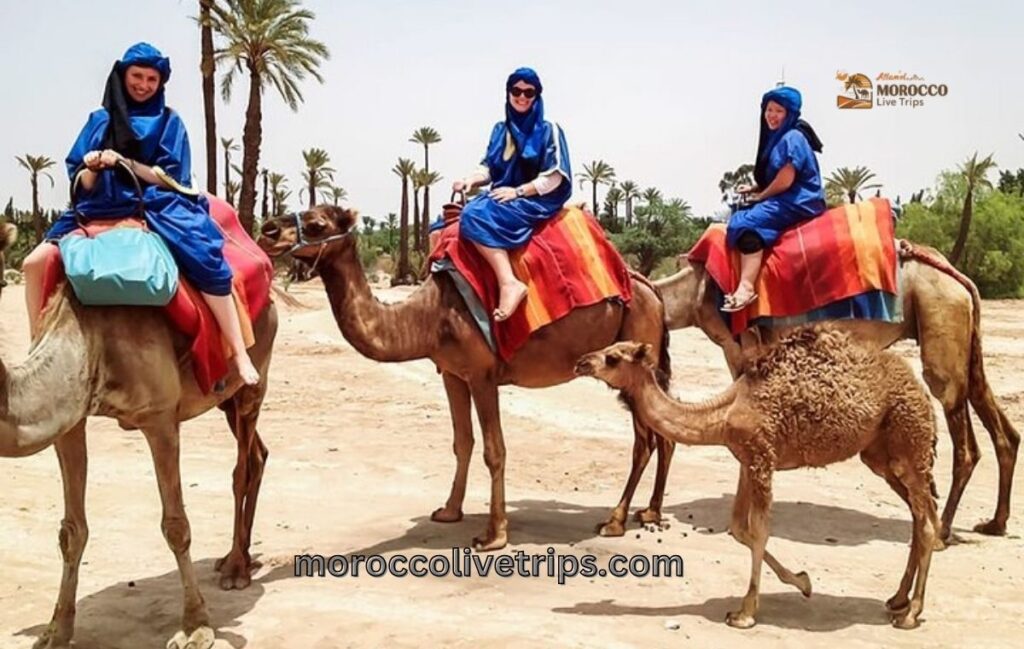
Imagine sitting on a camel’s back, slowly moving across the golden Sahara sand dunes as the sun melts into the horizon and the desert falls completely silent around you. A Morocco desert camel ride experience is one of those rare, magical moments that every traveler remembers for the rest of their life. Whether you choose a short sunset camel trek or a full overnight Sahara desert adventure, the feeling is always the same – pure, breathtaking, and absolutely unforgettable. At Morocco Live Trips, we make sure your Sahara camel ride is safe, authentic, and deeply memorable from the very first step. This complete guide has everything you need. What Is a Morocco Desert Camel Ride Experience? A Morocco desert camel ride experience is an authentic and deeply memorable journey across Morocco’s most spectacular Sahara Desert landscapes on the back of a traditionally decorated dromedary camel. It ranges from a short one-hour sunset excursion across the famous Erg Chebbi sand dunes to a multi-day overnight camel trek deep into the heart of the Sahara – connecting you with centuries-old Berber nomadic traditions, breathtaking desert scenery, and an unforgettable sense of adventure that very few travel experiences in the world can match. Why a Camel Ride in the Moroccan Desert Is a Must-Do Experience A camel ride in the Moroccan desert is not just a tourist activity – it’s a genuine connection with the ancient Saharan nomadic culture that has shaped Morocco for thousands of years. There is simply nothing quite like the feeling of riding a camel across towering golden dunes as the Sahara sky transforms into an explosion of orange, pink, and purple at sunset. It’s slow, peaceful, and deeply moving – the kind of experience that fills your heart, your camera roll, and your travel journal all at once, and stays with you for the rest of your life. Best Places for a Desert Camel Ride Experience in Morocco Morocco offers several incredible locations for an authentic desert camel ride experience each with its own unique character and charm: Merzouga & Erg Chebbi – The Classic Sahara Camel Ride Merzouga is without doubt the most popular and spectacular location for a Morocco desert camel ride – home to the magnificent Erg Chebbi dunes that tower up to 150 meters and glow a breathtaking golden orange at sunrise and sunset. This is the classic, iconic Sahara camel ride experience that most travelers dream of – and it delivers every single time without exception. Zagora & Draa Valley – Shorter Trek, Different Scenery Zagora offers a completely different but equally beautiful desert camel ride experience – with smaller dunes, dramatic Draa Valley palm groves, ancient kasbahs, and a more accessible location from Marrakech. It’s perfect for travelers who want a genuine Sahara desert experience without the longer drive to Merzouga. Agafay Desert – Best Camel Ride Near Marrakech The Agafay Desert is a stunning rocky moonscape just 40 minutes from Marrakech – making it the perfect choice for travelers who want a camel ride desert experience without spending a full day traveling. While it doesn’t have the towering sand dunes of Erg Chebbi, it offers a genuinely dramatic and photogenic desert landscape that never disappoints. Erg Chigaga – Morocco’s Most Remote Camel Trek Experience Erg Chigaga is Morocco’s most remote and wild Sahara desert camel trek destination – accessible only by 4×4 and offering a truly off-the-beaten-path experience for serious adventure travelers. With virtually no crowds and some of the most dramatic desert dune landscapes in all of Morocco, it delivers the most raw, authentic, and deeply immersive camel trekking experience in the entire country. Morocco Desert Camel Ride Experience – What to Expect Step by Step Meeting Your Camel & Desert Preparation Your Sahara camel ride experience begins at the edge of the dunes where your Berber guide introduces you to your camel – a gentle, friendly dromedary that will carry you safely across the desert. You’ll receive a traditional Berber turban to protect your head and face from the sun and sand before mounting – a small but genuinely special cultural touch that every traveler loves. How to Mount a Camel & What the Ride Actually Feels Like Mounting a camel is a surprisingly fun experience – the camel first kneels down, you climb on, and then it rises back up in a dramatic two-stage motion that always gets a laugh from first-timers. The ride itself is gentle, rhythmic, and wonderfully peaceful – a slow swaying motion that feels completely natural within just a few minutes of setting off across the dunes. Sunset Camel Ride Across the Sahara Sand Dunes The sunset camel ride across the Sahara sand dunes is the absolute highlight – watching the sky transform into breathtaking shades of gold, orange, and deep red as your camel carries you silently across the dunes is a moment of pure, unfiltered magic that no photograph can ever fully capture. Camel Ride with Overnight Desert Camp Experience in Morocco Overnight Camel Trek to a Berber Sahara Desert Camp The overnight camel trek to a Berber desert camp is the most complete and deeply immersive Morocco desert camel ride experience available. After your sunset camel ride, you arrive at a beautifully set up traditional Berber camp where you enjoy a delicious Moroccan dinner, live Berber music around a campfire, and the most spectacular starry night sky you have ever seen in your entire life. Luxury vs Standard Desert Camp – Is the Upgrade Worth It? Standard desert camps offer comfortable traditional Berber tents, shared bathrooms, and a genuine nomadic atmosphere that most travelers absolutely love. Luxury desert camps upgrade you to private ensuite tents, proper beds, and premium dining – a significantly more comfortable experience that couples and honeymooners find absolutely worth every extra penny for that special occasion. How Long Is a Camel Ride in the Morocco Desert? The length of a Morocco desert camel ride depends entirely on the experience you choose. A short sunset camel excursion
Morocco Tours with Local Guides – Authentic Travel Experiences in 2026
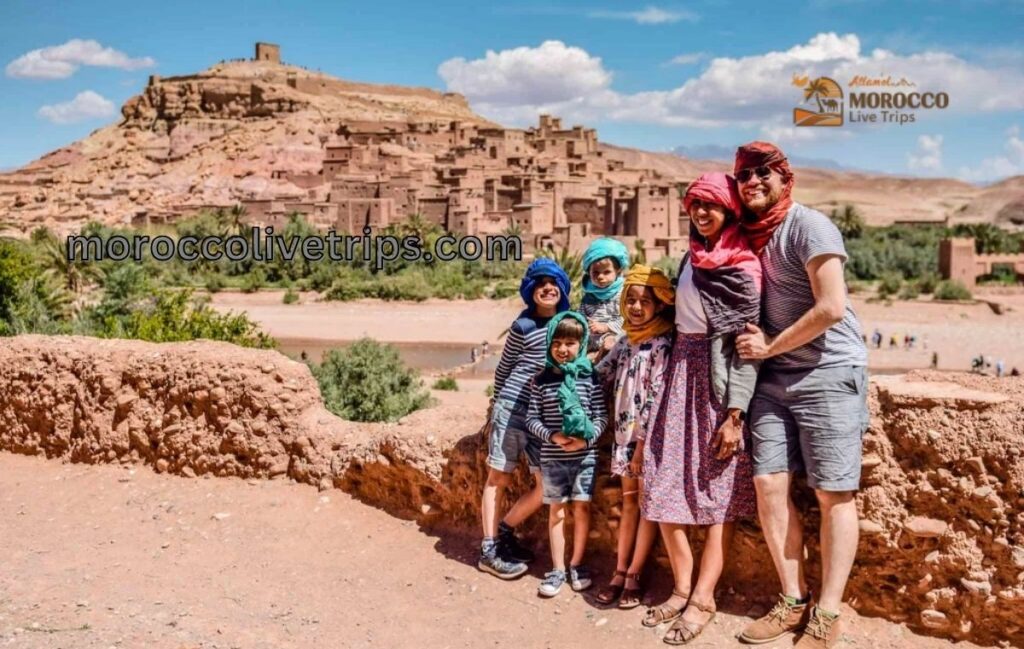
Imagine waking up in a beautiful Moroccan riad, sipping fresh mint tea, and spending your day exploring ancient medinas, riding camels across golden Sahara dunes, and ending the night around a fire under a sky full of stars in a traditional Berber camp. This is exactly what Morocco tours with local guides feel like. At Morocco Live Trips, our licensed local guides take you beyond the typical tourist trail – through the blue streets of Chefchaouen, the historic souks of Marrakech, and the UNESCO medina of Fes – giving you an experience that is real, personal, and truly unforgettable. This is the real Morocco – and we are here to show it to you. Why Choose Morocco Live Trips for Your Guided Morocco Tour Planning a trip to Morocco is exciting – but choosing the right tour company makes all the difference. At Morocco Live Trips, we are not just a travel agency – we are your local experts on the ground. Here is why thousands of travelers from around the world trust us to plan their guided Morocco tours: Licensed & Experienced Local Guides Every guide at Morocco Live Trips is officially licensed by the Moroccan Ministry of Tourism and has years of hands-on experience leading tours across the country. They don’t just show you the sights – they share real stories, hidden spots, and local knowledge that no guidebook can give you. 100% Customizable Private Morocco Tours Your trip, your rules. Whether you want a romantic couple’s tour, a family adventure, or a solo cultural journey, we build your itinerary around your interests, pace, and budget. No fixed programs, no rushing – just a perfectly planned private Morocco tour designed for you. Small Group Tours with Personal Attention Hate feeling like just another tourist in a crowd? Our small group Morocco tours keep numbers low so your guide can give every traveler the attention they deserve. You get the social feel of a group tour with the comfort and care of a private experience. Transparent Pricing – No Hidden Costs What you see is what you pay. We believe in honest and transparent pricing with no surprise fees, no hidden charges, and no last-minute add-ons. Every Morocco tour package comes with a clear breakdown so you can plan your trip with complete peace of mind. 24/7 On-Ground Support Across Morocco Travel doesn’t always go as planned – and that’s okay when you have us. Our local support team is available 24/7 across Morocco to handle any changes, questions, or emergencies. From the moment you land to the moment you leave, Morocco Live Trips has your back every step of the way. Why Morocco Tours with Local Guides Beat Every Other Travel Option Traveling Morocco alone can be stressful – getting lost in medinas, missing hidden gems, and falling for tourist traps are all too common. A licensed local guide changes everything. They know the secret spots, speak the local language, understand the culture deeply, and handle all the logistics so you don’t have to worry about a thing. You see more, experience more, and stress less. Simply put, a guided Morocco tour is safer, richer, and far more rewarding than any self-guided trip – and that is exactly what Morocco Live Trips delivers every single day. Types of Morocco Tours with Local Guides Not every traveler is the same – and neither are our tours. Whether you are a solo explorer, a family, a couple, or a group of friends, there is a perfect guided Morocco tour waiting for you. Here are the most popular types: Private Guided Tours in Morocco A private Morocco tour is the most personal and flexible way to explore the country. You get your own licensed local guide, your own vehicle, and a fully customized itinerary built around your interests and travel style. Want to spend more time in the Fes medina or skip a stop entirely? No problem – your tour moves at your pace, your way. Small Group Morocco Tours Perfect for solo travelers and budget-conscious explorers, our small group Morocco tours keep things intimate with a maximum of 8 travelers per group. You still get an expert local guide, comfortable transport, and a well-planned itinerary – but at a more affordable price. Plus, you get to share the experience with like-minded travelers from around the world. Multi-Day Morocco Tour Packages with Local Guides Want to see it all? Our multi-day Morocco tour packages take you on a complete journey through Morocco’s most iconic destinations – from the imperial cities of Marrakech and Fes to the Sahara Desert dunes of Merzouga and the blue city of Chefchaouen. Everything is taken care of – accommodation, transport, meals, and your expert local guide – so all you have to do is enjoy the ride. Specialty Morocco Tours (Desert, Trekking & Cultural) Looking for something beyond the typical sightseeing tour? Our specialty Morocco tours are designed for travelers who want a deeper, more unique experience. Choose from a Sahara desert camping tour, an Atlas Mountains trekking adventure, a Moroccan cooking class, or a photography tour through the ancient medinas. These tours are led by specialist local guides who bring real passion and expertise to every experience. Top Destinations Covered in Guided Morocco Tours Morocco is packed with incredible places – each one completely different from the last. From buzzing city medinas to silent desert dunes, here are the top destinations your local guide will bring to life for you: Marrakech Guided Tours – Souks, Medina & Hidden Riads Marrakech is where most Morocco journeys begin – and for good reason. Your local guide walks you through the famous Djemaa El-Fna square, deep into the colorful souks, past the stunning Bahia Palace, and into the hidden riads that most tourists never find. Without a guide, you will miss half of what makes this city so magical. Fes Private Tours – UNESCO Medina & Ancient Tanneries Fes is the cultural heart of Morocco and home