If you’re planning a trip to Morocco, understanding the people is just as important as knowing which cities to visit or what food to eat. The landscape is spectacular – but it’s the people who make Morocco unforgettable.
Morocco is a country of extraordinary depth, shaped by Amazigh roots, Arab heritage, Andalusian influence, sub-Saharan trade, and a Mediterranean coastal openness that has drawn travelers for centuries. The people carry all of that history in how they greet you, feed you, and welcome you into their world.
This is not a list of stereotypes or a surface-level cultural checklist. It’s an honest, thoughtful look at Moroccan values, social customs, daily life, and character by Morocco Live Trips – written to help you connect more meaningfully with the people you’ll meet along the way.
Who Are Moroccan People? A Brief Cultural Background
Morocco sits at the crossroads of Africa, the Arab world, and Mediterranean Europe – and that geography has shaped everything about its people. The majority of Moroccans are of Amazigh (Berber) descent, even among those who identify primarily as Arab today. The Amazigh are the indigenous population of North Africa, with a documented history stretching back more than five thousand years.
Arabic and Amazigh (Tamazight) are both official languages. French is widely spoken in business, education, and signage. Spanish remains common in the northern regions near Tetouan and Nador. Many Moroccans – especially in cities and tourist areas – move between three or four languages comfortably. That’s not a coincidence; it reflects a culture built on trade, movement, and openness to outsiders.
Islam is central to daily Moroccan life. It’s not simply a religious identity – it shapes time, greetings, meals, architecture, family structure, and social values. You cannot understand Moroccan people without understanding that.
Core Values That Shape Moroccan Society
Hospitality Is Genuine, Not Performative
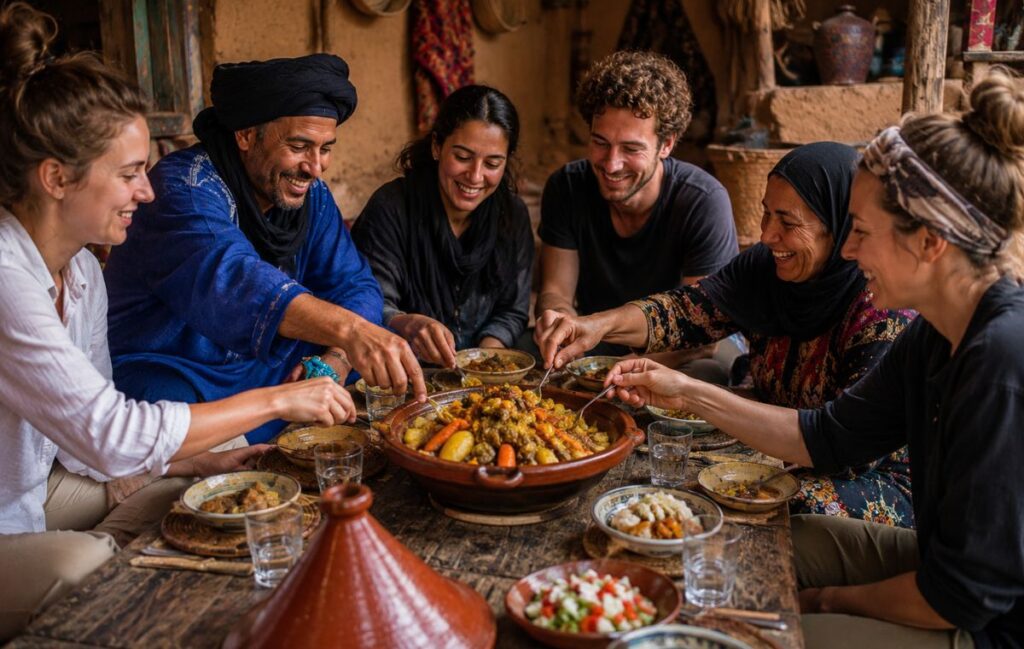
Moroccan hospitality – known in Arabic as diyafa – is one of the defining pillars of the culture. When a Moroccan invites you into their home for tea or a meal, that invitation is sincere. Declining without a good reason can feel dismissive, even rude.
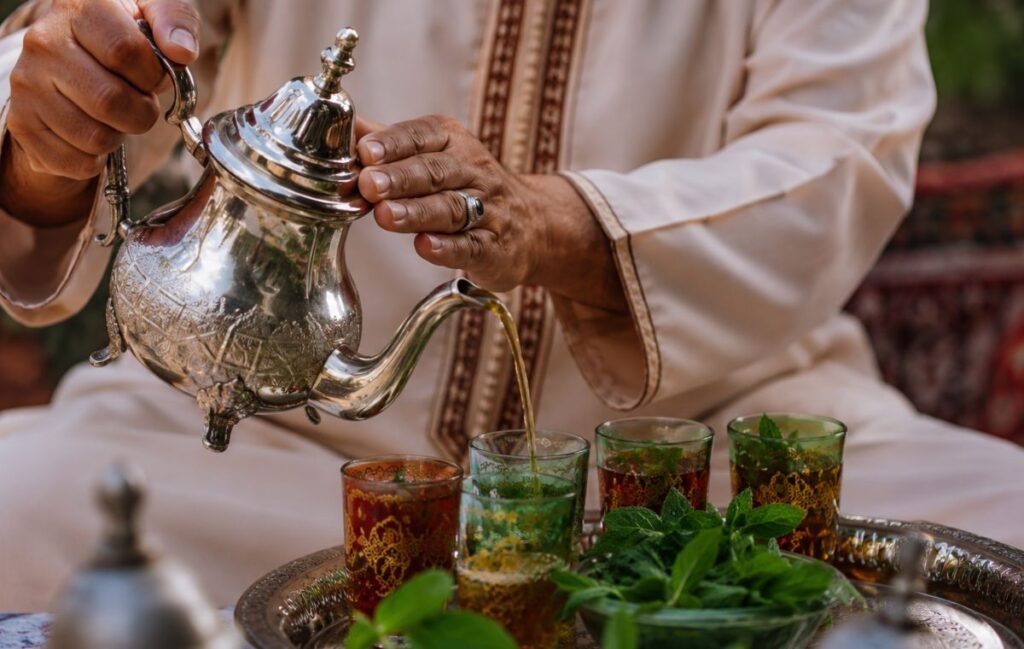
The tradition of offering mint tea to guests is almost sacred. You’ll encounter it everywhere – in homes, carpet workshops, rural guesthouses, and family riads. Accepting tea is a gesture of openness and respect. Refusing politely is always understood, but accepting it is always the warmer choice.
It’s fair to note that in heavily touristed areas, some commercial interactions borrow the language of hospitality. A little discernment helps. But the genuine warmth you’ll find in smaller towns, private homes, and off-the-beaten-path communities is entirely real – and it will stay with you long after you leave.
Family Is the Center of Everything
Moroccan society is family-first in a way that many Western visitors find striking. Multi-generational households are common. Major life decisions – where to live, who to marry, what career to pursue – regularly involve extended family input, and this isn’t resented; it’s expected.
Elders are treated with visible, active respect. You’ll see it in how people speak to older relatives, how they’re seated first at meals, and how their opinions shape family decisions. This reflects a genuine social value around continuity, duty, and gratitude – not just inherited convention.
If you’re invited to meet someone’s family during your time in Morocco, treat it as the honor it almost certainly is.
Community Over Individual Expression
Moroccan culture is collective rather than individualistic. The neighborhood (hay), the quarter, the family unit – these are the primary social anchors. People look out for each other in ways that can feel both warmly enveloping and a little overwhelming to solo travelers accustomed to privacy.
Don’t be surprised if strangers ask where you’re from, whether you’re married, or how old you are within minutes of meeting you. In Moroccan social culture, these aren’t intrusive questions. They’re connection-building – a way of establishing who you are and where you fit in the shared world.
What Moroccan People Are Like in Daily Life
One of the most useful things to know before visiting Morocco is what ordinary daily life actually looks like – not the version curated for tourists, but the rhythm that runs beneath it.
Mornings in most Moroccan cities begin early. The fajr call to prayer sounds before sunrise, and many neighborhoods wake up with it. Small bread bakeries (ferran) open early, and it’s common to see people collecting fresh khobz on their way somewhere before 7am. Corner cafes fill with men sharing coffee and msemen (flaky Moroccan flatbread) while watching the street come alive.
Afternoons slow down. Lunch is often the main meal of the day – a proper, cooked meal eaten at home when possible, usually shared. The siesta culture isn’t universal, but a quieter pace after midday is real, especially in summer.
Evenings are social. Families gather. In summer and during Ramadan, medina alleyways come alive at night with food vendors, conversation, and music. The souk economy runs on its own clock – afternoons and evenings are when business is most active.
This rhythm matters for travelers. Morocco doesn’t operate on the same schedule as Europe. Things move differently here – sometimes slower, sometimes in ways that feel chaotic, but always with their own internal logic.
Religion and Daily Life
Morocco is a predominantly Sunni Muslim country, and Islam is woven into the rhythm of everyday life in ways that can’t be separated from the culture itself.
The call to prayer (adhan) sounds five times a day from mosques across the country. During Ramadan – the holy month of fasting – daily life shifts significantly. Restaurants may be closed during daylight hours. Business pace changes. And at iftar (the sunset breaking of the fast), the streets transform into something communal and warm – families and neighbors eating together, vendors setting out dates and harira soup, and a collective exhale of relief and gratitude that is genuinely moving to witness.
A few things worth knowing as a visitor:
Dress modestly, especially in medinas, smaller towns, and near mosques. Covering your shoulders and knees is both respectful and practical – you’ll be more comfortable, and locals will be more at ease around you.
Non-Muslims cannot enter most mosques in Morocco. The Hassan II Mosque in Casablanca is a notable and magnificent exception, open to guided visits. Respect this boundary without being self-conscious about it.
During Ramadan, eating, drinking, or smoking in public during fasting hours is disrespectful. Moroccans working while fasting are doing something genuinely demanding. Simple awareness of that goes a long way.
None of this should feel burdensome. It’s about understanding the context you’re entering – and that understanding always makes the experience richer.
>>Confused about morocco safety ? safety guide is here..
Moroccan Social Etiquette: What Actually Matters
Greetings
Greetings in Morocco carry real social weight. As-salamu alaykum – peace be upon you – is the standard Islamic greeting, and it’s genuinely appreciated when visitors use it. The response is wa alaykum as-salam. Even a stumbling attempt earns a smile.
Between friends and family, greetings involve cheek kisses, typically among people of the same gender. Male friends will often shake hands and then place their right hand over their heart – a small gesture that signals sincerity rather than formality.
Negotiating in Souks
The medina markets of Marrakech, Fes, Chefchaouen, and Essaouira operate on negotiation. This is cultural commerce – centuries old – not aggressive confrontation. Going back and forth on price is expected. When done with good humor and a light touch, it’s actually enjoyable.
A few things that will serve you well:
Starting around 40–50% below the asking price is reasonable in most tourist markets. Once you name a price and the seller meets it, walking away is considered genuinely rude – and fairly so. Keeping the exchange warm and unhurried almost always gets you a better outcome than impatience.
Eating Together
Sharing food is a deeply social act in Morocco. Traditional meals are often eaten from a communal dish at the center of the table. If you’re eating with a Moroccan family, use your right hand – the left is considered unclean in traditional Islamic practice. Wait to be seated. Don’t begin eating before the host does.
Khobz – Moroccan flatbread – appears at nearly every meal. It’s used to scoop food, soak up sauces, and hold things together. Bread is treated with real respect here. You’ll rarely see it wasted or casually discarded.
Planning a cultural trip? Explore our Morocco heritage and culture tour.
Useful Darija Phrases Every Visitor Should Know
You don’t need to speak Arabic to visit Morocco. But a handful of Darija (Moroccan Arabic dialect) phrases will open more doors – and more genuine smiles – than almost anything else you can do.
| Phrase | Pronunciation | Meaning |
| As-salamu alaykum | Ah-SAH-lah-moo ah-LAY-koom | Peace be upon you (hello) |
| Wa alaykum as-salam | Wah ah-LAY-koom ah-SAH-lahm | And upon you peace (response) |
| Shukran | SHOOK-rahn | Thank you |
| La shukran | Lah SHOOK-rahn | No thank you |
| Bsaha | B-SAH-ha | Enjoy your meal / good health |
| Inshallah | In-SHAH-lah | God willing / hopefully |
| Bezzaf | Bez-ZAF | Too much / a lot |
| Mzyan | M-ZYAHN | Good / nice |
| Azul | Ah-ZOOL | Hello in Tamazight (Amazigh) |
| La | Lah | No |
| Iyeh | EE-yeh | Yes |
Even using two or three of these in the right moment will mark you as a visitor who came with genuine interest – and Moroccans notice and appreciate that difference.
Amazigh Identity: Morocco’s Indigenous Heart
No honest article about Moroccan people is complete without giving proper space to Amazigh identity. The Amazigh (Imazighen in plural) are the original inhabitants of North Africa, predating Arab and Islamic presence by thousands of years. Their history is not a footnote – it’s the foundation.
For much of the 20th century, Amazigh language and culture were marginalized in official Moroccan public life – treated as regional dialect rather than recognized heritage. That changed significantly in 2011, when Tamazight became a constitutionally recognized official language alongside Arabic. Today, Amazigh identity is experiencing a genuine cultural resurgence, visible in music, visual art, politics, and everyday expression.
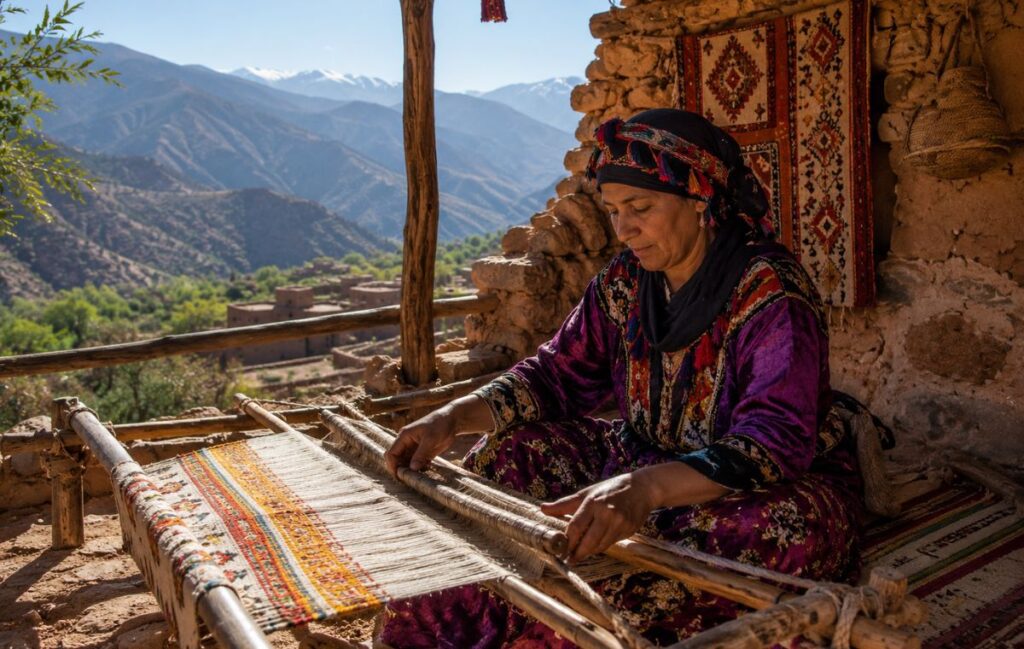
In the Atlas Mountains, the Anti-Atlas, and the southern pre-Saharan regions, you’ll find communities where Tamazight is the primary language and Amazigh cultural traditions remain deeply alive – in the geometric patterns of woven textiles, in moussem (festival) celebrations, in oral poetry passed between generations, and in architecture built from local stone and earth.
Visiting these communities – through a responsible, locally rooted tour operator – offers an experience of Morocco that goes well beyond the imperial city circuit. It’s among the most meaningful things you can do on any trip here.
Moroccan Art, Music, and Cultural Expression
Moroccan culture expresses itself loudly and beautifully through art, craft, and music – and as a visitor, you’ll feel this even if you’re not specifically looking for it.
Gnawa music has its roots in the spiritual practices of West African communities brought to Morocco historically. Today it’s one of Morocco’s most distinctive musical traditions – hypnotic, percussive, and deeply communal. The Gnawa World Music Festival in Essaouira draws international visitors every year and remains one of the most authentic musical experiences in North Africa.
Andalusian music (al-ala) is classical in the truest sense – preserved and refined over centuries by Moroccan musicians descended from Andalusian communities who arrived after 1492. It’s performed in conservatories and private gatherings across Fes, Rabat, and Tetouan.
Artisan craft is not just commerce in Morocco – it’s living heritage. The zellige tilework in Fes medina, the hand-knotted carpets of the Middle Atlas, the blue-painted pottery of Chefchaouen, the leather babouches stitched in Marrakech’s souks – each of these represents a skill tradition passed through generations of families. When you buy directly from an artisan, you’re participating in cultural continuity, not just shopping.
Gender Dynamics: Honest Observations
Understanding the Social Context
Gender roles in Morocco are more nuanced than any simple label can hold. Urban Morocco – especially Casablanca, Rabat, and to a growing extent Marrakech – has a visible professional class of women who work as lawyers, doctors, engineers, politicians, journalists, and entrepreneurs. The country has had women in parliament and government for decades.
At the same time, traditional expectations remain influential, particularly in rural areas and among older generations. Many Moroccan women navigate a dual social world – professional modernity and traditional family obligation – with considerable skill and pragmatism.
For Female Travelers
Solo female travelers visit Morocco successfully every year, and many count it among their most rewarding travel experiences. That said, it’s important to be honest: unsolicited attention from men – verbal comments, persistent approaches in medinas – is something many women report, especially in heavily touristed areas like Marrakech’s Djemaa el-Fna or the central souks of Fes.
>>Solo Female Traveler Guide is here
Things that genuinely help:
Dressing conservatively – covered shoulders and knees – reduces unwanted attention noticeably and signals cultural respect. Avoiding direct eye contact with men making comments is generally more effective than engaging or responding. Staying in well-reviewed riads and using reputable guides for medina exploration provides a significant layer of comfort. Group day trips or guided city walks are worth considering, particularly on your first day in an unfamiliar medina.
None of this should discourage you. Morocco is a remarkable destination and the vast majority of interactions are positive, warm, and genuinely memorable. Go informed – and go.
Urban vs. Rural Morocco: Two Different Worlds
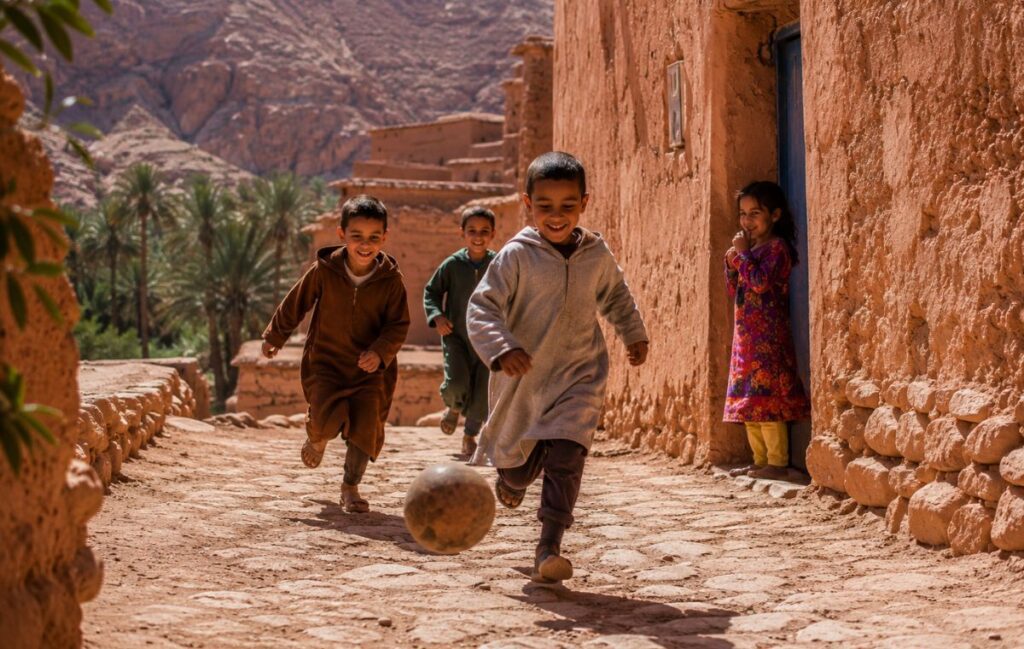
Morocco is not a monolithic experience. Life in Casablanca or Rabat looks very different from life in a village above the Draa Valley or on the edge of the Sahara. Both are real Morocco. Both are worth your time.
| Aspect | Urban Morocco | Rural Morocco |
| Language | Darija Arabic, French | Tamazight dialects, Darija |
| Social pace | Fast, cosmopolitan | Slower, community-centered |
| Dress norms | Wide range – modern to traditional | More conservative overall |
| Economy | Services, business, technology | Agriculture, crafts, local tourism |
| Visitor experience | More commercialized | More intimate, less transactional |
| Family structure | Nuclear families becoming more common | Strong extended family networks |
| Evening culture | Cafes, restaurants, nightlife | Community gatherings, family meals |
The richest travel experiences in Morocco often come from moving between both – spending time in a city medina, then heading into the mountains or south toward the desert. The contrast alone teaches you more than either world could on its own.
Moroccan Humor and Character
One thing that consistently surprises first-time visitors: Moroccans have a genuinely rich and expressive sense of humor. Wordplay, self-deprecating wit, and clever teasing between friends are part of the fabric of daily social life.
Derija – the Moroccan Arabic dialect – is filled with vivid metaphors, layered expressions, and a playfulness that doesn’t always survive translation into English or French. But you’ll feel the warmth of it even when you don’t catch the words.
Away from the most heavily touristed zones, Moroccans tend to be warm, curious, and genuinely interested in where visitors come from and what brought them here. If you step off the main medina drag in any Moroccan city – even briefly – you’ll often find people happy to talk, share a coffee, or help you figure out where you’re going, with no commercial agenda attached.
Things That Can Cause Misunderstandings (And How to Avoid Them)
Photography and Privacy
Always ask before photographing people – especially women, older individuals, and anyone in a traditional working or religious context. This is both ethical and practical. A photo taken without permission is a taking, not a sharing.
Many Moroccans are genuinely happy to be photographed once asked. Some are not, and that preference deserves full respect. A small tip offered to someone who poses for you (if they’re working, such as a vendor or water carrier in costume) is appropriate and expected.
>>Need more Guide on Photography?
Pork, Alcohol, and Dietary Awareness
Pork is absent from the vast majority of traditional Moroccan food contexts – it simply isn’t part of the food culture. Alcohol is available in licensed tourist restaurants, international hotels, and some riads, but it’s not part of everyday Moroccan life for most people. Avoid offering alcohol to a Moroccan who hasn’t indicated they drink.
Political and Religious Sensitivities
Openly criticizing Islam or the Moroccan monarchy is not just culturally uncomfortable – it can carry legal consequences under Moroccan law. As a visitor, you don’t need to engage with these topics at all. Respectful silence is always the right position when you’re a guest in someone else’s country.
What Visitors Commonly Ask About Moroccan People
Are Moroccan people friendly to tourists?
Genuinely, yes – and this isn’t just a tourism brochure line. Away from the most commercialized zones, Moroccan people are warm, curious, and welcoming toward visitors from other countries. The key is engaging respectfully and not filtering every interaction through suspicion or impatience.
Is Morocco safe for solo travelers?
Morocco is considered relatively safe for tourists, including solo travelers. Petty theft exists in crowded medina areas, as it does in any busy city anywhere in the world. Violent crime targeting tourists is uncommon. Female solo travelers face more challenges around unsolicited attention, but many navigate Morocco successfully every year with sensible preparation.
Do Moroccans speak English?
English proficiency is growing quickly, especially among younger Moroccans and those working in tourism, technology, and hospitality. In medinas and tourist areas, finding English speakers is easy. In rural areas and with older generations, French is considerably more useful. Even three or four words of Darija produce a response that’s worth the effort.
What do Moroccans think of Western visitors?
Most Moroccans are genuinely curious about and welcoming toward Western visitors. There’s no widespread hostility. Some frustration exists – quietly – around tourists who are visibly disrespectful of local customs: dressing immodestly in medinas, photographing people without permission, or behaving dismissively in souk negotiations. Visitors who arrive with genuine interest and basic respect are almost universally well-received.
Is tipping expected in Morocco?
Yes – tipping is a culturally embedded expectation for guides, drivers, restaurant servers, and even helpful strangers in medinas who show you directions or help you find something. Around 10% in restaurants is appropriate. For private guides, 100–200 MAD per day is reasonable depending on the quality and length of service. It’s not mandatory, but it matters meaningfully to the people who earn it.
Can I visit a Moroccan home?
If you’re invited, absolutely yes – and a home visit is one of the most genuinely memorable experiences Morocco offers. Accept with real gratitude, remove your shoes at the door without being asked, bring a small gift if possible (pastries, sweets, or fruit are always appropriate), and simply let the hospitality happen. Don’t rush it.
What is the best way to make a genuine connection with Moroccan people?
Slow down. Learn a few words of Darija. Accept tea when offered. Ask questions about their life rather than talking only about yours. Moroccans respond beautifully to visitors who show real curiosity rather than just moving through the country as a backdrop to selfies. The connection you’ll make in twenty minutes of genuine conversation will outlast any photo you take.
How does Ramadan affect travel in Morocco?
Ramadan is one of the most culturally rich times to visit Morocco, but it does require adjustment. Restaurants in less touristy areas may be closed during the day. Pace slows in the heat of fasting hours. But at iftar – sunset – Morocco comes alive in a way that’s unlike any other travel experience. The communal spirit, the food, the sound of families gathering is deeply moving. If you visit during Ramadan, lean into it rather than around it.
Conclusion
Understanding Moroccan people isn’t a box to tick before departure. It’s an ongoing act of attention – one that pays back more than almost anything else you can prepare for a trip here.
Morocco has welcomed travelers, traders, scholars, and pilgrims for well over a thousand years. That openness is embedded in the culture at a cellular level. It didn’t begin with tourism and it won’t end with it.The people you’ll meet in the souks of Fes, the mountains of the High Atlas, the blue lanes of Chefchaouen, and the desert camps near Merzouga are not backdrop characters in your travel story. They’re the story.
Go with respect. Stay with curiosity. Leave with connection.
Ready To Book Amazing Tour ? Morocco Live Trips have Everything that you need
Moha BN is a Moroccan-born licensed tour guide with 10+ years of experience organizing cultural tours, Sahara Desert trips, and private itineraries across Morocco. He shares local travel insights, safety advice, and budget tips through Morocco Live Trips.