Tanger City Tour
Private sightseeing in northern Morocco Tangier City Tour: Private Guided Sightseeing in Morocco Discover Tangier’s historic Medina, Kasbah, Atlantic coastline, Strait of Gibraltar views, Cape Spartel and Hercules Caves with a private local guide. Choose a half-day, full-day, hotel pickup or cruise-port tour designed around your time, interests and travel plans. Whether you search for a Tangier city tour, city tour Tanger or a private Tangier shore excursion, Morocco Live Trips can help you explore the city with less stress and more local insight. Plan Your Tangier TourAsk on WhatsApp Tell us your date, group size, pickup point and available hours for a personalised route. Your time, your route Discover Tangier on a Private Guided City Tour Tangier is a city of entrances and connections. It sits in northern Morocco near the Strait of Gibraltar, with the Atlantic Ocean and Mediterranean Sea shaping its history, trade, culture and views. A private Tangier city tour helps you see the important places without spending your limited time finding taxis, comparing routes or guessing which attractions belong together. Your guide can explain the city’s history, architecture, cultural influences and daily life as you move between the Medina, Kasbah and coast. The tour can be relaxed or focused. Spend more time in the historic old town, add Cape Spartel and Hercules Caves, stop for Moroccan tea, browse local crafts or plan a short shore excursion that returns you to the port on time. Tangier’s location gives visitors a rare view across the meeting point of Africa, Europe, the Atlantic and the Mediterranean. Explore Tangier With a Private Guide A city between two worlds Why Visit Tangier? Where Africa meets Europe Tangier’s position near Spain and the Strait of Gibraltar gives it a strong international character. The city has long connected people, goods, languages and ideas across the water. A mix of cultures and history Moroccan, Amazigh, Arab, Andalusian, Mediterranean and international influences appear in the city’s architecture, food, languages and public spaces. History, coast and local life Tangier combines a historic Medina with beaches, cafés, markets, viewpoints and coastal roads. You can experience heritage and everyday life in one day. Is Tangier worth visiting? Yes, especially if you enjoy port-city history, Moroccan architecture, coastal scenery, local markets and cultural contrasts. Tangier is also a convenient starting point for northern Morocco routes to Chefchaouen, Tetouan, Asilah and Fes. Local planning tip: If you have only one day, prioritise the Medina and Kasbah first, then add Cape Spartel and Hercules Caves if your schedule allows. A private vehicle makes the coastal loop easier. The highlights worth your time Best Places to Visit on Our Tangier City Tour Tangier has more attractions than you can comfortably see in a short visit. The route below separates the essential sights from optional stops so you can build a realistic Tangier sightseeing tour. Explore Tangier’s Historic Medina The Medina is the heart of a Tangier walking tour. Wander through narrow lanes, traditional doors, small shops, local markets and quiet residential corners. A guide can help you understand how the old city developed and point out details that are easy to miss alone. Wear comfortable shoes and remember that the Medina is a living neighbourhood. Ask before taking close photographs of people, keep doorways clear and support local artisans respectfully. Discover the Tangier Kasbah The Kasbah sits above the old city and offers a different atmosphere from the busier souks. Explore whitewashed lanes, historic buildings, viewpoints and the Kasbah Museum area when open and suitable for your itinerary. The ramparts can provide views toward the Strait of Gibraltar. A local guide can connect the architecture with Tangier’s history and international character. Visit Grand Socco and Petit Socco Grand Socco is a lively gateway between parts of the modern city and the old town. Petit Socco is a smaller historic square surrounded by cafés and Medina lanes. Both are useful places to observe movement, meet your guide and begin a walking route. These squares are not only photo stops. They help show how Tangier’s public life connects older neighbourhoods with the contemporary city. Explore Cape Spartel Cape Spartel is a dramatic coastal viewpoint west of Tangier. The lighthouse, cliffs and open sea make it a popular addition to a full-day Tangier tour or a coastal half-day route. It is a good place for photography and landscape learning. Wind and weather can change quickly, so bring a light layer and follow local guidance near edges. Discover the Hercules Caves The Caves of Hercules are a famous natural and legendary site near Cape Spartel. Their rock formations, sea opening and stories connected with Hercules make them a memorable stop outside the city. Allow time for walking and uneven ground. Opening arrangements and access can change, so confirm current information before promising entry in a tour package. Enjoy Strait of Gibraltar Views From elevated parts of the Kasbah and coastal viewpoints, you may see across the Strait of Gibraltar toward Europe on a clear day. The view gives students and travellers a practical sense of Tangier’s geography. Visibility depends on weather. A good guide will present the viewpoint as an opportunity, not an absolute guarantee. Visit the American Legation Museum The American Legation is associated with the long diplomatic relationship between Morocco and the United States. It can add depth for visitors interested in diplomacy, international history and Tangier’s role as an international city. Check current opening arrangements before including it as a fixed stop. Explore Tangier’s Coastal Areas The Corniche, beaches and coastal cafés show Tangier beyond the Medina. Add Achakar Beach, Café Hafa or another suitable viewpoint if you want sea air, sunset photography or a slower break. Book a Tour Around Tangier’s Highlights Simple, private and flexible What to Expect on Your Tangier City Tour Private transportation Travel in a comfortable vehicle rather than negotiating taxis between the Medina, Kasbah and coast. Hotel or port pickup Begin from your Tangier hotel, cruise port, ferry arrival point, airport or another agreed location.
Morocco student tours
Educational travel designed in Morocco Morocco Student Tours: Customized Educational Travel Experiences Take learning beyond the classroom with a Morocco student tour built around your group’s age, academic goals, budget and interests. Explore historic medinas, Islamic heritage, Amazigh culture, Moroccan architecture, local crafts, mountain communities and the Sahara Desert with a practical itinerary planned for schools, universities, study-abroad programs and faculty-led groups. Plan Your Morocco Student TourAsk on WhatsApp Tell us your group size, dates, educational goals and preferred destinations. We will prepare a custom itinerary. Learning outside the classroom Discover Morocco Through Educational Travel Morocco is a powerful setting for experiential learning. In one country, students can study ancient history, Islamic architecture, North African geography, Amazigh culture, traditional crafts, food systems, desert ecosystems and modern community life. A well-planned student tour is more than sightseeing. It gives learners opportunities to ask questions, observe carefully, speak with local people, reflect on cultural differences and connect real places with subjects they study at school or university. Morocco Live Trips works with group organisers to design travel that balances education, comfort, cultural immersion and enjoyable activities. Your route can include guided visits, field-study themes, practical workshops, outdoor learning and time for reflection. A Morocco student tour can connect classroom subjects with real communities, landscapes and heritage. Request a Custom Itinerary A country with many classrooms Why Choose Morocco for a Student Tour? History and cultural heritage Students can see layers of Moroccan history in Roman ruins, imperial cities, ancient medinas, palaces, kasbahs, mosques, madrasas and former caravan routes. Visits to places such as Volubilis, Fes, Rabat, Marrakech and Ait Benhaddou can support lessons in archaeology, history, architecture and international studies. Diverse landscapes Morocco connects the Atlantic Ocean and Mediterranean region with the Rif Mountains, Atlas Mountains, valleys, oases and Sahara Desert. A single itinerary can help students compare climate, land use, water, settlement patterns and environmental adaptation. Experiential learning Students remember what they participate in. Cooking, craft workshops, guided medina walks, hiking, community visits and desert activities can turn abstract ideas into direct learning experiences. Authentic cultural exchange With respectful local introductions, students can learn about Moroccan traditions, hospitality, language, religion, food, music and daily life without treating communities as attractions. Planning insight: The strongest educational itineraries connect every activity to a learning purpose. A medina visit can explore urban history, a craft workshop can explore skills and livelihoods, and a mountain visit can explore geography and water. Build academic value into every day What Can Students Learn and Experience in Morocco? Your student group does not need to follow a generic tourist itinerary. We can help you build a program around curriculum themes, university research, study-abroad goals or broad global learning. Moroccan and Amazigh culture Explore Amazigh identity, Arab culture, local traditions, hospitality, music, storytelling, language and community life. History and architecture Study Roman heritage, Islamic architecture, imperial cities, medinas, kasbahs, palaces, madrasas and colonial influences. Geography and environment Compare Atlantic coast, Rif and Atlas landscapes, desert ecosystems, oases, valleys, agriculture and mountain communities. Food and agriculture Understand Moroccan cuisine through tagine, couscous, bread, spices, mint tea, markets and a cooking experience. Crafts and livelihoods Meet artisans or visit workshops to learn about weaving, leather, pottery, zellige, metalwork, woodwork and local economies. Global and intercultural learning Encourage students to compare their own communities with Morocco through observation, conversation and guided reflection. Discuss Learning Goals Choose the destinations for your group Best Places to Visit on a Morocco Student Tour The best route depends on the age of the students, available days, academic focus and budget. The destinations below can be combined into a city, culture, history, geography or desert-focused program. Casablanca Begin with Morocco’s modern Atlantic city. Students can discuss urban development, trade, architecture, religion and Morocco’s relationship with the wider world. The Hassan II Mosque area offers an opportunity to discuss Islamic architecture and contemporary religious space. Explore our Casablanca tour experiences. Rabat Morocco’s capital connects political history, royal heritage, coastal geography and historic architecture. The Hassan Tower and Kasbah of the Udayas can support lessons about state formation, urban history and cultural heritage. Chefchaouen The Blue City offers a calmer setting for studying medina design, mountain settlement, colour, local crafts and tourism. Students can explore blue streets, local markets, viewpoints and respectful cultural photography. See the Chefchaouen Blue City experience. Fes Fes el Bali is one of Morocco’s strongest living classrooms. Guided walks can explore historic urban planning, Islamic art, craft production, education, trade, food systems and the role of the medina in daily life. Students may see the tanneries area, traditional souks, artisan workshops, madrasa architecture and the wider Fes heritage story. Volubilis The Roman ruins of Volubilis can support learning about archaeology, Roman North Africa, trade, mosaics, settlement and the movement of ideas across the Mediterranean. Pair the visit with Meknes or Moulay Idriss when the schedule allows. Marrakech Marrakech provides lessons in imperial history, tourism, architecture, markets, public space, food and cultural continuity. Students can explore the medina, Jemaa el-Fnaa, palaces, souks, museums and craft areas. Explore Marrakech tour options. Ait Benhaddou This historic earthen ksar helps students understand defensive settlement, caravan routes, climate-responsive architecture, conservation and the cultural landscape of southern Morocco. Merzouga and the Sahara Desert The Sahara can support learning about desert ecosystems, water, nomadic culture, tourism, navigation, astronomy and environmental adaptation. Camel trekking and desert camping add an engaging outdoor dimension. See our Merzouga Desert experiences. Build Our Destination Route Learning by doing Educational Activities for Student Groups Students stay engaged when a program mixes guided learning with participation. We can include activities that suit your group’s age, safety requirements and learning goals. Guided medina tours Study history, architecture, trade, religion, crafts and urban life while walking through Fes, Marrakech or Chefchaouen. Artisan and craft workshops Explore materials, techniques, cultural heritage and livelihoods through pottery, weaving, leather, zellige or cooking activities. Moroccan cooking experiences Learn about ingredients, agriculture, hospitality, family traditions and regional food through a practical cooking class or food
Things to do in Marrakech morocco
Things to Do in Marrakech Morocco: Best Attractions and Experiences Things to Do in Marrakech Morocco: Best Attractions and Experiences Looking for the best things to do in Marrakech Morocco? This practical guide helps you choose the places and experiences that are truly worth your time, whether you have one day, a long weekend or a full Morocco holiday. Explore the medina, historic palaces, Moroccan souks, local food, rooftop views and memorable day trips with a plan that fits your pace. Plan Your Private Marrakech TourAsk on WhatsApp Marrakech can feel exciting and overwhelming at the same time. There are famous monuments, busy souks, gardens, museums, food stalls, rooftop restaurants and day trips in almost every direction. The trick is not to collect the longest list. It is to group nearby attractions, book experiences that need planning and leave enough time to enjoy the city. This Marrakech travel guide is written for first-time visitors, couples, families, solo travellers, seniors and anyone comparing Marrakech tours. It also explains when a local guide or private driver can save time and make your holiday more comfortable. Jemaa el-Fnaa after sunset Explore the Marrakech Medina Koutoubia Mosque Bahia Palace details Jardin Majorelle Atlas Mountains from Marrakech Traditional Moroccan cuisine Extend your trip to the Sahara Why Visit Marrakech? Marrakech is one of Morocco’s most atmospheric cities. Its old medina combines red walls, Islamic architecture, lively markets, riads, food traditions and historic monuments. Outside the old town, modern Guéliz, Hivernage, the Palmeraie and the surrounding High Atlas routes offer a different side of the city. The city is often called the Red City or Ochre City because of the warm colour of many walls and buildings. Its medina is recognised as a UNESCO World Heritage site, while Jemaa el-Fnaa remains the social heart of the old city. For a concise overview of the city’s history and main landmarks, read Marrakech history and landmarks. What Makes Marrakech Special? A historic medina with souks, palaces, mosques and artisan workshops. Strong links between Moroccan, Amazigh, Arab and Andalusian cultural traditions. Food experiences ranging from street snacks to refined riad and rooftop dining. Easy access to the Atlas Mountains, Ourika Valley, Agafay Desert and other day-trip areas. A natural starting point for private Morocco tours and Sahara itineraries. How Many Days Do You Need in Marrakech? One day is enough for a focused introduction, but two or three days gives you a much better balance. With two days, you can combine the main medina sights with a garden or cultural experience. With three days, you can add a day trip or spend more time on food, shopping, hammam and local life. Local planning tip: Do not place Jardin Majorelle, the far side of the medina and an evening desert excursion into one rushed day. Group attractions by area and protect your best energy for the experiences you care about most. Explore a Private Marrakech Tour Best Things to Do in Marrakech Morocco The attractions below cover the main reasons travellers visit Marrakech. They are arranged so you can understand what each place offers, how much time it may need and whether a guide adds value. 1. Experience Jemaa el-Fnaa Square Jemaa el-Fnaa is the most famous place in Marrakech and the central meeting point of the medina. During the day, you may see juice stalls, market activity and performers. From late afternoon into the evening, food stalls, music and crowds create a completely different atmosphere. The square is worth visiting, but it is not only a checklist attraction. Find a safe café terrace, watch the movement from above and use a local guide if you want help understanding the area. Be cautious with unsolicited photo opportunities and confirm prices before accepting a service. Jemaa el-Fnaa is close to the Koutoubia Mosque and the main souks, so it works well as the beginning or end of a medina walking tour. 2. Walk Through the Marrakech Medina The medina is the historic old town and one of the best places to experience Marrakech architecture and everyday life. Walk slowly through lanes lined with carved doors, traditional riads, small bakeries, spice sellers, metalworkers and textile shops. Some lanes are easy to explore independently, but first-time visitors can lose time because maps are not always intuitive inside the souks. A local guide can show you the main route, explain customs, identify genuine craft areas and help you avoid unnecessary detours. 3. Shop the Marrakech Souks Marrakech souk shopping is part of the experience, even if you do not plan to buy much. Look for spices, leather goods, carpets, lanterns, pottery, woven baskets, jewellery, babouche slippers and textiles. The best approach is to browse first, compare quality and buy only what you genuinely want. Ask about materials, care instructions, shipping and the final price. Bargaining is common, but it should stay friendly. If a product feels aggressively pushed or the price changes repeatedly, walk away politely. Local guide tip: A good shopping stop should give you time to look without pressure. Tell your guide whether you want artisan workshops, everyday markets, gifts, premium carpets or no shopping at all. Book a Marrakech Local Guide 4. See the Koutoubia Mosque The Koutoubia Mosque is one of Marrakech’s most recognisable landmarks. Its minaret stands near Jemaa el-Fnaa and helps visitors orient themselves around the old city. The mosque is an important religious site, so non-Muslim visitors should not assume interior access. You can admire the exterior, surrounding gardens and urban setting respectfully. The Koutoubia is especially attractive in warm evening light. It is easy to combine with Jemaa el-Fnaa, the medina and a sunset walk. 5. Explore Bahia Palace Bahia Palace is a strong choice for visitors interested in Moroccan architecture. Courtyards, painted ceilings, carved stucco, zellige tilework and decorative woodwork show the detail that makes historic Marrakech buildings so memorable. Allow around an hour or more depending on crowd levels and your interest in photography. Visit earlier in the day when possible, and check
Ourika Valley Day Trip from Marrakech: Waterfalls, Berber Villages & Atlas Mountains
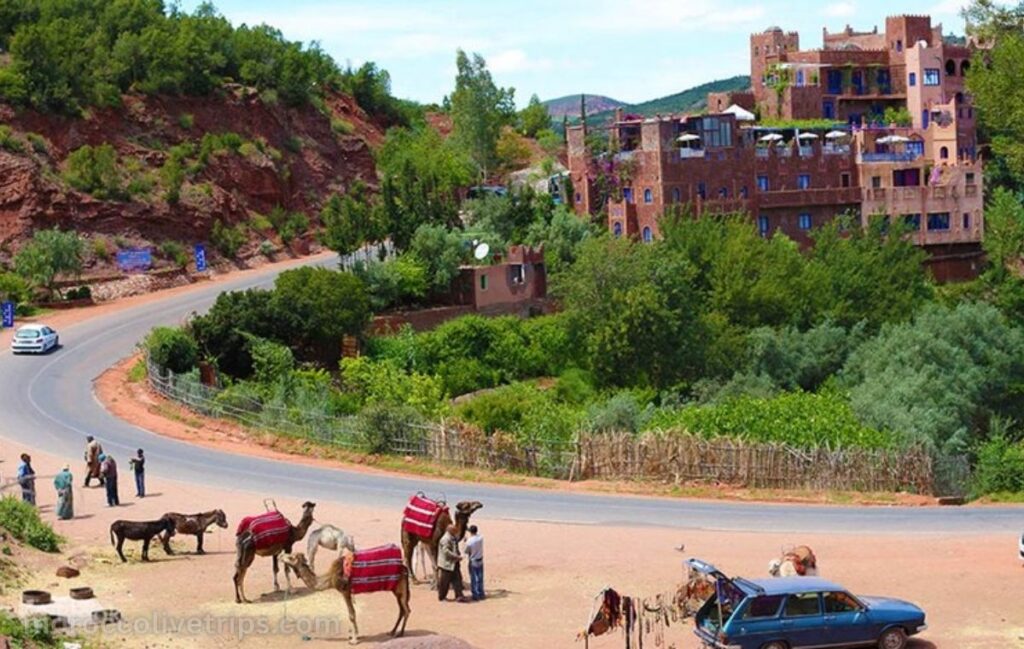
An Ourika Valley day trip from Marrakech takes you 60 kilometres south of the city into the High Atlas Mountains – through traditional Berber villages, past olive groves and riverside markets, all the way to the Setti Fatma waterfalls at the end of the valley road. The whole experience fits comfortably into one day, with pickup from your Marrakech riad in the morning and return by early evening. Morocco Live Trips runs this as a private guided day tour – your own vehicle, your own guide, your own pace. No shared minibuses, no fixed group schedules, no rushing. If you want to book it directly, contact us today. If you want to know exactly what the day involves before you do, everything is covered below. Why Choose an Ourika Valley Day Trip? Marrakech is extraordinary, but after two days in the medina most visitors start craving space, fresh air, and a change of scenery. The Ourika Valley delivers all three – and it does it in a way that feels completely different from anything the city offers, without requiring a long journey to get there. The valley sits just one hour from Marrakech, which means you lose almost no travel time getting there and back. What you gain is a full day in one of Morocco’s most beautiful natural landscapes – river valleys, mountain villages, cascading waterfalls, and the kind of clean cool air that the Marrakech medina simply cannot offer. It is the perfect single-day escape that almost every visitor to Marrakech benefits from building into their trip. Morocco Live Trips has been running Ourika Valley tours for years, and it remains one of our most consistently loved experiences – particularly for families, couples, and first-time Morocco visitors who want to see the country beyond the city walls. Where Is Ourika Valley? The Ourika Valley sits in the Al Haouz Province, approximately 60 kilometres south of Marrakech in the foothills of the High Atlas Mountains. The valley follows the course of the Ourika River as it descends from the high mountain peaks, cutting a lush green corridor through the otherwise arid Atlas foothills. The road into the valley climbs gradually from the Marrakech plain, passing through small market towns before entering the mountain landscape proper. By the time you reach Setti Fatma – the village at the far end of the valley road – you are at around 1,500 metres elevation, the air is noticeably cooler and cleaner, and the scenery around you looks nothing like the flat red city you left an hour ago. The contrast between Marrakech and the Ourika Valley is part of what makes the day trip so satisfying. They are genuinely different worlds separated by sixty kilometres of road. Top Attractions You Will Visit High Atlas Mountain Scenic Drive The journey into the valley is itself part of the experience. The road from Marrakech climbs steadily through the Atlas foothills, passing through villages of red mud-brick houses, roadside stalls selling pottery and local produce, and panoramic views across the plain behind you that get wider and more impressive with every kilometre. The mountain scenery builds gradually as you drive deeper into the valley – rocky ridges giving way to greener slopes, the river appearing and disappearing beside the road, and traditional Berber villages clinging to the hillsides above the valley floor. Morocco Live Trips drivers know every good stopping point along this road for photographs, and they stop at all of them. >>Want More Details about Atlas Mountains… Explore Traditional Berber Villages The Berber villages of the Ourika Valley are home to Amazigh families who have lived in these mountains for generations, farming small terraced plots of land and producing olive oil, argan products, and traditional crafts. Stopping in one of these villages with a local guide gives you a completely different perspective on Moroccan life than the medinas of Marrakech or Fes can offer. A traditional Berber house visit – where you are welcomed with mint tea and shown the layout of a family home built into the hillside – is one of the most genuine cultural moments available on a day trip from Marrakech. Your Morocco Live Trips guide handles the introductions and translates, turning what could be an awkward tourist moment into a warm and natural exchange. Visit an Argan Oil Cooperative The Ourika Valley road passes several argan oil cooperatives – women-run production facilities where local Amazigh women crack open argan nuts by hand, grind the kernels on traditional stone mills, and produce the pure argan oil that Morocco is famous for worldwide. Stopping at a genuine cooperative – not a tourist shop dressed up as one – gives you the chance to watch the process, understand how labour-intensive it is, and buy directly from the women who produced it. Morocco Live Trips only stops at verified cooperatives that genuinely support local women’s employment. The difference between a real cooperative and a roadside tourist trap is immediately apparent once you know what to look for, and your guide will make sure you are seeing the real thing. Hike to the Setti Fatma Waterfalls Setti Fatma is the village at the top of the valley road and the starting point for the most popular hike in the Ourika Valley. From the village, a trail follows the river upstream through a rocky gorge to a series of cascading waterfalls – the famous Seven Waterfalls of Setti Fatma – tucked into a narrow canyon above the village. The hike to the first and most impressive waterfall takes approximately 20 to 30 minutes on a well-worn path that involves some rocky scrambling and river crossings on stepping stones. Local guides from the village offer their services at the trailhead, which Morocco Live Trips recommends accepting – they know the safest route and the best viewpoints, and their fee is modest. The higher waterfalls require more time and a reasonable level of fitness – reaching all seven takes two to three hours return and
Morocco Desert Camping and Stargazing: The Ultimate Sahara Night Experience
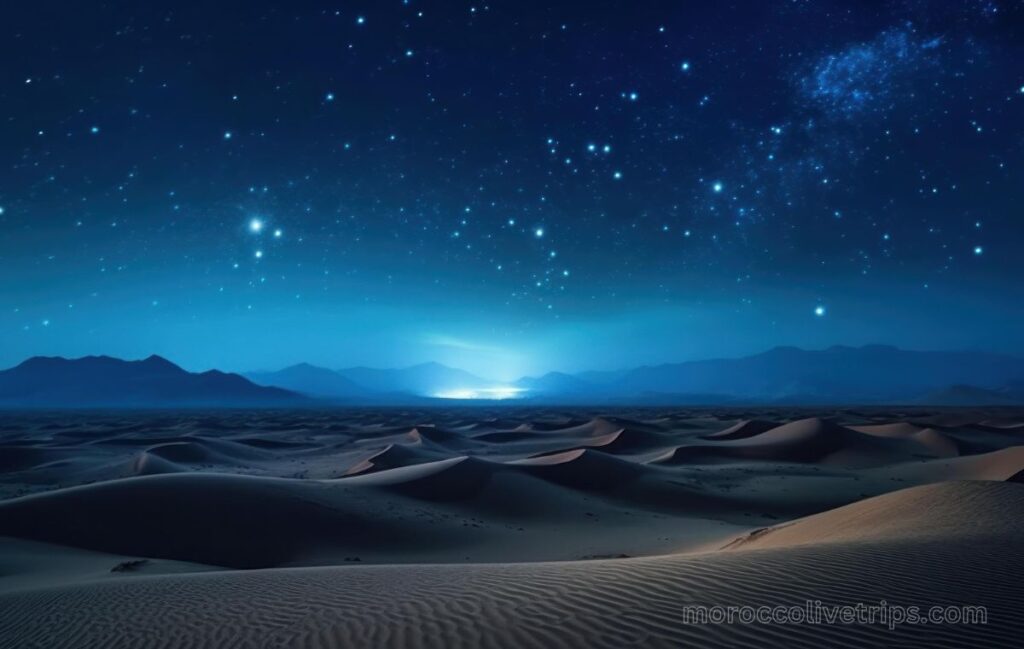
There are travel experiences you never forget, and a night in the Sahara Desert is one of them. As the sun sets over the golden dunes, the sky comes alive with countless stars and the breathtaking Milky Way, creating one of the world’s most unforgettable stargazing experiences. With Morocco Live Trips, you’ll enjoy an authentic overnight desert camp, traditional Berber hospitality, and a magical night under the stars. If you’re dreaming of the ultimate Sahara adventure, book your Morocco desert camping experience with us today. Why Morocco Is Perfect for Desert Camping? Morocco sits at a rare geographical crossroads – close enough to Europe to be easily accessible, yet home to one of the world’s great desert wildernesses just a few hours’ drive from its imperial cities. You can sleep in a Marrakech riad one night and wake up in the Sahara Desert the next evening. Very few countries on earth offer that kind of contrast in such a short distance. The Moroccan desert landscape is also genuinely varied. You get towering golden dunes at Erg Chebbi, vast remote wilderness at Erg Chigaga, and dramatic rocky desert at Zagora – each with its own character, its own silence, and its own sky. The Sahara in Morocco is not a single experience. It is several, and every one of them is worth making the journey for. What Makes the Sahara So Special? The Sahara is the largest hot desert on earth, covering over nine million square kilometres across North Africa. The section of it that sits inside Morocco – particularly the great dune systems around Merzouga and M’Hamid El Ghizlane – represents some of the most dramatic desert scenery on the planet. What makes it special for camping is the combination of elements that very few places can offer at once. Complete silence. Zero light pollution. Extreme temperature contrast between the heat of the day and the cool of the night. And a human history stretching back thousands of years – the Berber people and Amazigh culture that shaped this landscape have been living with and moving through this desert for longer than most civilisations have existed. Why the Night Sky Is Exceptionally Clear? The Moroccan Sahara is one of the darkest places in North Africa. The nearest large city to Merzouga is hundreds of kilometres away, which means the artificial light that washes out the night sky in most parts of the world simply does not exist here. The air at this altitude and in this dry climate is also exceptionally transparent – no humidity, no haze, no cloud cover for most of the year. The result is stargazing conditions that professional astronomers actively seek out. On a clear night at Erg Chebbi, the naked eye can pick out thousands of individual stars. The Milky Way appears not as a faint smear but as a clearly structured band of light arching overhead. If you have only ever seen the night sky from a city or suburb, what you see in the Sahara will feel like discovering it for the first time. Best Places for Desert Camping and Stargazing in Morocco Not all desert locations in Morocco offer the same experience, and knowing the differences helps you choose the right one for your trip. Merzouga and Erg Chebbi Erg Chebbi near Merzouga is Morocco’s most famous dune system and the most accessible Sahara desert camping location in the country. The dunes here rise to over 150 metres – tall enough to feel genuinely monumental – and the colour they turn at sunset, deep orange fading to dark gold, is one of the most photographed natural scenes in Africa. Merzouga is reachable in a day’s drive from Fes or in two days from Marrakech, which makes it the natural choice for travellers doing a circuit of Morocco’s highlights. The infrastructure around Erg Chebbi is well developed – there are luxury camps, mid-range camps, and budget options – but move even a short distance into the dunes and all of that disappears completely. The silence and the stars are the same regardless of which camp you stay in. Morocco Live Trips uses Erg Chebbi as the desert stop on our 7-day circuit tour, and it consistently produces the most memorable night of the entire trip for every group we bring here. Erg Chigaga Erg Chigaga near M’Hamid El Ghizlane is Morocco’s more remote desert alternative, and for travellers who want a deeper, more isolated Sahara experience it is the better choice. The dunes here are less visited, the silence is more complete, and the sense of genuine remoteness – of being truly far from everything – is significantly stronger than at Erg Chebbi. Getting to Erg Chigaga requires either a long 4×4 drive across open desert or a two-day camel trek from M’Hamid, which adds a layer of genuine desert adventure that more accessible locations cannot match. The luxury glamping camps here are exceptional – small, private, designed for guests who want the full Sahara experience with genuine comfort. Zagora Desert The Zagora Desert in the Draa Valley offers a different character again – less dramatic dunes than Erg Chebbi, but a richer historical and cultural context. The Draa Valley was one of the great Saharan trade routes, and the ancient kasbahs and palm groves lining the valley floor give the landscape a layered, storied quality that pure dune deserts do not have. Zagora is closer to Marrakech than Merzouga, which makes it a good option for travellers with limited time who still want a genuine overnight desert experience. The stargazing conditions here are excellent – the same dark skies, the same clear air, the same extraordinary night sky that defines the Moroccan Sahara. What Happens During an Overnight Desert Camp? Most people booking their first Morocco desert camping experience do not know exactly what to expect. Here is the full picture of what a well-run overnight camp involves from arrival to sunrise. Camel Trek at Sunset The desert camp experience begins
Morocco Itinerary 7 Days: The Perfect One-Week Adventure from Casablanca to Marrakech
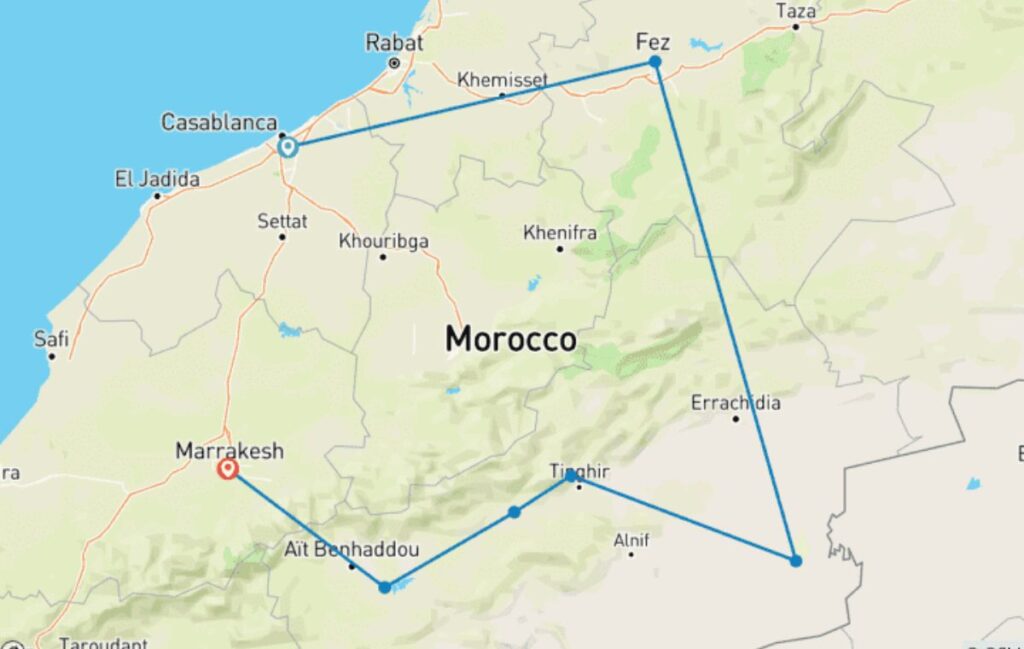
The best Morocco itinerary for 7 days starts in Casablanca and ends in Marrakech, covering the Sahara Desert, Fes Medina, Chefchaouen, Ait Ben Haddou, and the High Atlas Mountains in one seamless route. No backtracking, no wasted days, no guesswork. Morocco Live Trips has run this exact circuit for years as a fully private guided tour. Everything – transport, riads, desert camp, guides – is handled for you. Read the full day-by-day guide below. Why This 7-Day Morocco Itinerary Is Perfect for First-Time Visitors? Most first-time visitors to Morocco make the same planning mistake. They try to see everything – Marrakech, Fes, Chefchaouen, Essaouira, Casablanca, the desert, the coast – and end up spending more time in a vehicle than in the places they came to see. Seven days is not enough for all of Morocco. It is more than enough to experience the very best of it, if the route is built correctly. This itinerary is built correctly. It covers Morocco’s three non-negotiable experiences – the imperial cities, the Sahara Desert, and the High Atlas Mountains – and connects them in a logical geographic flow that minimises driving time and maximises time on the ground. Every day has a clear purpose and enough breathing room for the unplanned moments that Morocco is famous for. Morocco Live Trips runs this route as a private guided tour, which means a dedicated driver, an experienced local guide, and handpicked riad accommodation at every stop. No group schedules to follow, no waiting around – just Morocco, at your own pace, done properly. Morocco Itinerary 7 Days at a Glance Before diving into the detail, here is the full week at a glance so you can see how the route flows: Day 1 – Arrive Casablanca → Hassan II Mosque → drive to Rabat → overnight RabatDay 2 – Explore Rabat → drive to Chefchaouen → overnight ChefchaouenDay 3 – Chefchaouen → drive to Fes → overnight FesDay 4 – Full day Fes Medina → overnight FesDay 5 – Fes → drive south → arrive Merzouga → camel trek → luxury desert campDay 6 – Desert sunrise → drive via Todra Gorge and Dades Valley → overnight DadesDay 7 – Ait Ben Haddou → cross High Atlas via Tizi n’Tichka → arrive Marrakech The route covers approximately 1,200 kilometres across seven days. Private transport with Morocco Live Trips handles every transfer, so you travel comfortably and arrive at each destination ready to explore. Day 1: Arrive in Casablanca and Explore Rabat Most international flights into Morocco land at Casablanca’s Mohammed V International Airport, which makes it the natural starting point for this itinerary. Your Morocco Live Trips driver meets you at arrivals and takes you straight into the city. Casablanca is Morocco’s commercial capital and largest city. It is modern, fast-moving, and home to one of the most impressive buildings in Africa. The Hassan II Mosque sits on a promontory overlooking the Atlantic Ocean and is one of the few mosques in Morocco that non-Muslims can enter on a guided tour. Its minaret rises 210 metres – the tallest religious structure in Africa – and the interior can hold 25,000 worshippers. Allow 90 minutes here. It is worth every minute. After the mosque, drive north to Rabat – Morocco’s quiet, elegant capital city, just 45 minutes from Casablanca. Rabat is one of the most underrated cities in Morocco and one of the most relaxed. Check into your riad or hotel and spend the evening walking the old medina along the river. Day 2: Discover the Blue Streets of Chefchaouen Start the morning in Rabat properly before heading north. The Kasbah des Oudayas is a fortified 12th-century citadel overlooking the Atlantic estuary, with blue and white painted lanes that give a first taste of what Chefchaouen will deliver in full. The Mausoleum of Mohammed V is a short walk away – an ornate royal tomb that is one of the finest examples of modern Moroccan architecture in the country. After Rabat, drive northeast through rolling hills to Chefchaouen – the famous Blue City of Morocco, set in the Rif Mountains at around 600 metres elevation. The drive takes approximately two and a half hours and the road climbs steadily through pine forests as you approach the city. Arriving in Chefchaouen in the late afternoon gives you the best light for your first walk through the blue medina lanes – golden hour here, with soft light bouncing off cobalt walls, is one of Morocco’s great visual experiences. Check into your riad in the medina and spend the evening in the central plaza. Chefchaouen has a noticeably calmer pace than any other Moroccan city, and your first evening here – a quiet dinner, a walk through the empty blue streets after dark – sets the tone perfectly. Day 3: Explore Chefchaouen then Drive to Fes Wake up early and spend the morning in Chefchaouen before the day-trippers arrive from Fes and Tangier. The upper medina lanes around the old mosque are the most photographed spots in Morocco, and before 8am you often have them almost entirely to yourself. Walk the staircase alleys, explore the 15th-century kasbah and its small ethnographic museum, and have breakfast at one of the terrace cafés overlooking the central square. After a full morning, drive southeast to Fes – approximately two and a half hours through the Rif Mountain foothills. Fes is Morocco’s oldest imperial capital and the most intense cultural experience the country offers. Arrive in time for a late lunch in the medina and an afternoon walk through the edge of the Fes Medina to get your bearings before the full day exploration tomorrow. Check into your riad inside the medina walls – waking up inside Fes el-Bali the following morning is an experience that sets up the whole day differently. Day 4: Full Day in the Ancient Medina of Fes Give Fes a full day. It deserves it, and one day is already not quite enough – but one
Best Riad Marrakech Guide: Where to Stay for an Authentic Moroccan Experience (2026)
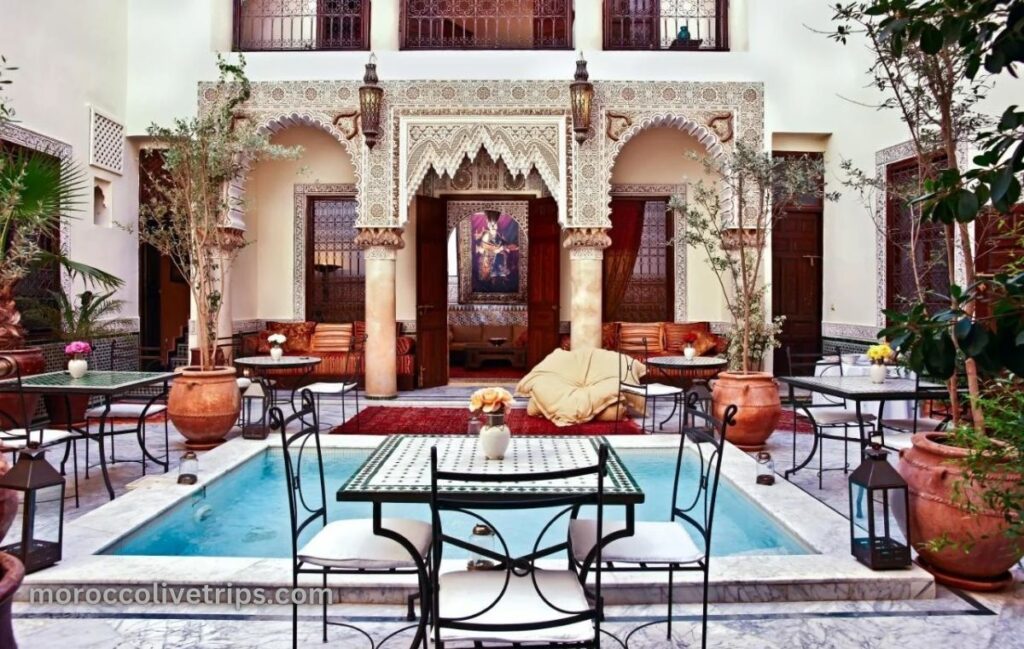
Marrakech is one of those cities that gets under your skin – the winding medina lanes, the smell of spices drifting from the souks, the call to prayer echoing across the rooftops at dawn. But where you sleep here changes everything about how you experience it. Skip the generic hotel and book yourself into a riad Marrakech instead – a traditional Moroccan courtyard house hidden behind an unassuming medina door – and suddenly you are not just visiting Marrakech, you are living it. Morocco Live Trips builds handpicked riad stays into every tour package we run, because we genuinely believe it is the only way to do this city properly. Read on and we will show you exactly why. What Is a Riad in Marrakech? A riad is a traditional Moroccan house built around a central interior courtyard, and staying in one is the single best accommodation decision most Marrakech visitors make. The word riad comes from the Arabic word for garden, and the defining feature of every riad is that private central space – sometimes a fountain, sometimes a garden, sometimes a small pool, always beautiful. From the outside, riads Marrakech reveal almost nothing. The street-facing walls are plain, the doors are often small and unmarked, and you would walk past dozens of them without a second glance. Step through the door and the contrast is extraordinary – noise and heat of the medina behind you, and ahead a quiet, cool, tiled courtyard that feels like an entirely different world. The History of Traditional Moroccan Riads Riads have been at the heart of Moroccan domestic architecture for centuries. The design was practical as much as beautiful – thick walls kept the heat out in summer and the warmth in during winter, while the central courtyard created airflow and gave the family a private outdoor space shielded from the street. All rooms opened inward toward the courtyard rather than outward toward the alley, which gave Moroccan families both privacy and a shared communal heart to the home. Many of the riads that exist in Marrakech today date back several hundred years. Some were family homes that fell into disrepair and were restored by European buyers in the 1990s and 2000s, turning them into boutique riad Marrakech guesthouses. Others have stayed in the same Moroccan family for generations. Either way, the bones of the building – the zellige tiles, the carved plaster, the cedar wood ceilings – are often genuinely old and genuinely remarkable. Unique Features of Riad Architecture Every traditional riad Marrakech shares certain architectural features that you will not find in any conventional hotel. The zellige tilework – intricate geometric mosaics cut by hand from fired clay – covers the lower walls and floors of the courtyard in patterns that can take master craftsmen months to complete. Above the tiles, carved plasterwork panels called tadelakt rise to the ceiling, and above those, hand-painted cedar wood beams carry the weight of the upper floors. The rooftop terrace is the other defining feature of any good riad. Most riads in Marrakech have a terrace where you can eat breakfast with a view across the medina rooftops, watch the sunset over the Koutoubia Mosque, or simply sit with a pot of mint tea and let the city wash over you from a comfortable distance. Why Choose a Riad Instead of a Hotel in Marrakech? This is a question worth answering properly, because the difference between a riad stay and a standard hotel stay in Marrakech is significant. It is not just about aesthetics or Instagram photographs, though both are excellent. It is about how the experience of the city feels from the inside. A hotel puts you at a distance from Marrakech. A riad puts you inside it. When you sleep in the medina, you wake up to the sounds of the city starting its day – bread sellers, motorbikes threading through the lanes, the neighbourhood mosque. You step outside your door and you are immediately in the oldest, most alive part of the city. That proximity to the real Marrakech is something no hotel on the edge of the new town can replicate. Authentic Moroccan Hospitality Moroccan hospitality is legendary, and nowhere does it show itself more naturally than in a well-run riad. Most riads are small – anywhere from four to twenty rooms – which means the staff know your name, remember your breakfast preferences, and genuinely want your stay to go well. It is the opposite of the anonymous, transactional experience of a big chain hotel. Arriving at a riad after a long journey and being met with a glass of Moroccan mint tea and a plate of dates and pastries is one of the small pleasures that seems like nothing and somehow means everything. It sets the tone for the whole stay. Beautiful Courtyards and Rooftop Views The Moroccan interior design of a well-restored riad is genuinely beautiful in a way that photographs cannot fully capture. The play of light in the courtyard changes through the day – bright and sharp at noon, golden and warm in the late afternoon, silver and cool after dark when lanterns light the tilework. Sitting in the courtyard of a good riad with a coffee in the morning is a perfectly complete travel moment. The rooftop views across the Marrakech Medina are equally special. You can see the Koutoubia Mosque minaret rising above the rooflines, the Atlas Mountains in the distance on clear winter days, and the whole tangled geography of the old city spread out below you in a way that helps it make sense. Cultural Experiences You Will Not Find in Hotels Staying in a traditional riad Marrakech is itself a cultural experience in a way that staying in a hotel simply is not. You are living inside a building type that has been central to Moroccan domestic life for centuries. Many riads offer hammam treatments in their private bathhouses, cooking classes in their kitchens, and guided medina walks
Morocco: What to See and Do – 25 Unmissable Experiences for First-Time Visitors (2026)
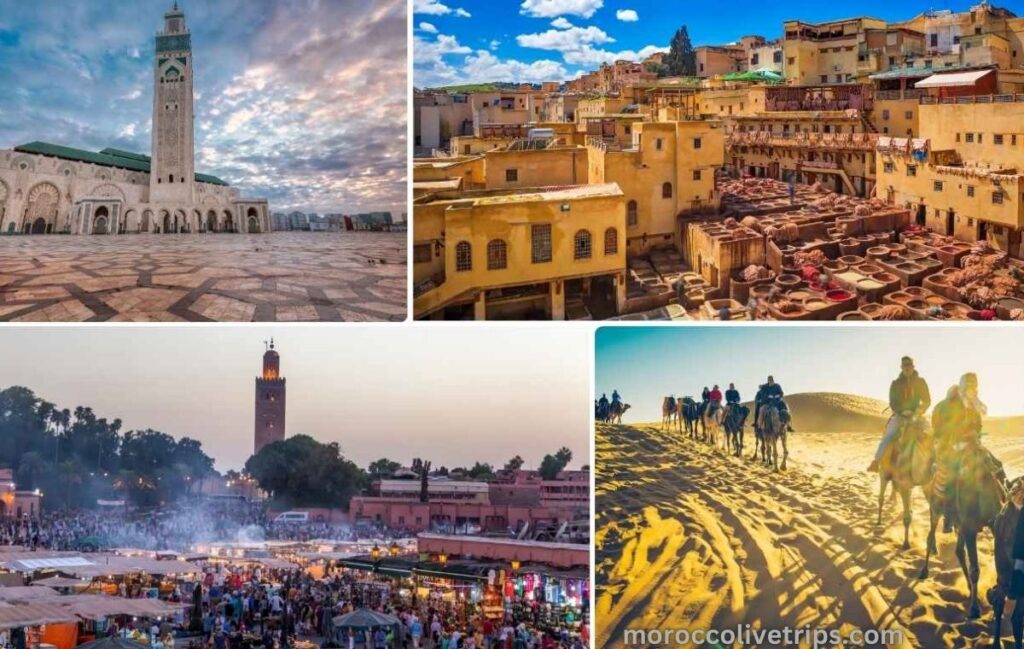
Morocco stops you in your tracks. One moment you are standing in a sun-drenched square surrounded by snake charmers and street musicians. The next you are gazing at a sea of golden sand dunes stretching to the horizon. Then you are sipping sweet mint tea inside a candlelit riad, wondering how a single country can hold this much. That is exactly what Morocco does to people. It is a place of wild contrasts – ancient and modern, desert and ocean, chaotic and deeply peaceful. If you are planning your first trip and wondering what to see and do in Morocco, this guide covers everything from the imperial cities to the Sahara Desert, the mountains, the coast, the food, and the culture. Morocco Live Trips has been running handcrafted tours across Morocco for years, and we have packed everything we know into this guide. Why Morocco Should Be on Every Traveller’s Bucket List? Morocco sits at the crossroads of Africa, Europe, and the Arab world. That position has shaped a culture unlike anywhere else on earth – a blend of Berber, Arab, Andalusian, and French influences that shows up in the food, the Moroccan architecture, the music, and the people. You get landscapes that shift from Atlantic beaches to alpine valleys to Saharan dunes, sometimes all in a single day’s drive. The 2030 FIFA World Cup is also coming to Morocco, and the country is buzzing with anticipation. Infrastructure is improving fast, new hotels are opening, and the best tour experiences are already booking up months in advance. There has never been a better time to visit before the crowds arrive and prices rise. Explore the Vibrant City of Marrakech No list of places to visit in Morocco starts anywhere else. Marrakech is loud, colourful, chaotic, and completely magnetic – it pulls you in from the moment you step out of your accommodation and does not let go until you leave. The city works on all your senses at once, and most visitors say they need at least two full days here to feel like they have scratched the surface. Visit Jemaa el-Fnaa Square Jemaa el-Fnaa is the heartbeat of Marrakech and one of the most famous public spaces in the world. By day it is a busy open-air market with orange juice stalls, henna artists, and snake charmers working the crowds. By evening it transforms into something between a carnival and a theatre – storytellers performing in Arabic, acrobats flipping through the air, and food stalls sending plumes of smoke into the warm night sky. Sitting at a rooftop café overlooking the square with a glass of mint tea is one of those simple travel moments that stays with you for years. UNESCO recognises Jemaa el-Fnaa as an Intangible Cultural Heritage of Humanity, and once you experience it at dusk, you will understand exactly why. Discover Majorelle Garden Majorelle Garden is one of the most peaceful spots in all of Marrakech, a striking contrast to the medina’s intensity just outside its walls. The garden was designed by French painter Jacques Majorelle and is famous for its vivid cobalt blue buildings set against lush tropical plants, fountains, and winding shaded paths. It was later purchased and restored by fashion designer Yves Saint Laurent, who fell in love with Morocco and is buried here. Allow at least an hour to walk through the garden slowly. It is genuinely beautiful at any time of day, though early morning gives you the best light and the smallest crowds. Shop in the Historic Medina The Marrakech Medina is a UNESCO World Heritage Site and one of the best-preserved medieval city centres in the Arab world. Its narrow lanes twist and turn past hidden workshops, neighborhood mosques, and Moroccan souks stacked floor to ceiling with hand-woven carpets, copper lanterns, leather bags, and aromatic spices. Do not be in a hurry when you explore it – the best discoveries always come when you wander without a fixed destination and get a little lost. Experience the Magic of the Sahara Desert If there is one experience that defines what to do in Morocco, it is a night in the Sahara. The desert is not just a landscape – it is a feeling, a silence so complete you can hear your own breathing. Most visitors say it is the single most powerful moment of their entire trip, and many describe it as one of the best experiences of their lives. Camel Trekking in Merzouga The village of Merzouga sits at the edge of Erg Chebbi, one of Morocco’s most dramatic dune systems, where the sand rises to over 150 metres in places. From here you mount a camel and ride into the desert as the late afternoon light turns the dunes deep orange and the shadows stretch long and clean across the sand. The pace is slow, the scenery is surreal, and the whole experience feels like stepping into a world that exists outside of normal time. Spend a Night in a Luxury Desert Camp Luxury desert camps in Morocco offer proper beds inside beautifully decorated Berber tents, warm showers, candlelit Moroccan dinners, and live traditional music performed around an open fire. The camps sit in the dunes away from any light pollution, which means the night sky above you is something most people in cities have never seen – thousands of visible stars laid out across the darkness in every direction. Morocco Live Trips can arrange private luxury camp stays as part of any custom tour package. Watch the Sunrise Over Erg Chebbi Waking up before dawn and climbing a dune to watch the sunrise over Erg Chebbi is non-negotiable if you are spending a night in the Sahara. The colours shift from deep purple to orange to pale gold in a matter of minutes, and the silence during that transformation is absolute. Photographs will not do it justice, but you will take hundreds anyway and they will still be your favourite photos from the entire trip.
Moroccan Hammam: The Ultimate Guide to Morocco’s Traditional Bath Experience
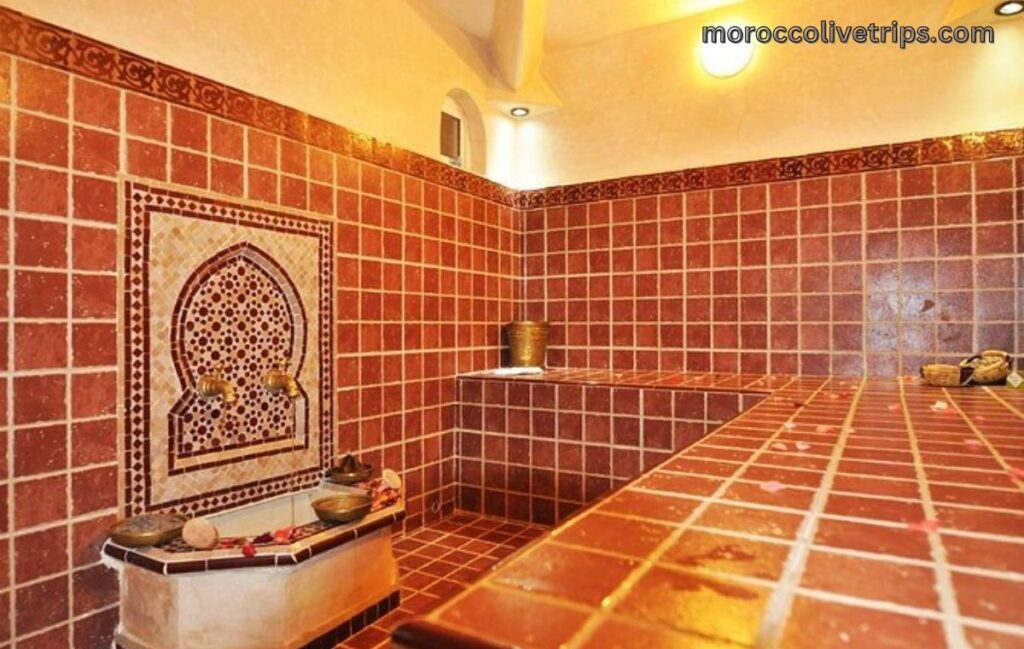
You walk through a carved cedar door into a world of warmth, steam, and silence. A few minutes later, someone is scrubbing years of dead skin off your body with a rough black glove, and you are wondering why you have never done this before. That is the Moroccan hammam – and it is unlike anything you have experienced at a Western spa. The hammam is not just a bath. It is one of Morocco’s oldest living traditions – a weekly ritual of cleansing, community, and self-care practiced by Moroccans of every background for over a thousand years. For travelers visiting Morocco, experiencing an authentic Moroccan hammam is consistently rated as one of the most memorable and culturally meaningful moments of any trip. Morocco Live Trips has guided hundreds of international visitors through their first hammam experience. In this complete 2026 guide, we walk you through everything: the history, the ritual step by step, what to wear, how much to pay, the best cities to visit, and exactly how to book the right experience for your trip. What Is a Moroccan Hammam? A Moroccan hammam is a traditional steam bathhouse where a full-body cleansing ritual takes place using heat, natural black soap, and physical exfoliation. Unlike a Western sauna or day spa, the hammam is not simply about relaxation – it is a structured ritual with cultural, social, and spiritual significance deeply rooted in Moroccan and Islamic tradition. The word hammam comes from the Arabic root meaning “to heat.” Every town and neighborhood in Morocco has at least one public hammam. In major cities like Marrakech and Fes, there are hundreds – some centuries old, hidden behind unmarked doors in the medina’s narrow alleys. The History of Moroccan Hammams The hammam tradition arrived in Morocco with the Arab conquests of the 7th century, drawing on Roman and Byzantine bathhouse culture and blending it with Islamic cleanliness rituals. Under Islamic law, ritual purity – known as taharah – is required before prayer. The hammam became the community’s answer to that spiritual need, long before running water reached private homes. Morocco’s oldest surviving hammams date back to the Marinid dynasty of the 13th and 14th centuries. The hammams of Fes Medina, the world’s oldest continuously inhabited medieval city, include structures built during this era – some still operating today with their original clay-fired heating systems running beneath the marble floors. For centuries, the hammam was where Moroccan society came together across class lines. Brides were prepared for their wedding nights in hammams. Business deals were made there. Friendships were formed. News was shared. The hammam was, in many ways, the social heart of Moroccan life. Why Hammams Are Central to Moroccan Culture? The hammam sits at the intersection of faith, beauty, and community in Morocco. Visiting the hammam at least once a week is considered a social norm and a mark of self-respect across all generations. Moroccan mothers bring their young children to the hammam. Elderly women maintain lifelong friendships forged in hammam steam rooms. Berber beauty rituals passed down through generations center on hammam ingredients: beldi soap made from olives, rhassoul clay from the Atlas Mountains, and argan oil from Morocco’s southwestern forests. These are not marketing terms – they are the actual products Moroccan women have used for personal care since long before the concept of the spa industry existed. For travelers, entering a traditional hammam means entering a living piece of Moroccan heritage. It is one of the few tourism experiences that connects you directly to how Moroccan families actually live, rather than a version staged for visitors. Traditional vs Luxury Moroccan Hammams There are two distinctly different hammam experiences available to tourists in Morocco – and choosing the right one depends on what you are looking for. Public Local Hammams Public hammams – known as hammam beldi or hammam sha’bi – are the neighborhood bathhouses used by local Moroccan families. They charge a fraction of tourist prices, typically between 15 and 30 Moroccan dirhams for entry, with black soap and kessa scrub services available for a few dirhams more. These hammams are gender-segregated, with separate sections or operating hours for men and women. The environment is basic – tiled rooms, marble slabs, communal washing areas, and a consistent heat that opens every pore in your body within minutes. Staff communicate in Arabic or Darija, and very little English is spoken. The experience is raw, authentic, and transformative. You are not a tourist here – you are a participant in something Moroccans do every week of their lives. Many seasoned travelers describe a public hammam as one of the most human, humbling, and memorable experiences of their time in Morocco. Private Tourist Hammam Experiences Private and luxury hammams are specifically designed for tourists and are often located in riads, boutique hotels, and dedicated spa facilities in Morocco’s major cities. They offer a fully guided experience in English, private rooms or semi-private booths, premium products, and add-on treatments like argan oil massage, facial rhassoul clay masks, and full-body Moroccan spa packages. Prices range from 200 to 800 dirhams for a full treatment, depending on the city and the facility. These hammams are a genuinely excellent experience – clean, comfortable, unhurried, and professionally run. The therapists are trained and accustomed to working with first-time visitors from the UK, US, and Europe. Which Option Is Best for First-Time Visitors? If you are comfortable with minimal facilities and basic communication barriers, a public local hammam delivers an irreplaceable cultural experience that no amount of money can replicate in a luxury spa setting. Go with someone who knows the ropes – a local guide or a friend who has been before. If you want a guided, comfortable, fully explained introduction to the hammam ritual – especially if you are traveling as a couple, with a family, or as a solo female traveler who prefers a private environment – a private tourist hammam is the right call. Many Morocco Live Trips tour packages include
Best Time To Visit Morocco From UK: Complete Seasonal Guide
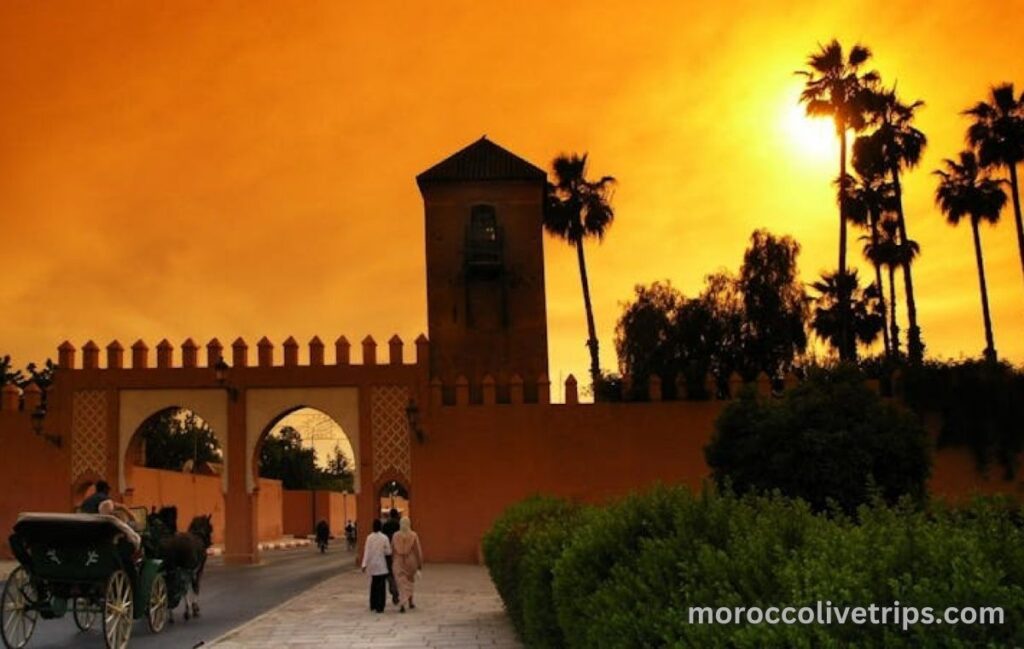
Planning a Morocco holiday from the UK? You are in the right place. Morocco sits just 3 hours by flight from London, yet it feels like a completely different world – ancient medinas, golden Sahara dunes, snow-capped Atlas Mountains, and vibrant imperial cities. But picking the best time to visit Morocco from the UK can make or break your experience. This guide breaks down Morocco weather by month for UK tourists, the best seasons for every type of traveller, and exactly when to book to get the best value. Whether you are planning a desert tour, a romantic couples escape, a family holiday, or a cultural city break, this complete Morocco travel guide for UK visitors has you covered. Ready to book? Morocco Live Trips offers handpicked Morocco tour packages from the UK designed around every season. Browse our tours and plan your perfect trip today. When Is The Best Month To Visit Morocco? The best months to visit Morocco from the UK are March, April, October, and November. Spring and autumn deliver the most comfortable temperatures, clear skies, and ideal conditions across all regions – from the Sahara Desert to the Atlas Mountains, Marrakech, Fes, and the Atlantic Coast. If you want winter sun, January and February are surprisingly warm and affordable. If you love beaches, July and August suit the Atlantic Coast and Agadir perfectly. Summer in Marrakech and the desert, however, reaches 40°C+ and is best avoided unless you handle extreme heat well. Morocco Weather By Season Morocco has four distinct travel seasons. Each one suits a different type of holiday. Here is what to expect. Spring (March–May): The Most Popular Time To Visit Spring is peak season for a reason. Temperatures across Morocco sit between 18°C and 28°C, wildflowers cover the valleys, and the Sahara is warm but not brutal. Marrakech weather in spring is at its most pleasant – warm days, cool evenings, and zero risk of heatstroke. The Atlas Mountains weather in spring is spectacular. Snow melts off the higher peaks by April, trekking trails open up, and the landscapes turn a vivid green. Chefchaouen – the Blue City – looks stunning against spring skies. Spring is also the best time for Morocco road trips from the UK – the Dades Valley blooms with roses in April, the Draa Valley turns golden, and the route through Ouarzazate and Ait Benhaddou sits in perfect light for photography. March is great for Easter holidays in Morocco from the UK. April and May are the sweet spot before crowds peak in summer. Best for: Desert tours, Atlas Mountains hiking, city breaks in Marrakech and Fes, couples, families, road trips. Summer (June–August): Best For Coastal Holidays Is Morocco too hot in summer? For inland cities – yes. Marrakech regularly hits 38°C to 45°C in July and August. Fes and the Sahara Desert are similarly intense. Casablanca temperatures are slightly cooler, sitting around 26°C–30°C due to Atlantic breezes. The Atlantic Coast of Morocco is the real summer winner. Essaouira stays breezy and pleasant thanks to trade winds, making it one of the best summer destinations for British tourists in Morocco. Agadir beaches are busy but lively, and sea temperatures along the coast hit a comfortable 22°C–24°C. Summer flights from the UK to Marrakech are frequent and direct. Easyjet, Ryanair, and British Airways all operate routes from London, Manchester, and Birmingham. Prices peak in July and August, so book early. Best for: Atlantic Coast holidays, Essaouira, Agadir, beach breaks. Avoid: Sahara Desert, Marrakech medina, Fes in peak July heat. Autumn (September–November): Perfect For Desert Tours Autumn is the second-best season to visit Morocco from the UK – and arguably the best time for Sahara Desert tours. By September, the desert heat drops from brutal to bearable. October delivers perfect camel trekking weather in Merzouga, with clear nights, warm days around 28°C, and zero tourist overcrowding. October Morocco holidays from the UK are incredibly popular for this reason. The Morocco climate in October mirrors spring – warm, stable, and dry. Marrakech, Fes, Chefchaouen, and the imperial cities are all comfortable for walking and exploring. November sees temperatures dip slightly but remains excellent for city breaks and cultural tours. Flight prices start to fall after school half-term, making November one of the cheapest times to visit Morocco with great weather. Best for: Sahara Desert camping, camel trekking, Merzouga, Marrakech, Fes, Chefchaouen, couples holidays, cultural tours. Winter (December–February): Morocco’s Winter Sun Escape Morocco is one of the best winter sun destinations from the UK. While Britain shivers through grey skies, Marrakech sits at a comfortable 18°C–22°C in December and January – warm enough for sightseeing, cool enough to be refreshing. Is Morocco warm enough in February? Yes – daytime temperatures in Marrakech average 20°C, the souks are quieter, and hotel rates drop significantly. The Sahara Desert in winter is actually magical – cold nights (4°C–8°C) mean you get a proper desert camping experience with stars above and silence all around. Christmas tours in Morocco from the UK are growing in popularity. Morocco stays open, restaurants serve food throughout December, and the festive crowds of Europe feel a world away. January and February are among the cheapest months to visit Morocco from the UK, with flights and riads available at very low prices. Best for: Winter sun breaks, budget travel, Sahara camping, Marrakech sightseeing, couples escapes from the UK. Best Time To Visit Marrakech From The UK The best month to visit Marrakech from the UK is March, April, October, or November. Marrakech weather in these months sits between 20°C and 28°C – perfect for walking the Djemaa el-Fna, exploring the souks, visiting the Bahia Palace, and taking day trips to the Atlas Mountains. Avoid July and August in Marrakech. The heat is serious – 40°C+ is common – and the medina becomes very crowded with European tourists. If you must visit in summer, book a riad with a pool and plan outdoor activities only in the early morning. Direct flights from London