Quick answer: The Fes to Marrakech desert tour is a 3 day, one way trip of roughly 1,100 km. You cross the Middle Atlas from Fes, spend a night in a camp in the Erg Chebbi dunes at Merzouga, then return west through Todra Gorge, the Dades Valley and Ait Ben Haddou to Marrakech. It is the best way to see the Sahara if your trip starts in Fes or the north, because you never drive the same road twice. We run it private or shared, starting from your riad in Fes and ending at your hotel in Marrakech.
Check dates and price on WhatsApp or send an enquiry. We reply within 24 hours.
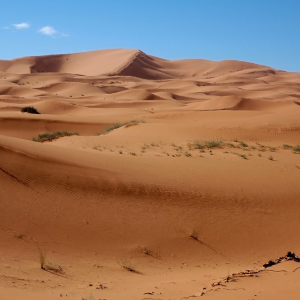
Fes and Marrakech are Morocco’s two great imperial cities, and the Sahara sits almost exactly between them on the map. Linking them by road through the desert is one of the most rewarding journeys in North Africa. In three days you pass cedar forests with wild monkeys, a town built to look like the Alps, palm oases that stretch for kilometres, red canyons, the tallest dunes in Morocco and a UNESCO kasbah, before dropping down from the High Atlas into Marrakech.
This guide explains the route day by day, the driving times, where you sleep, what is included, how private and shared versions differ, what it typically costs, and how to fit the tour into a longer trip. It is written by our team in Marrakech, who drive this route throughout the year.
Tour at a glance
| Duration | 3 days, 2 nights |
|---|---|
| Start | Your riad or hotel in Fes, around 8:00 am |
| End | Your riad or hotel in Marrakech, early evening on day 3 |
| Total distance | About 1,100 km |
| Nights | 1 night in a desert camp in Erg Chebbi, 1 night in the Dades Valley or Ouarzazate area |
| Style | Private (your group only) or shared (small group) |
| Highlights | Ifrane, Azrou cedar forest, Ziz Valley, sunset camel ride in Erg Chebbi, Todra Gorge, Dades Valley, Ait Ben Haddou, Tizi n’Tichka pass |
| Best for | Travellers starting in Fes, Chefchaouen or Tangier who want to finish in Marrakech |
Why take the desert route from Fes to Marrakech?
Most visitors to Morocco want to see Fes, the Sahara and Marrakech. If you do them as separate trips, you end up driving Marrakech to Merzouga and back, then taking the train or a long transfer to Fes. That is a lot of repeated road.
The one way desert tour solves this. You travel from Fes to the desert on the eastern route and from the desert to Marrakech on the southern route, so every hour in the car shows you something new. It also means your city stays at each end are simple: medina in Fes, desert in the middle, medina and Atlas in Marrakech.
It works the other way round too. Our 3 day tour from Marrakech to Merzouga ending in Fes follows the same route in reverse, which suits travellers who arrive in Marrakech and fly home from Fes or continue north to Chefchaouen.
Day by day itinerary
Day 1: Fes to Merzouga via the Middle Atlas (about 470 km)
Your driver collects you from your riad or hotel in Fes around 8:00 am. The road climbs south into the Middle Atlas. The first stop is Ifrane, a mountain town with sloping roofs and gardens that looks more like a European ski resort than North Africa. It is often called the Switzerland of Morocco and is one of the cleanest towns in the country.
A little further on is the Azrou cedar forest, home to Barbary macaques, the only wild monkeys in North Africa. They are used to visitors, so you will usually see them close to the road. Please do not feed them.
The road continues across high plateaus to Midelt, a small town known for apples and fossils, where most tours stop for lunch. From there you cross the eastern High Atlas through the Tizi n’Talghemt pass and descend into the Ziz Valley, a long ribbon of date palms in a desert gorge. The views from the road over the palm grove are among the finest in southern Morocco.
Through Errachidia and Erfoud you reach Merzouga in the late afternoon. Here you leave your main luggage in the vehicle, take a small overnight bag and meet your camel handler. The ride into the Erg Chebbi dunes lasts about an hour, timed for sunset when the sand turns from gold to deep orange. Dinner is served at camp, usually soup, salad, bread and a tagine, followed by drumming around the fire on most nights. With no lights for kilometres, the sky is full of stars.
Driving time: around 7 to 8 hours with stops. Overnight: desert camp in Erg Chebbi. Meals: dinner.
Day 2: Merzouga to the Dades Valley via Todra Gorge (about 300 km)
Wake early to climb a dune for sunrise. This is the moment most people say is the highlight of the trip. After breakfast at camp you ride or drive back to Merzouga, freshen up and meet your driver.
The day starts at Rissani, an old caravan town at the edge of the Tafilalt oasis. If it is market day, the souk is one of the most authentic in the south. From there the road runs west across stony desert to Tinghir and the Todra Gorge, where canyon walls rise around 300 m on either side of a shallow river. The walk through the narrowest part is short and flat.
The afternoon brings you along the Road of a Thousand Kasbahs to the Dades Valley, where you can drive a short way into the Dades Gorge to see its famous winding road and red rock formations. You spend the night in a riad or kasbah hotel in the valley.
Driving time: around 5 to 6 hours with stops. Overnight: hotel in the Dades Valley. Meals: breakfast and dinner.
Day 3: Dades Valley to Marrakech via Ait Ben Haddou (about 320 km)
After breakfast you continue west through the Valley of Roses at Kelaat M’Gouna, then Skoura with its palm grove and kasbahs, to Ouarzazate, the gateway to the desert and home to film studios.
Just beyond Ouarzazate is Kasbah Ait Ben Haddou, a fortified village of earth buildings on a hill above the river and a UNESCO World Heritage site. It has appeared in many films and series. You have time to walk up through the village to the granary at the top for wide views.
The final stretch climbs into the High Atlas over the Tizi n’Tichka pass, at 2,260 m the highest paved road in Morocco, with Berber villages and terraced fields on the slopes. You descend to Marrakech and arrive at your riad or hotel in the early evening.
Driving time: around 6 to 7 hours with stops. Meals: breakfast.
Want this route? Tell us your start date and group size and we will send the full itinerary and a clear price. WhatsApp us or call +212 601 339154.
Distances and driving times
| Leg | Approximate distance | Driving time with stops |
|---|---|---|
| Fes to Ifrane | 65 km | 1 hour |
| Ifrane to Midelt | 140 km | 2 hours |
| Midelt to Merzouga via Ziz Valley and Erfoud | 265 km | 4 to 5 hours |
| Merzouga to Todra Gorge | 190 km | 3 hours |
| Todra Gorge to Dades Valley | 70 km | 1.5 hours |
| Dades Valley to Ait Ben Haddou | 145 km | 2.5 hours |
| Ait Ben Haddou to Marrakech over Tizi n’Tichka | 185 km | 3.5 to 4 hours |
These are typical figures. Roadworks, weather in the mountains and how long you stop can change them. On a private tour you decide the pace.
What is included and what is not
Included
- Pick up from your riad or hotel in Fes and drop off at your riad or hotel in Marrakech
- Air conditioned vehicle with an English speaking driver
- One night in a desert camp in Erg Chebbi, standard or luxury
- One night in a hotel or riad in the Dades Valley area
- Two dinners and two breakfasts
- Sunset camel ride into the dunes and sunrise in the desert
- Fuel and road costs
Not included
- Lunches and drinks
- Local guides at Todra Gorge or Ait Ben Haddou, if you want one
- Entrance to some kasbahs
- Tips
- Travel insurance
- Optional activities such as quad bikes
Budget roughly 300 to 500 MAD per person in cash for lunches, drinks and small tips over the three days.
Private or shared?
| Private | Shared | |
|---|---|---|
| Who is in the vehicle | Only your group | Other travellers too |
| Pick up | Your riad or hotel | Often a meeting point |
| Stops | Wherever you want, as long as you want | Fixed |
| Start time | Agreed with you | Fixed |
| Changes | Add a night, change the route | Not possible |
| Price per person | Higher, lower for bigger groups | Lower |
For two or more people we always suggest asking for both prices. For a family of four or more, private is often close to the shared price per person.
How much does the Fes to Marrakech desert tour cost?
The price depends on private or shared travel, group size and camp level. For comparison, similar 3 day Fes to Marrakech tours are listed on large booking platforms at roughly US$290 for a comfort camp to US$345 for a superior camp per adult. Booking directly with us removes the platform commission. Send us your dates for an exact price.
For a full breakdown of desert tour prices and hidden costs, read how much a Morocco desert tour costs.
The desert camp in Erg Chebbi
Erg Chebbi is Morocco’s largest and most famous dune field, about 22 km long with dunes rising well over 100 m. Camps are set among the dunes, reached by camel or by 4×4 depending on the camp and the conditions.
We offer two levels:
- Standard camp: private tent with beds and blankets, shared bathroom facilities, dinner and breakfast. Simple, comfortable and close to the traditional experience.
- Luxury camp: larger tent with a proper bed, private bathroom with hot shower and flush toilet, better linen and lighting. Dinner and breakfast included.
From November to March, desert nights are cold, often close to freezing. That is when the luxury camp is most worth it. In spring and autumn either level is comfortable. We tell you which camp we use before you book so you can see photos.
The camel ride
Each camel is led on foot by a handler, so no riding experience is needed. The ride into camp takes around an hour at sunset. The trickiest moment is when the camel stands up, back legs first, so lean back and hold the handle. If you prefer not to ride, or have back or joint problems, you can reach camp by 4×4 instead at no extra cost. Tell us when you book.
A closer look at the stops along the way
The route passes through some of Morocco’s most varied landscapes. Here is what to look out for at each main stop, so you can decide where you want to spend more time on a private tour.
Ifrane
Built in the 1930s as a summer retreat, Ifrane sits at around 1,650 m in the Middle Atlas. Its pitched roofs, tidy parks and cool air make it feel unlike anywhere else in Morocco. The stone lion statue in the town centre is a favourite photo stop. In winter, snow sometimes covers the town and the nearby Michlifen slopes. Most tours stop here for coffee and a short walk.
Azrou cedar forest
The Atlas cedar forests around Azrou are among the largest in North Africa, with trees that are hundreds of years old. Barbary macaques live in the forest and often gather near the roadside. They are wild animals, so watch from a respectful distance, keep food in the vehicle and do not feed them, as human food harms their health. The cool shade here is a welcome contrast to the desert later in the day.
Midelt
Midelt lies on a high plateau between the Middle and High Atlas, with the Ayachi peak behind it. The area is known for apples and for mineral and fossil shops, which sell stones from nearby mines. It is the usual lunch stop on day one, with simple restaurants serving tagines, brochettes and salads.
Ziz Valley and gorges
After Midelt, the road crosses the eastern High Atlas and drops through the Ziz Gorges, where the river has cut a narrow passage through rock. Below lies the Ziz Valley, a long green line of date palms between bare hills. The viewpoint above the palm grove is one of the best photo stops on the whole route. The palm groves here feed into the Tafilalt, one of the largest oases in the world.
Erfoud
Erfoud is a small desert town known for its fossil workshops. The local black limestone contains fossils of ancient sea creatures such as ammonites and trilobites, and workshops cut and polish the stone into tables, sinks and souvenirs. If you are curious, a short visit shows how the fossils are cut. Erfoud also hosts a date festival in autumn.
Merzouga and Erg Chebbi
Merzouga is the village at the foot of the Erg Chebbi dunes and the base for camel rides and desert camps. The dunes change colour through the day, from pale gold at midday to deep orange and red at sunset. Climbing even a medium dune is hard work in soft sand, but the view across the dune sea towards the Algerian border is worth it.
Rissani
Rissani was once a major stop on the caravan routes across the Sahara and the heartland of the Alaouite dynasty, Morocco’s current royal family. Its souk is busiest on market days, with livestock, spices, dates and household goods. Nearby is the mausoleum of Moulay Ali Cherif, founder of the dynasty.
Todra Gorge
Near the town of Tinghir, the Todra River runs through a canyon whose walls rise about 300 m and close in to just a few metres apart at the narrowest point. The walk through this section is flat and easy. Rock climbers come here for the sheer walls. Before entering the gorge, the view down over the Tinghir palm grove and its villages is excellent.
Dades Valley and Dades Gorge
The Dades Valley is lined with kasbahs, villages and fields along the river. A short drive into the Dades Gorge brings you to rock formations often called “monkey fingers” and to a famous zigzag road climbing the side of the canyon. The valley is a peaceful place to spend the night, with cool evenings and quiet riads.
Valley of Roses and Skoura
Kelaat M’Gouna is the centre of Morocco’s rose growing region, and in late April and May the hedges of Damask roses are in bloom, with a rose festival in May. Shops along the road sell rose water and creams. A little further, Skoura has a large palm grove dotted with old kasbahs, including the well known Amridil kasbah.
Ouarzazate
Ouarzazate is the largest town in the region and the centre of Morocco’s film industry, with studios that have hosted many international productions. The Taourirt kasbah in the town centre is worth a short visit if time allows.
Ait Ben Haddou
The ksar of Ait Ben Haddou is a group of earthen buildings packed inside defensive walls on a hillside above the Ounila River. It is a UNESCO World Heritage site and one of the best preserved examples of southern Moroccan architecture. Walk up through the narrow lanes to the old granary at the top for views over the river and the surrounding plain.
Tizi n’Tichka pass
The last major stop is the High Atlas pass of Tizi n’Tichka at 2,260 m. The road winds through mountain villages with terraced fields and walnut trees. On a clear day the views back south over the pre Saharan plains and north towards Marrakech are wide. The descent is winding, so take it slowly and stop when you need to.
Food along the route
Lunches are not included, which lets you eat where and what you like. Along this route you will find:
- Tagines of chicken, beef, lamb or vegetables, slow cooked in clay pots.
- Brochettes, grilled skewers of meat, often cooked to order at roadside grills in Midelt and the Ziz Valley.
- Madfouna, sometimes called “Berber pizza”, a flatbread stuffed with spiced meat, onions and herbs and baked in a clay oven. It is a speciality around Merzouga and Rissani.
- Harira, a tomato, lentil and chickpea soup.
- Fresh dates from the Tafilalt and Ziz oases, especially in autumn.
- Mint tea, served everywhere, usually sweet. Ask for less sugar if you prefer.
Vegetarians can always find vegetable tagines, couscous, omelettes and salads. Tell your driver about any diet or allergy and they will suggest suitable restaurants.
Photography tips
- Golden hours in the desert: the first and last hour of light give the best colour and shadows on the dunes.
- Protect your camera: fine sand gets everywhere. Change lenses inside the vehicle or tent and carry a cloth and a plastic bag.
- Ask before photographing people: many people in rural Morocco prefer not to be photographed, and a smile and a simple question go a long way.
- Night sky: bring a small tripod if you want star photos at camp. Turn off your torch to let your eyes and camera adjust.
- Best viewpoints: the Ziz Valley lookout, the top of Ait Ben Haddou and the hairpin road in the Dades Gorge.
Is the route safe?
This is one of the most travelled tourist routes in Morocco, used every day by private drivers and small group tours. The main practical points are road fatigue and weather. Our drivers know the roads well, stop regularly and check mountain conditions in winter. In the desert, camps are staffed through the night. For general advice on safety, scams and what to expect in the cities, read Is Morocco safe to visit right now?
Respecting local life along the way
Much of this route passes through Amazigh (Berber) villages where life follows the seasons and the oasis. A few small things make a big difference: greet people with “salam”, dress modestly in villages, ask before taking photos, and buy from local cooperatives when you shop for argan oil, rose products or carpets. If you visit a nomad family near the dunes, a small gift such as tea or sugar is appreciated more than money.
Best time to do this tour
| Season | Conditions on the route | Our advice |
|---|---|---|
| March to May | Warm days, cool nights, green valleys and roses in Kelaat M’Gouna in late April and May | The most popular time. Book a few weeks ahead. |
| June to August | Very hot in the desert, often over 40°C. Mountains are pleasant. | Early starts and sunset camel rides. Carry plenty of water. |
| September to November | Warm and settled. Date harvest in the oases in autumn. | An excellent time to go. |
| December to February | Clear, sunny days. Cold desert nights. Snow is possible in Ifrane and on high passes. | Choose a luxury camp. Allow flexibility for mountain weather. |
Snow on the Middle Atlas or the Tizi n’Tichka pass occasionally closes roads for a few hours in winter. Our drivers check conditions every morning and adjust the timing if needed. For more detail, read our guide on the best time to visit Morocco.
Who this tour suits
- Travellers starting in the north. If you arrive in Tangier or Fes, or come from Chefchaouen, this route takes you to the desert and on to Marrakech without backtracking.
- Couples. A private version with a luxury camp is a popular romantic trip. See our honeymoon guide.
- Families. Children love the camels and dunes. On a private tour you stop whenever they need a break. See our family tours guide.
- Older travellers. The route is comfortable with a private vehicle and frequent stops. If long days are a concern, add a night. See our seniors guide.
It suits people less well if you have only two days, or if you dislike long days in a vehicle. In that case consider the 2 day Zagora tour from Marrakech, which has much shorter drives.
How to fit the tour into a longer trip
Here are three common ways travellers build the Fes to Marrakech desert route into a wider holiday.
One week starting in Fes
- Day 1 and 2: Fes medina, with a guided walk through the souks, tanneries and Al Quaraouiyine.
- Day 3 to 5: Fes to Marrakech desert tour.
- Day 6 and 7: Marrakech, with a day trip to the Atlas Mountains or Essaouira.
Ten days from Tangier or Chefchaouen
- Day 1 and 2: Tangier and Chefchaouen.
- Day 3: Chefchaouen to Fes via Volubilis and Meknes.
- Day 4 and 5: Fes.
- Day 6 to 8: Fes to Marrakech desert tour.
- Day 9 and 10: Marrakech.
A full loop from Casablanca
If you are flying in and out of Casablanca, our 10 day tour from Casablanca and 8 day tour via Chefchaouen and Fes both include this desert section as part of a complete route, with all transfers and hotels arranged.
Practical tips for the route
- Pack a small overnight bag for the camp. Your suitcase stays in the vehicle.
- Bring layers. You can go from cool mountain air in Ifrane to desert heat and back to cold in one day.
- Carry cash in dirhams for lunches, drinks and tips. Card payments are rare outside cities. See our guide to money in Morocco.
- Bring sunglasses, sunscreen and a scarf for sun and wind blown sand.
- Charge your phone and a power bank before the desert night.
- Take travel sickness tablets if mountain roads affect you. The Tizi n’Tichka descent is winding.
- Dress modestly in villages, covering shoulders and knees. Read what to wear in Morocco.
Fes to Marrakech without the desert: is it worth the detour?
The direct route from Fes to Marrakech by train or road takes roughly 7 to 8 hours and passes through flat farmland and cities. It is efficient, but you see little. The desert route takes three days instead of one, and in exchange you see the Middle Atlas forests, two great desert valleys, the Erg Chebbi dunes, two famous gorges and Ait Ben Haddou. For most visitors with a week or more in Morocco, the extra two days are the best spent of the trip.
If you are deciding between this route and a round trip from Marrakech, the comparison is simple. If you are in Fes, choose this tour. If you are based in Marrakech for your whole stay, choose the 3 day Marrakech to Merzouga tour or the 4 day version.
Private tour pick up in Fes: how it works
Most riads in Fes el Bali are inside car free lanes. On the evening before your tour, we confirm the pick up time and the nearest gate a vehicle can reach, usually Bab Boujloud, Bab Ftouh, Bab Guissa or Bab Rcif depending on where you stay. Your driver or a porter meets you at the riad door and helps carry luggage to the vehicle. If you stay in the Ville Nouvelle, the driver collects you directly at your hotel entrance.
At the end of the tour in Marrakech, the same applies: if your riad is in the medina, the driver stops at the nearest point a car can reach and a porter helps with bags.
Travelling in a group of friends or as a couple
Couples usually choose a private 4×4 with a luxury camp for comfort and privacy. Groups of friends of four to seven often book a private minivan, which keeps the per person price close to a shared tour while keeping full flexibility. For larger groups, we can arrange two vehicles travelling together.
Can the tour be extended?
Yes, on a private tour. Popular additions are:
- A second night in the desert, with time to visit Khamlia village for Gnawa music and to explore the dunes by 4×4.
- A night in Ait Ben Haddou instead of the Dades Valley, to see the kasbah at sunset and sunrise without the day visitors.
- A night in Skoura in a restored kasbah among the palms.
- Ending in Essaouira or the Agafay desert instead of central Marrakech.
Each extra night adds accommodation, meals and a day of the driver’s time. Ask us and we will price the exact version you want.
What makes our version different
Our team is based in Marrakech and we plan every route ourselves, working with the same drivers, hotels and camps season after season. That means we can tell you before you book exactly where you will sleep and which camp you will use. You deal directly with us from your first message, not through a booking platform. On private tours, your driver is there for your group only, and the route bends around what you enjoy: longer at the monkeys, a detour to a viewpoint, an extra stop for photos in the Ziz Valley.
You can read reviews from our travellers on Tripadvisor.
A sample timeline for each day
Times vary with the season and your pace, but this is how a typical private tour runs.
| Time | Day 1 | Day 2 | Day 3 |
|---|---|---|---|
| Early morning | 8:00 pick up in Fes | Sunrise on the dunes, breakfast at camp | Breakfast in the Dades Valley |
| Mid morning | Ifrane, Azrou cedar forest and monkeys | Return to Merzouga, Rissani market | Valley of Roses, Skoura |
| Midday | Lunch in Midelt | Drive west across the plains | Ouarzazate, lunch near Ait Ben Haddou |
| Afternoon | Ziz Gorges and valley viewpoint, Erfoud | Todra Gorge walk, lunch nearby | Ait Ben Haddou visit |
| Late afternoon | Arrive Merzouga, camel ride to camp | Dades Gorge viewpoint | Tizi n’Tichka pass |
| Evening | Sunset, dinner, music, stars | Dinner at the hotel | Arrive at your Marrakech riad |
Before the tour: making the most of Fes
Most travellers spend one or two nights in Fes before setting off. Fes el Bali, the old medina, is a UNESCO World Heritage site and one of the largest car free urban areas in the world, with more than 9,000 lanes. It is easy to get lost, and that is part of the experience, but a local guide for your first morning makes a huge difference.
Highlights to see before you leave for the desert:
- Bab Boujloud, the blue gate that is the main entrance to the medina.
- Al Quaraouiyine, founded in 859 and often described as the oldest continuously operating university in the world. Non Muslims can look into the courtyard from the doorway.
- The Chouara tannery, where leather is still dyed in stone pits as it has been for centuries. Terraces in the surrounding leather shops give the best views.
- Bou Inania Madrasa, a 14th century religious school with fine carved cedar, stucco and tilework.
- The Mellah, the old Jewish quarter, with its distinctive balconied houses.
- The Merenid Tombs viewpoint at sunset, looking out over the whole medina.
Our guide to exploring the Fes medina with a guide covers routes, prices and how to avoid unofficial guides.
After the tour: arriving in Marrakech
You arrive in Marrakech in the early evening of day 3, usually tired but happy. Many travellers keep the next day relaxed, with a hammam and a slow walk through the souks, before exploring the city properly. Popular things to do once you have rested:
- A guided walk through the medina, the Bahia Palace and the Saadian Tombs.
- The Majorelle Garden and the Yves Saint Laurent museum in Gueliz.
- An evening at Jemaa el Fna, the main square, when the food stalls and musicians set up.
- A day trip to the Atlas Mountains, Ourika Valley or Essaouira.
See our Marrakech tours and day trips for ideas, or our guide to the best things to do in Marrakech.
Getting to Fes before the tour
From the United States and Canada
There are no direct flights from North America to Fes. Most travellers fly into Casablanca and take the train to Fes, which takes around 4 hours, or connect through a European hub to Fes Saiss airport. Another option is to start your trip in Casablanca with our 8 day tour via Chefchaouen and Fes, which includes this desert route and handles every transfer.
From the United Kingdom and Ireland
Fes has direct flights from several UK airports, mostly on low cost airlines, depending on the season. Flying into Fes and home from Marrakech is a natural fit for this tour, as Marrakech has many direct flights back to the UK.
From Australia and New Zealand
Australian travellers usually reach Morocco through Europe or the Middle East, often combining it with Spain or Portugal. If you are coming from Spain, the ferry to Tangier, followed by Chefchaouen and Fes, leads straight into this route.
From Spain and Europe
Fes has direct flights from many European cities. Many European travellers spend two nights in Fes, take this tour, then fly home from Marrakech.
Where to stay in Fes and Marrakech
Because the tour starts and ends at your accommodation, you can stay anywhere. Our general advice:
- Fes: a riad inside the old medina gives you the full atmosphere. Riads near Bab Boujloud or Bab Rcif are easiest for a driver to reach. If stairs are a problem, a hotel in the Ville Nouvelle is more accessible.
- Marrakech: a riad in the medina near Jemaa el Fna, or a hotel in Gueliz or Hivernage for a quieter, more modern stay. See our guide to riads in Marrakech.
Our driver will meet you at the nearest point a car can reach if your riad is deep in a car free lane, and help with luggage.
Packing list
| Item | Why |
|---|---|
| Small overnight bag | Only this goes to the desert camp |
| Warm layer and jacket | Mountains and desert nights can be cold, even in spring |
| Light long sleeved clothes | Sun protection and modest dress in villages |
| Scarf or buff | Sun, wind and blowing sand |
| Sunglasses, hat, sunscreen | Strong sun in the desert and at altitude |
| Comfortable walking shoes | Todra Gorge and Ait Ben Haddou |
| Sandals or bare feet | Walking on the dunes |
| Head torch | Moving around camp at night |
| Power bank | Limited charging at some camps |
| Cash in small notes | Lunches, drinks, tips |
| Travel sickness tablets | Winding mountain roads |
| Reusable water bottle | Refill from large bottles to reduce plastic |
Merzouga or Chegaga on the way from Fes?
Travellers sometimes ask whether they can visit the Chegaga dunes instead of Merzouga on a trip from Fes. Chegaga lies far to the south west, beyond Zagora and M’Hamid, so it does not fit a 3 day route from Fes. Merzouga is the natural desert stop between Fes and Marrakech. If you want Chegaga, plan it as a separate trip from Marrakech: our 4 day Chegaga tour and 3 day Chegaga tour both start there.
Common concerns before booking
“Is it too much driving?”
It is a road trip. Day 1 and day 3 each involve around 6 to 8 hours on the road with stops, and day 2 is shorter. The landscapes change constantly, which makes the time pass quickly, and on a private tour you stop whenever you like. If you prefer shorter days, we can add a night in the Ziz Valley, the desert or Ait Ben Haddou.
“Will the camp be crowded?”
Erg Chebbi is popular, and some camps are large. We use camps among the dunes rather than at the edge of the village, and we will tell you in advance which one, so you can see photos and reviews.
“What if someone in our group cannot ride a camel?”
No problem. The camp can be reached by 4×4 and you still enjoy sunset and sunrise on the dunes.
“Can we change plans during the tour?”
On a private tour, yes, within reason. Your driver will adjust stops and timing. Extra nights need to be arranged in advance where possible, as camps and hotels book up in high season.
“Is the price fixed?”
Your quote lists exactly what is included. The only extras are personal spending such as lunches, drinks, tips and optional activities, which you choose on the day.
Frequently asked questions
How long is the Fes to Marrakech desert tour?
Three days and two nights, covering about 1,100 km, with one night in a desert camp and one in the Dades Valley.
Is 3 days enough for the desert from Fes?
Yes. Fes is closer to Merzouga than Marrakech, so the first day reaches the dunes by sunset. If you want more time in the desert, add a night.
Can I do the tour in the other direction?
Yes. Our Marrakech to Fes route via Merzouga is the same trip in reverse.
Is the tour private?
We run both private and shared versions. On the private tour only your group is in the vehicle and you choose the pace.
What vehicle is used?
An air conditioned 4×4 or minivan, depending on group size.
Is lunch included?
No. Lunch is at a restaurant of your choice along the way, usually in Midelt on day 1, near Todra on day 2 and near Ait Ben Haddou on day 3.
Can children do this tour?
Yes. The camel ride is gentle and handlers lead the camels. On a private tour you can stop as often as children need.
Is it cold in the desert camp?
From November to March, nights are cold. Camps provide heavy blankets, and luxury camps have better bedding and hot showers.
Can I leave large luggage somewhere?
Your luggage stays in the vehicle overnight in the desert. Take only a small bag to camp.
How do I book?
Send us your dates and group size on WhatsApp or through the enquiry form. We reply with a full itinerary and price. A 25% deposit confirms the booking. See our payment and cancellation policy.
Related tours
- 3 days Marrakech to Merzouga desert
- 3 day tour to Merzouga ending in Fes
- 8 days from Casablanca via Chefchaouen and Fes
- 10 days from Marrakech
Plan your Fes to Marrakech desert tour
Tell us your start date in Fes, how many are travelling and whether you prefer private or shared. We will send the itinerary, camp details and a clear price, usually within 24 hours.
Message us on WhatsApp | Call +212 601 339154 | Use the enquiry form
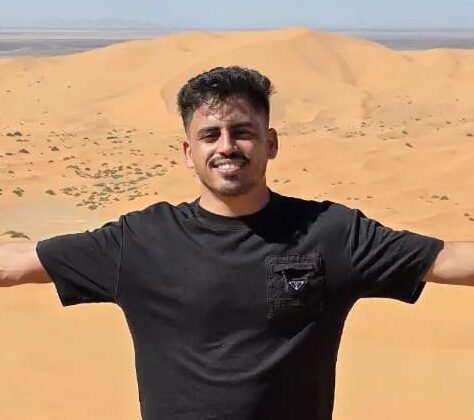
Moha BN is a Moroccan-born licensed tour guide with 10+ years of experience organizing cultural tours, Sahara Desert trips, and private itineraries across Morocco. He shares local travel insights, safety advice, and budget tips through Morocco Live Trips.